Why Low-Speed Torque Matters During Heavy Loader Work
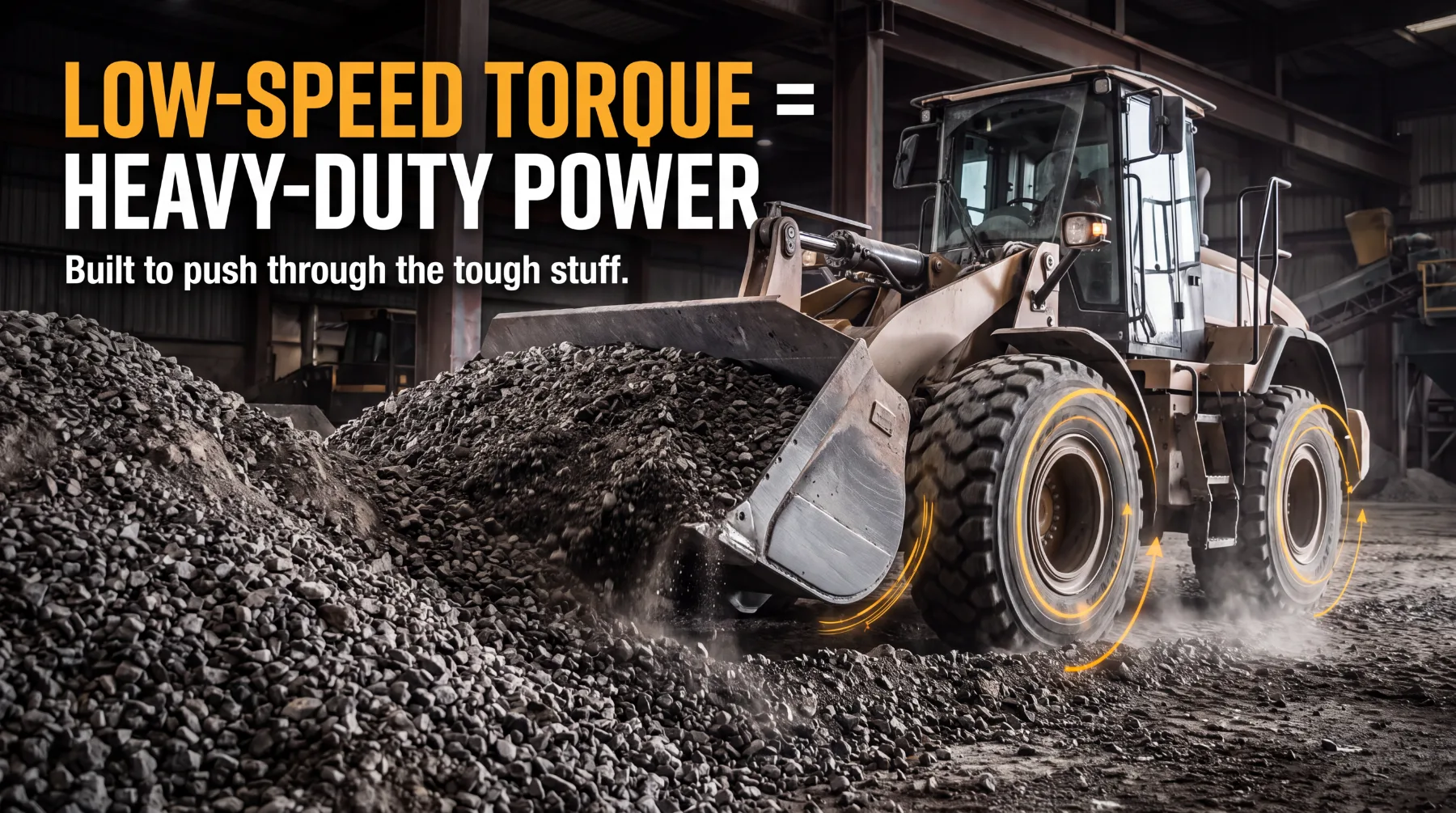
Speed rarely tells the full story of what a loader can do. When a machine forces its bucket into a packed pile or hauls a full load up a grade, the number that counts is not how fast it travels but how much force it delivers while moving slowly. That force is low-speed torque, and it is what separates a loader that powers through tough work from one that stalls, slips, and struggles. If you depend on a loader to move material shift after shift, understanding low-speed torque is central to choosing and operating a machine you can trust. This guide breaks down why low-speed torque matters during heavy loader work, covering how it drives the machine into material, why it outweighs travel speed when digging, how it shapes performance on slopes, how it connects to hydraulic power, and how to choose a loader with the right torque for your conditions.
How Low-Speed Torque Helps Loaders Push Into Material
A loader earns its keep by driving its bucket into material and filling it, and that job calls for raw force rather than speed. High torque at low travel speeds gives the machine the strength it needs to push into piles of soil, gravel, sand, and other dense materials. When the bucket meets a compacted heap, the loader has to overcome the resistance of tightly packed material, and only strong torque delivered to the wheels or tracks can supply the steady pushing force that resistance demands. Speed contributes little here. What matters is the machine's ability to keep pressing forward against a load that pushes back just as hard.
This is precisely why a loader does not need high travel speed to work effectively. Rather than relying on momentum to break into a pile, the machine uses sustained torque to bite in and fill the bucket in a controlled, deliberate way. A loader creeping forward with plenty of force behind it accomplishes far more than one that charges at a pile and stalls the instant it hits real resistance.
Consider what low-speed torque makes possible during a typical loading pass:
- Steady penetration into compacted material without losing forward drive.
- Consistent bucket filling as the machine holds its pushing force through the pass.
- Effective work at a crawl, keeping the operator in full control while applying maximum force.
- Operating weight sets how much mass the drivetrain must move, especially on slopes and soft ground.
- Rated load defines the weight the machine carries, which the powertrain must handle again and again.
- Drivetrain design determines how effectively engine power becomes pushing force at the wheels or tracks.
- Terrain dictates the resistance the machine meets, from firm level yards to steep or broken sites.
- Typical applications reveal how hard and how often the loader will dig, push, and climb.
When a loader delivers strong torque at low speed, it turns engine power directly into the pushing force the work requires. The result is a machine that digs into dense material with confidence, fills the bucket on every pass, and keeps the loading cycle moving without hesitation. That pairing of force and control is the bedrock of productive loader work, and it comes down to torque delivered exactly where and when the machine needs it most.
Why Torque Matters More Than Speed During Digging
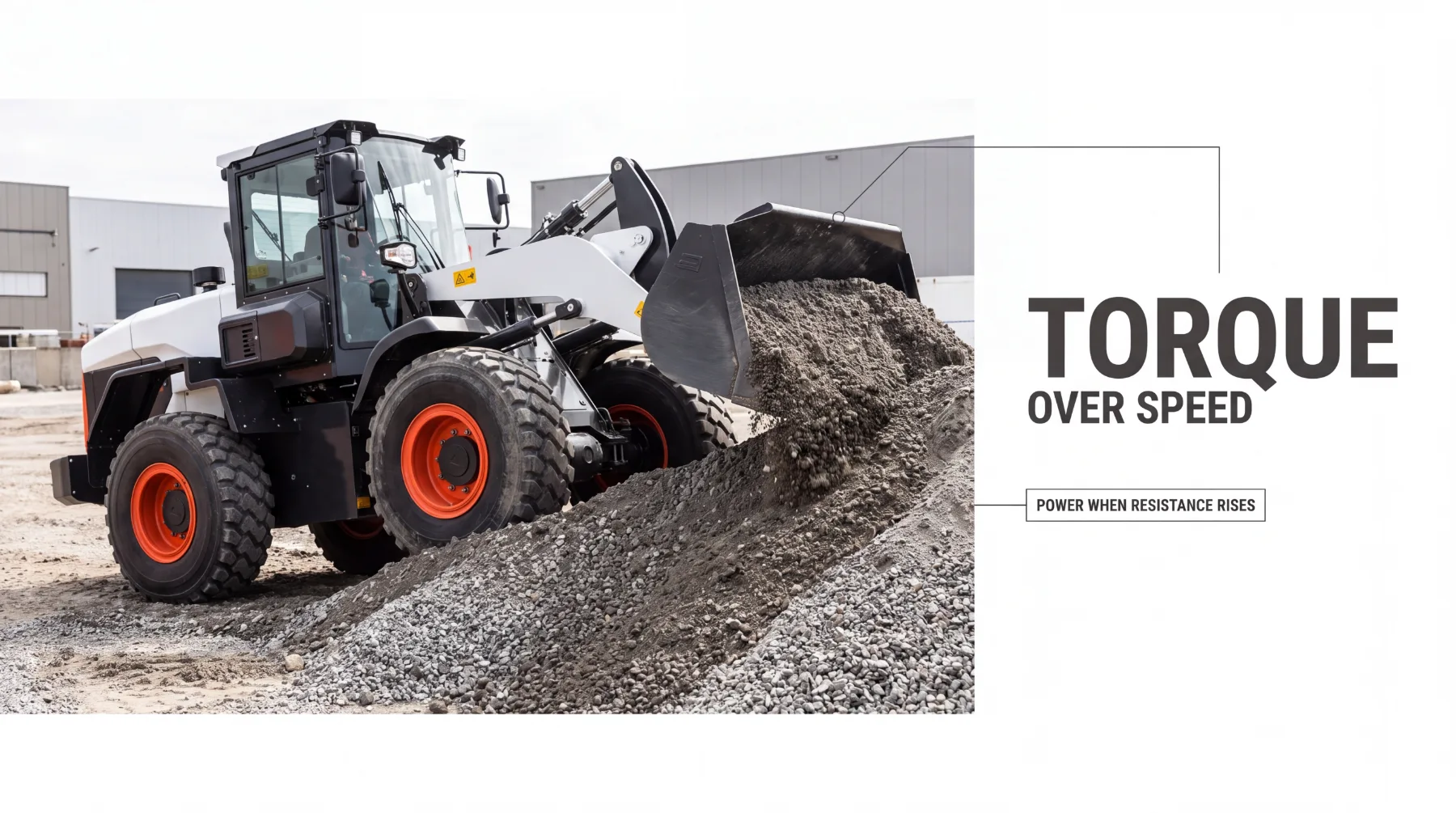
Digging and loading reward controlled movement, not fast travel, which is why torque matters far more than speed once the bucket is at work. Through a loading cycle, rushing gains the operator very little. The machine needs to advance into the material with intent, hold steady force as the bucket fills, and keep that force even as resistance climbs. Strong low-speed torque is what lets the loader do all three, supplying the pushing power that carries the bucket through the material instead of stopping it short.
Resistance is the reason torque takes the lead. As the bucket bites deeper into a pile, the material packs against it and pushes back harder, so the force required rises even as the machine slows. A loader with weak low-speed torque runs out of drive at exactly this point, leaving the bucket half full and the operator forced to reverse and try again. A loader with strong torque keeps grinding against that resistance, filling the bucket completely in a single, controlled pass.
The practical gap shows up across a full shift. A machine that fills cleanly on each attempt completes more cycles and moves more material with less effort, while one that struggles wastes time on repeat passes and wears down the operator with constant corrections. This is why seasoned operators prize pulling power over travel speed whenever the work involves digging and filling.
Controlled movement also keeps the machine stable and precise. When the loader eases forward with ample torque, the operator can feel how the bucket is loading and adjust the approach as needed. That control produces fuller, cleaner loads and shields the machine from the shock of stalling against a pile. In demanding digging work, torque delivered at low speed is simply worth more than speed itself.
How Torque Affects Loader Performance on Slopes
Slopes place some of the heaviest demands a loader will ever meet on its drivetrain, and low-speed torque is what carries the machine through them. When a loader hauls a heavy load uphill, the drivetrain has to overcome two forces at once: the combined weight of the machine and its load, and the pull of gravity along the grade. Both fight against forward movement, and both grow tougher as the slope steepens or the load increases. Adequate low-speed torque is what allows the machine to keep climbing steadily rather than losing momentum partway up.
The challenge on a grade is sustaining consistent movement under continuous resistance. Unlike a quick jab into a pile, climbing a slope with a full bucket asks the drivetrain to deliver force without letup over the whole length of the climb. A loader with enough torque handles this calmly, moving up the grade at a measured pace while keeping the load secure. A machine short on torque labors against the incline, bleeds off speed, and heaps excessive stress on its powertrain as it fights to keep going.
That strain carries a genuine cost. A drivetrain pushed beyond its comfortable range on slopes wears faster and runs hotter, which shortens component life and raises the risk of failure over time. Strong low-speed torque guards against this by keeping enough force in reserve to climb without overworking the powertrain.
Steady, confident movement on grades also serves safety and control. A loader that climbs smoothly keeps its load stable and answers the operator predictably, while one that bogs down and stalls becomes harder to manage on an incline. For work that moves heavy loads across uneven or sloping ground, adequate low-speed torque is what keeps the machine steady, protects the powertrain, and ensures the loader performs dependably where the terrain asks the most of it.
The Relationship Between Engine Torque and Hydraulic Performance
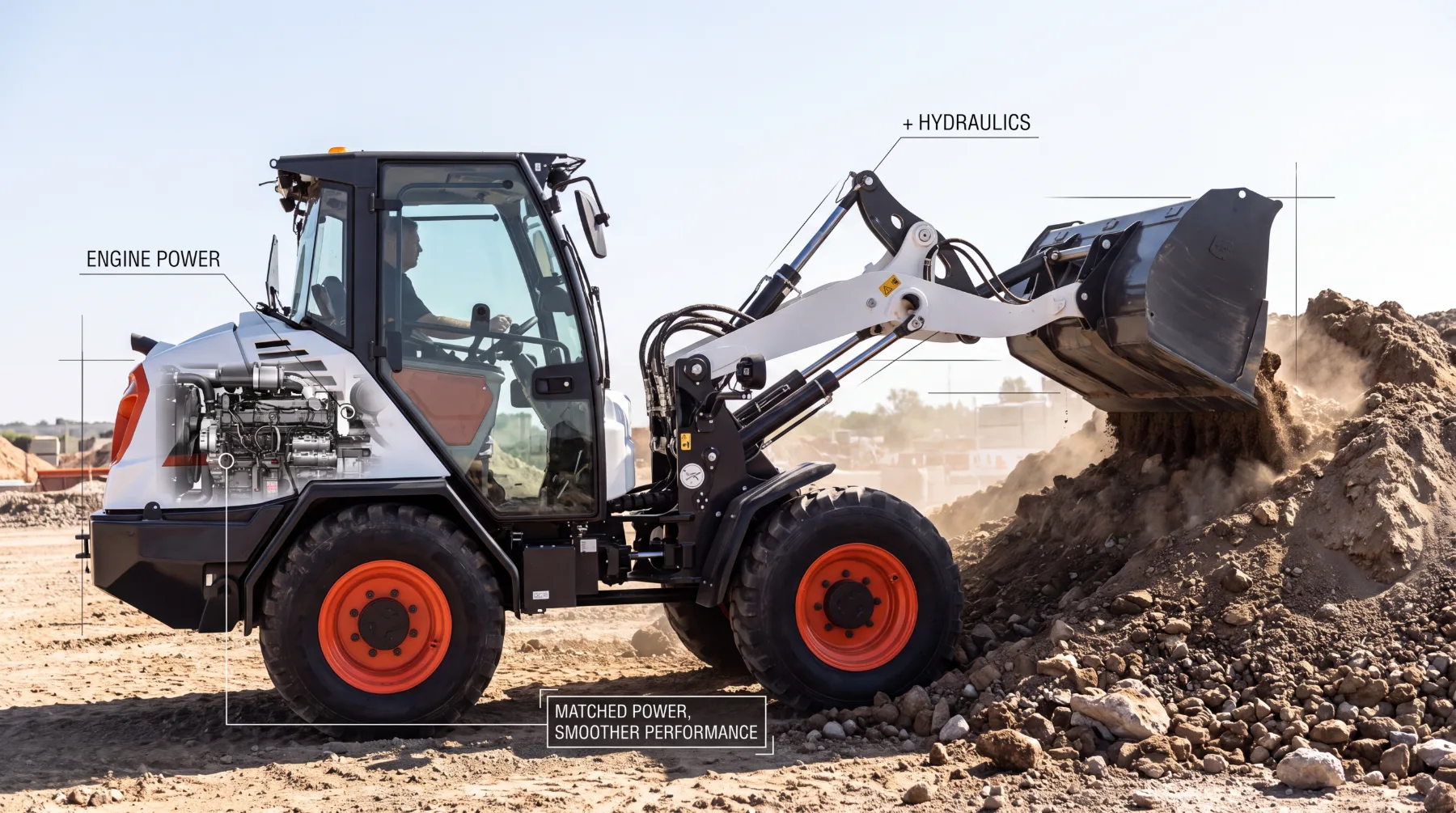
A loader leans on two working systems that must complement one another, and seeing how they connect explains why matched power matters so much. Engine torque supplies the mechanical power that drives the machine, propelling it forward and putting force behind its movement. The hydraulic system, powered by that same engine, handles the lifting and bucket functions, raising loads and curling the bucket to dig and dump. Both draw from the engine, and both need enough power to do their jobs when the work turns heavy.
The demand on these systems often peaks at the very same moment. As a loader drives into a pile, it needs strong torque to push forward and, at the same instant, hydraulic power to curl and lift the bucket through the material. If the engine cannot feed both systems together, performance drops off. The machine might push into the pile but fail to lift the load, or lift cleanly but lack the drive to penetrate the material. Properly matched power keeps neither system starved while both are working hard.
This balance is why a loader has to be engineered as a whole rather than around one headline number. An engine sized to deliver ample torque for travel and pushing must also supply the hydraulic system with the flow and pressure it needs for lifting and bucket work. When the two are matched well, the loader digs, lifts, and carries in one smooth, coordinated motion, handling heavy loads without either system holding the other back. For the operator, that matched power feels like a machine that stays capable and responsive under load, driving into material with force while the bucket fills and lifts cleanly and the whole cycle flows without a stumble.
Choosing a Loader With the Right Low-Speed Torque
Choosing a loader with the right low-speed torque means matching the machine to the real demands of your work rather than reading a single figure in isolation. The torque a loader needs depends on several factors working in concert: its operating weight, its rated load, the design of its drivetrain, the terrain it will face, and the typical applications it will handle. Weighing these together is what points you toward a machine that pushes hard, moves smoothly, and performs consistently through demanding conditions.
Each factor shapes the torque requirement in its own way:
These factors seldom act alone. A loader that carries heavy loads across sloping, uneven ground needs far more low-speed torque than one moving light material on flat, firm surfaces. Defining the toughest conditions the machine will regularly face, rather than the easiest, gives a realistic picture of the torque required to perform there with a sensible margin to spare.
A loader with sufficient low-speed torque repays that careful selection with stronger pushing ability, smoother operation, and more consistent performance under load. It drives into dense material with confidence, takes on grades without straining its powertrain, and keeps the loading cycle moving through the hardest parts of the job. The dependable approach is to define your loads, your terrain, and your daily applications first, then choose a machine whose torque and drivetrain are built to meet them. Selecting this way gives you the force and reliability that heavy work demands.
Conclusion
Low-speed torque is the quiet force behind everything a loader achieves in heavy work. It gives the machine the power to push into dense material without leaning on speed, and it keeps the bucket filling steadily as resistance builds during digging. On slopes, adequate torque carries the machine and its load uphill while sparing the powertrain from excessive strain, and when it is matched well to the hydraulic system, the loader digs, lifts, and carries in one coordinated motion. Choosing the right machine means weighing operating weight, rated load, drivetrain design, terrain, and typical applications together, then selecting a loader whose torque meets those demands with room to spare. Judge a loader by the force it delivers at low speed, not the speed it can reach, and you will have a machine that pushes harder, works smoother, and performs dependably through the toughest jobs.
Frequently Asked Questions
1. What is low-speed torque and why does it matter for loaders?
Low-speed torque is the turning force a loader delivers to its wheels or tracks while traveling slowly, and it matters because loader work is about force rather than speed. When the machine drives its bucket into a pile of soil, gravel, or sand, it has to overcome the resistance of tightly packed material, and only strong torque at low speed supplies the steady pushing force that job requires. Speed does little to help penetrate dense material, since charging at a pile simply leads to stalling. A loader with high low-speed torque bites into material confidently, fills the bucket fully on each pass, and keeps the loading cycle moving. That is why torque delivered at a crawl forms the foundation of productive, dependable loader performance.
2. Why does torque matter more than travel speed during digging?
Digging and loading depend on controlled movement, not fast travel, so torque takes priority over speed. As the bucket digs deeper into a pile, the material packs against it and pushes back harder, meaning the force required climbs even as the machine slows. A loader with weak low-speed torque loses drive at this critical point, leaving the bucket half full and forcing the operator to back out and try again. Strong torque keeps the bucket moving through the resistance, filling it completely in a single controlled pass. Over a shift, this difference adds up: a machine that fills cleanly on each attempt completes more cycles and moves more material with less effort, while a weaker one wastes time on repeat passes and tires the operator with constant corrections.
3. How does low-speed torque affect a loader working on slopes?
On slopes, the drivetrain must overcome both the combined weight of the machine and its load and the pull of gravity along the grade, and both grow more demanding as the slope steepens or the load increases. Adequate low-speed torque lets the loader climb steadily rather than losing momentum partway up. Unlike a quick push into a pile, climbing a grade with a full bucket calls for continuous force over the length of the climb. A machine short on torque strains against the slope, loses speed, and places excessive stress on its powertrain, which generates heat and accelerates wear over time. Strong low-speed torque keeps force in reserve so the machine climbs without overworking its powertrain, holding the load stable and keeping the loader predictable and safe on inclines.
4. How are engine torque and hydraulic performance related on a loader?
Engine torque and hydraulic performance are closely linked because both draw power from the same engine. Engine torque provides the mechanical force that propels the loader forward and drives it into material, while the hydraulic system handles lifting and bucket functions such as raising loads and curling the bucket. The demand on both often peaks at the same moment, since driving into a pile requires torque to push forward and hydraulic power to curl and lift the bucket at once. If the engine cannot feed both together, the machine may push well but lift poorly, or lift cleanly but lack drive. Properly matched power keeps neither system starved, so the loader digs, lifts, and carries in one smooth, coordinated action under heavy load.
5. What factors should I consider when choosing a loader for low-speed torque?
The torque a loader needs depends on several factors that should be weighed together rather than judged by a single figure. Operating weight sets how much mass the drivetrain must move, particularly on slopes and soft ground. Rated load defines the weight the machine carries repeatedly, which the powertrain must handle. Drivetrain design determines how effectively engine power becomes pushing force at the wheels or tracks. Terrain dictates the resistance the machine faces, from firm level yards to steep, uneven sites. Typical applications reveal how hard and how often the loader will dig, push, and climb. Define the toughest conditions the machine will regularly face, then choose a loader whose torque and drivetrain meet those demands with a sensible margin, ensuring stronger pushing ability and consistent performance.