Water Spray Systems for Preventing Asphalt from Sticking to Roller Drums
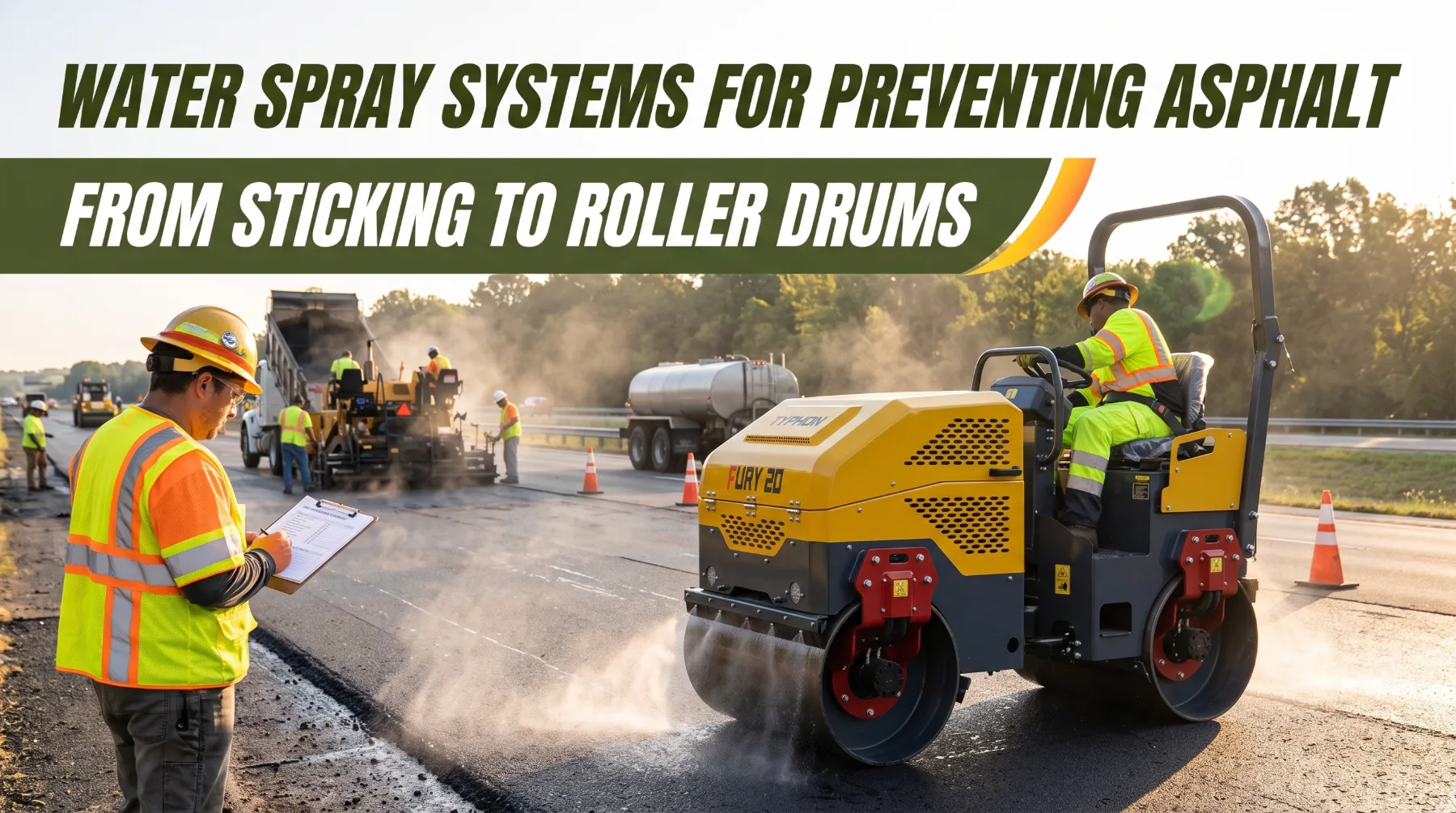
Asphalt compaction leaves little room for error. Hot mix arrives at the jobsite, the paver lays it down, and roller operators have a limited window to bring the mat to the required density while the material is still workable. During that window, every pass of the drum affects the finished surface. When hot asphalt sticks to a steel drum, the drum carries material away from the mat, leaves behind torn or rough patches, and builds up a layer of material that affects every pass that follows.
Water spray systems are the main defense against this problem. A thin, even film of water on the drum surface helps keep hot asphalt from bonding to the steel. The drum rolls cleanly across the mat, the surface stays smooth and uniform, and operators spend their time compacting rather than stopping to scrape off buildup. A spray system that works correctly supports both productivity and finish quality from the first pass to the last.
Like any system on a road roller, spray performance depends on how well it is understood, operated, and maintained. Blocked nozzles, dirty water, empty tanks, and poorly adjusted spray rates can all lead to sticking, uneven coverage, or excess water on the mat. This guide explains how drum water spray systems work, how water reduces asphalt adhesion, and how to keep spray coverage consistent. It also covers water supply and filtration, coordinating spray use with the compaction process, and the inspections and maintenance that keep the system ready for every shift. When operators and crews apply these practices, the spray system delivers clean drums, consistent results, and fewer interruptions on every paving job.
Understanding Drum Water Spray Systems
A drum water spray system delivers water from an onboard tank to the surface of the roller drum. Its job is simple: keep a controlled, even film of moisture on the steel so hot asphalt does not adhere to it. The system runs continuously or intermittently while the roller works, depending on the machine design and the operator's settings.
Most drum spray systems share a common set of components, although the exact arrangement varies by model:
Water tank: Holds the water supply, often mounted on the roller frame. Some machines have a single tank, while others use separate tanks or a shared tank feeding front and rear drums.
Pump: Moves water from the tank through the lines to the spray bars. Many machines use one or more electric pumps, and some include a backup pump for redundancy.
Filters and strainers: Remove debris and sediment before water reaches the pump and nozzles. Filters may be located at the tank fill opening, in the tank outlet, and inline before the spray bars.
Lines, hoses, and valves: Carry water to the spray bars and control flow.
Spray bars and nozzles: Distribute water across the drum's working width in a consistent pattern.
Scrapers or wiping pads: Mounted against the drum surface on many machines, these help spread water evenly and remove small amounts of material before they build up.
Controls: Allow the operator to switch the system on or off and, on many machines, adjust the spray rate or select intermittent operation.
Many modern rollers offer variable or interval spray control. Instead of running water at a single fixed rate, the operator can adjust the flow to match conditions. Some systems also pause the spray automatically when the roller stops moving, which helps prevent water from pooling on the mat.
Spray system designs differ between machines, and controls that look similar may behave differently. Operators should review the manufacturer's instructions for the specific roller to understand how the system is configured, how the controls work, and what settings are recommended for different conditions. Knowing where the filters, drain points, and pump are located also makes daily checks and troubleshooting faster.
Key takeaway: A drum spray system uses a tank, pump, filters, spray bars, and nozzles to keep a controlled film of water on the drum, so learn how the specific machine's system and controls work before operating it.
Spray Coverage and Nozzle Inspection
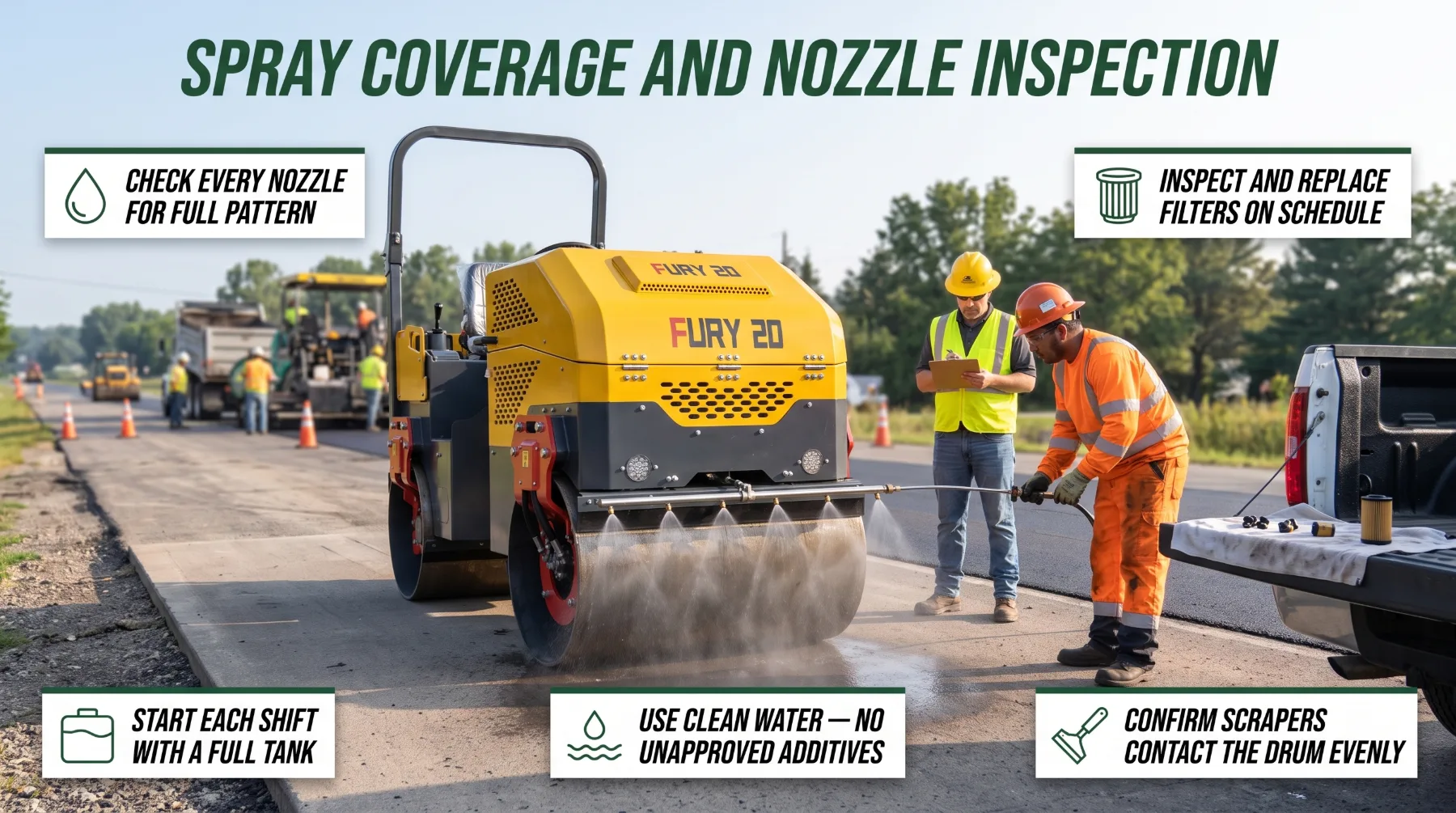
Consistent spray coverage helps prevent asphalt from sticking to the drums during compaction. Before starting a paving shift, inspect the roller's spray bars and check that every nozzle produces an even fan pattern across the drum surface. Look for blocked openings, damaged nozzles, uneven flow, or dry areas that could affect drum cleanliness and compaction quality.
Clean water and properly maintained filters are essential for reliable spray system operation. Inspect the tank, fill strainer, filters, and visible connections for contamination or damage. Start the shift with sufficient clean water for the planned work, and use only additives specifically approved by the roller manufacturer and paving specifications. Keep disconnected fittings protected from dirt and debris.
Drum scrapers also contribute to consistent operation. Check that the scrapers contact the drum evenly and are free from excessive wear or damage. If spray coverage is uneven or a nozzle remains blocked, stop and correct the problem according to the manufacturer's procedure before continuing compaction. Keep the engine off and the system safely depressurized before cleaning or servicing components.
Key takeaway: Inspect every nozzle, maintain clean water and filters, and verify even spray coverage and scraper contact before beginning asphalt compaction.
How Water Reduces Asphalt Adhesion
Hot mix asphalt is sticky by nature. The binder that holds the aggregate together is designed to bond, and at compaction temperatures it readily clings to clean, dry steel. When the drum rolls over the mat without a barrier between the steel and the asphalt, some of the material can transfer to the drum surface.
A thin film of water acts as that barrier. As the drum rolls, the water sits between the steel and the hot mat, limiting direct contact between the binder and the drum. Part of the water turns to vapor when it meets the hot asphalt, which helps keep the drum surface slightly cooler and less receptive to sticking. The result is a drum that releases cleanly from the mat with each rotation.
More water is not always better. Excessive spray wastes the onboard supply, which means more frequent refills and more downtime. It can also run off the drum onto the mat, creating puddles and cooling the surface of the asphalt. Cooling the mat too quickly can reduce the time available to achieve density. Water can also collect at the edges of the mat or in low spots, creating slippery conditions for workers and other equipment. The goal is the minimum amount of water that keeps the drum clean.
Rubber tire rollers present a different situation. Their tires can also pick up asphalt, and some machines use water or a manufacturer-approved release agent applied to the tires. Only use release agents approved for asphalt work and for the machine. Never use diesel fuel or other petroleum solvents as a release agent, since they can soften and damage the asphalt binder and create environmental and fire hazards.
Key takeaway: A thin film of water prevents hot binder from bonding to the drum, so use enough spray to keep the drum clean while avoiding the excess water that wastes supply and cools the mat.
Maintaining Consistent Spray Coverage
Even the best spray rate will not prevent sticking if the water does not reach the entire drum. Coverage must be consistent across the full working width, from one edge of the drum to the other. Any section of the drum that stays dry can begin picking up material, and that buildup will grow with every rotation.
Spray nozzles are designed to produce overlapping patterns that wet the drum evenly. When one nozzle becomes blocked, partially clogged, or damaged, a dry stripe can form on the drum. That stripe often shows up first as a line of asphalt buildup on the drum or a matching rough line on the mat. Worn or misaligned nozzles can also produce uneven patterns, with too much water in one area and too little in another.
Scrapers and wiping pads play an important supporting role. On machines equipped with them, they help spread water across the drum and remove small amounts of material before it can accumulate. A worn, misadjusted, or damaged scraper may leave gaps where material builds up, even when the spray itself is working properly. Pads that are dried out, hardened, or packed with debris can lose their ability to distribute water evenly.
During work, keep an eye on the drum and the mat. Signs of a coverage problem include material building up on part of the drum, small pieces of asphalt torn from the mat surface, a streaked or rough finish, or a section of the drum that appears dry while the rest stays wet. Address these signs promptly. A small coverage problem that is ignored can quickly turn into widespread buildup and surface defects.
Never attempt to clear a blocked nozzle or adjust a scraper while the drum is turning or the roller is running. Stop the machine in a safe location, shut down the engine, and follow the manufacturer's procedure before working near the drum.
Key takeaway: Water must cover the full drum width evenly, so check spray patterns, nozzles, and scrapers before compaction and stop to correct any dry stripes or buildup as soon as they appear.
Spray System Maintenance and Cold Weather Protection
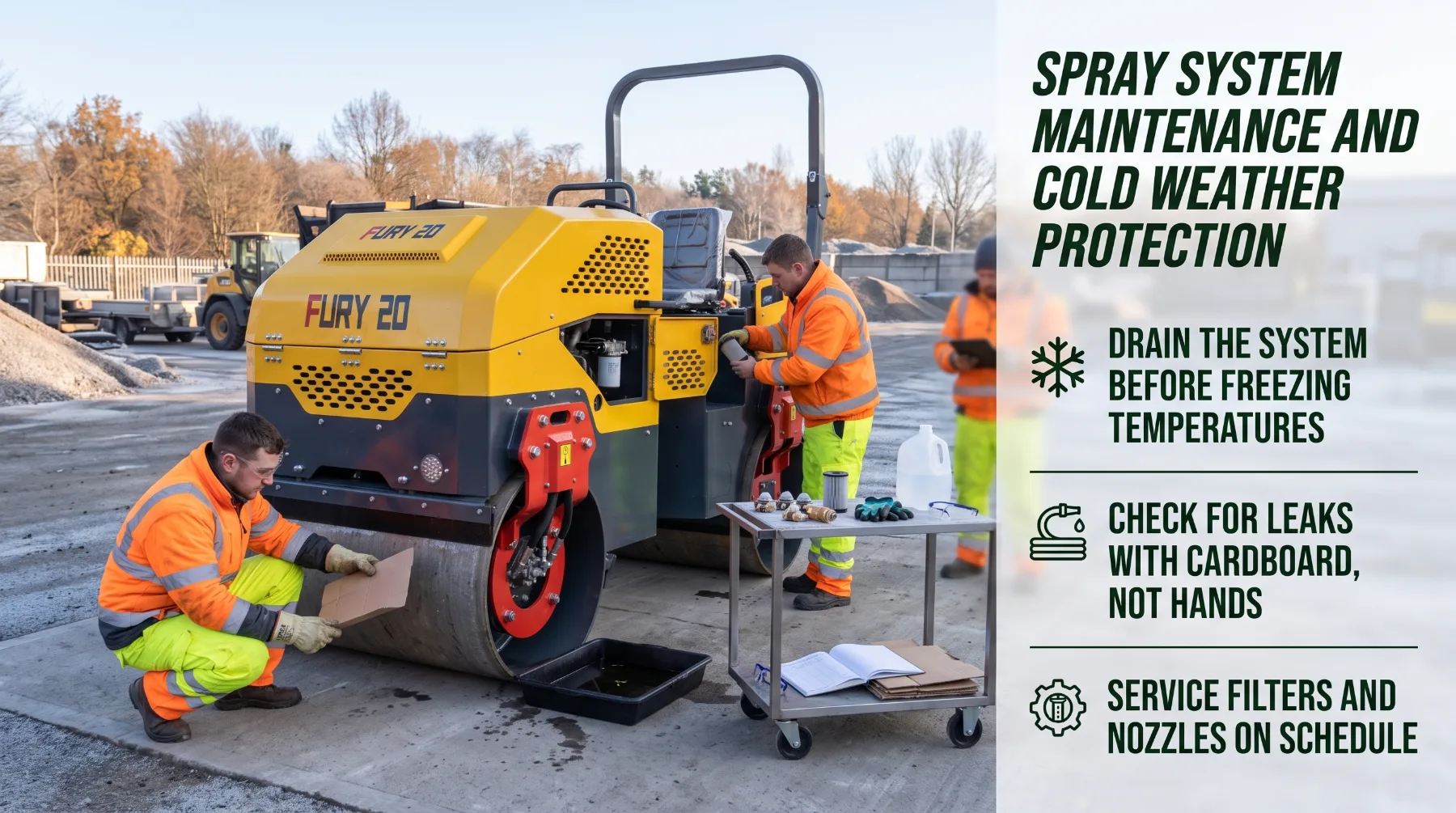
Regular spray system maintenance helps keep the roller ready for each paving shift. Follow the manufacturer's service schedule for cleaning the tank, inspecting filters, and replacing worn or blocked nozzles. Check the spray bars and hoses for damage, loose connections, and signs of leakage, and record completed maintenance in the service log.
Cold weather requires additional attention because water left inside the tank, pump, hoses, or spray bars can freeze and damage components. When freezing temperatures are expected, drain and protect the system according to the manufacturer's instructions. Collect discharged water appropriately, and confirm that the system is prepared for the forecast conditions before storing or operating the roller.
Leak inspections should be performed with the machine safely shut down and pressure relieved as specified by the manufacturer. Never use bare hands to search for hydraulic or pressurized fluid leaks. Use cardboard or another suitable method from a safe position, and wear the required protective equipment when handling filters, nozzles, or drain components.
Key takeaway: Maintain filters and nozzles on schedule, inspect for leaks safely, and protect the spray system against freezing by following the manufacturer's cold-weather procedures.
Spray System Inspection and Maintenance
A spray system that is inspected and maintained on schedule is far less likely to fail during paving. Problems such as clogged filters, leaking hoses, and worn nozzles usually develop gradually, and routine checks catch them before they interrupt work or damage the mat. Building spray system checks into the daily pre-operation routine keeps the roller ready for every shift.
Perform inspections with the roller parked on firm, level ground, the engine off, the key removed, and the parking brake applied, unless a specific check requires the system to run. Allow hot components to cool before handling them, since drums and nearby parts can remain hot long after work ends.
Include the following in regular inspections:
Tank: Check the water level, look for cracks or leaks, and confirm that the cap and fill strainer are in place and undamaged.
Pump: Listen for unusual noise, check for leaks, and confirm the pump delivers steady flow when the system runs.
Filters: Inspect, clean, or replace filters at every location in the system according to the manufacturer's schedule.
Hoses and lines: Look for cracks, kinks, abrasion, loose connections, and leaks.
Valves: Confirm that valves open and close correctly and do not leak.
Spray bars and nozzles: Check for blockages, damage, and misalignment, and confirm each nozzle produces a full pattern.
Scrapers and wiping pads: Inspect for wear, damage, and correct contact with the drum, and replace pads that are hardened or packed with debris.
Controls: Test the on and off function, spray rate settings, and any automatic or interval functions.
When cleaning nozzles, use the method the manufacturer recommends. Many nozzles can be removed and cleaned or replaced. Avoid enlarging nozzle openings with wire or sharp tools, since a damaged opening produces an uneven spray pattern. Keep spare nozzles and filter elements on hand so worn parts can be replaced quickly.
Before cleaning, adjusting, or repairing any part of the spray system near the drum, secure the machine and follow the required shutdown procedure. Never work on spray bars, nozzles, or scrapers while the engine is running or the drum can move. Where the manufacturer requires electrical isolation for pump or control repairs, follow that procedure as well. Repairs to electrical components should be handled by qualified personnel.
Cold weather calls for extra precautions. Water left in the tank, pump, filters, and lines can freeze and crack components. When freezing temperatures are expected, drain the system completely or follow the manufacturer's approved method for cold weather protection. Open drain points, run the pump briefly only if the manufacturer allows it, and store the roller in a protected area where possible.
At the end of each shift, clean the drums and scrapers of any remaining asphalt using approved methods, check the tank and filters, and report any defects. Keep a record of filter changes, nozzle replacements, and repairs so recurring problems can be identified and addressed before they affect production.
Key takeaway: Inspect the tank, pump, filters, hoses, nozzles, scrapers, and controls on schedule, follow the shutdown procedure before working near the drum, and drain the system when freezing temperatures are expected.
Conclusion
Water spray systems play a vital role in asphalt compaction by keeping hot material from sticking to roller drums. A well-designed system delivers a controlled film of water that prevents the binder from bonding to the steel, allowing the drum to release cleanly and leave a smooth, uniform surface. The right amount of water depends on asphalt temperature, mix characteristics, weather, and roller design, and the goal is always to keep the drum clean without leaving excess water on the mat. Consistent coverage across the full drum width prevents the dry stripes that lead to buildup, while clean water, a planned supply, and well-maintained filters keep nozzles flowing freely. Coordinating spray use with the rolling pattern and project specifications ensures the system supports good compaction instead of trying to replace it. Routine inspection and maintenance, including cold weather protection, keep every component ready for work. When operators understand their spray system, monitor it closely, and maintain it on schedule, their rollers deliver the clean drums, consistent finishes, and dependable performance that every paving project demands.
FAQs
Why do road rollers use water spray systems?
Water spray systems keep a thin film of water on the drum, which prevents hot asphalt from sticking to the steel during compaction. This helps protect the surface finish, reduces buildup on the drum, and limits interruptions for cleaning.
Can blocked nozzles affect asphalt finishing?
Yes. A blocked or damaged nozzle can leave a dry stripe on the drum, where asphalt begins to build up. That buildup can tear or roughen the mat surface and leave visible lines in the finished pavement.
Should operators use as much water as possible?
No. Excess water wastes the onboard supply, can pool on the mat, and may cool the asphalt surface too quickly. Use the minimum spray needed to keep the drum clean, following the manufacturer's guidance and the needs of the compaction task.
What kind of water should be used in the spray system?
Use clean water of the type specified by the manufacturer. Water containing sand, silt, rust, or other debris can clog filters and nozzles. Only use additives that the manufacturer approves for the system.
Can diesel fuel be used to keep asphalt from sticking?
No. Diesel fuel and other petroleum solvents can soften and damage the asphalt binder and create environmental and fire hazards. Use water or a release agent approved for asphalt work and for the machine.
Which parts require regular inspection?
Check the tank, pump, filters, hoses, valves, spray bars, nozzles, scrapers or wiping pads, and controls for blockages, leaks, wear, and damage. Follow the manufacturer's maintenance schedule and inspect more often when water quality is poor.
How should the spray system be protected in cold weather?
When freezing temperatures are expected, drain the tank, pump, filters, and lines completely, or follow the manufacturer's approved cold weather procedure. Frozen water can crack components and disable the system.