Transport Dimensions and Jobsite Mobility for Scissor Lifts
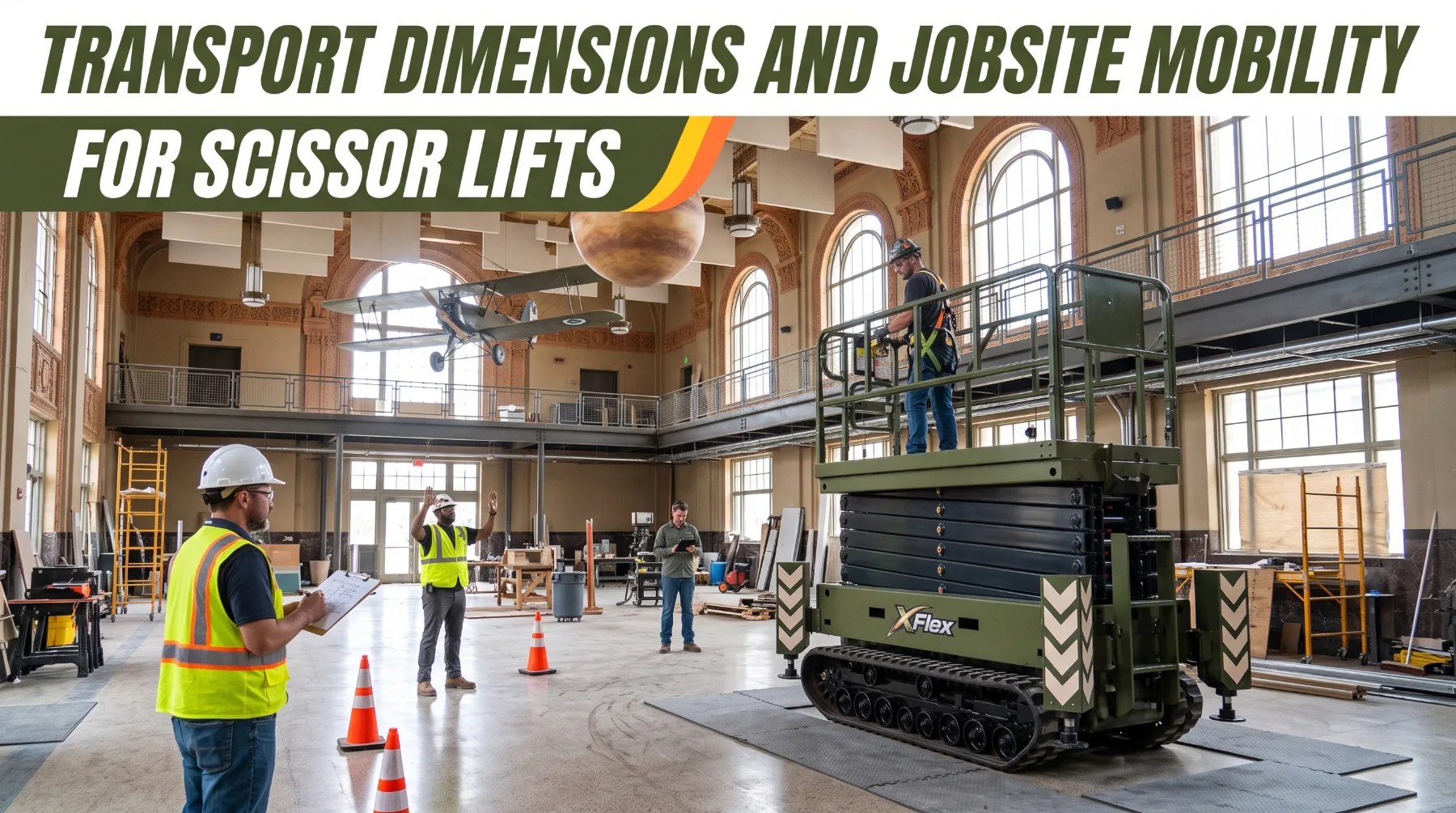
Transport dimensions and jobsite mobility play an important role in delivering scissor lifts to construction, maintenance, installation, and facility management projects. Before equipment arrives, contractors must consider whether the lift can pass through site entrances, travel along access roads, move around buildings, and reach the intended work area. Restricted doorways, narrow corridors, low overhead structures, and limited unloading space can create logistical challenges when equipment dimensions have not been checked in advance.
Selecting a suitable scissor lift involves more than comparing platform height and lifting capacity. Overall length, width, transport height, machine weight, turning requirements, and ground conditions all influence how easily the equipment can be delivered and positioned. A lift that meets the working height requirements may still be unsuitable if it cannot pass through the available access route or if the ground cannot support its weight. Careful planning helps contractors avoid delivery delays, unnecessary repositioning, and unsafe movement during transportation and onsite operation.
Understanding Transport Dimensions
Transport dimensions describe the overall size of a scissor lift in its designated transport configuration. The main measurements include overall length, width, and height, along with the position of the platform and any components that extend beyond the machine's main frame. These measurements help contractors determine whether the lift can pass through gates, doorways, loading areas, and other restricted access points. Manufacturer specifications should always be checked for the exact model being considered.
Machine height is particularly important when transporting equipment through enclosed spaces or beneath overhead structures. Door frames, warehouse entrances, utility lines, pipes, and covered walkways can restrict vertical clearance. Contractors should confirm the lift's transport height and account for any protruding components or accessories. They should also distinguish between transport height and maximum platform height, since these measurements describe different operating configurations.
Overall width affects whether a scissor lift can travel through narrow corridors, between storage racks, or along restricted construction access routes. Even a small difference in width can determine whether the equipment fits through a doorway without removing obstacles or changing the route. Length also influences turning space, trailer positioning, and the ability to maneuver around corners. Reviewing all three dimensions together provides a more accurate assessment than relying on a single measurement.
Machine weight should be evaluated alongside its physical dimensions. A compact lift may fit through a narrow entrance but still exceed the permitted loading capacity of a floor, ramp, or transport vehicle. Contractors should check the operating weight, applicable axle or wheel loads where relevant, and the manufacturer's handling requirements. These details help determine whether the equipment can be delivered and moved safely across the intended route.
Measuring Jobsite Access
Jobsite access should be assessed before a scissor lift is ordered or delivered. Contractors should measure gate openings, doorway widths, overhead clearances, corridor dimensions, and turning areas along the entire planned route. Measuring only the entrance can lead to problems if the lift encounters a narrower passage or a sharp turn farther inside the property. A complete route assessment helps identify obstacles before equipment arrives.
Turning space requires particular attention in confined construction areas. A lift may fit through a straight passage but lack sufficient room to change direction near a corner, doorway, or loading bay. The machine's wheelbase, steering design, overall length, and turning characteristics influence how it can maneuver. Contractors should consult the manufacturer's specifications and allow adequate clearance for controlled movement without contacting walls, equipment, or structural components.
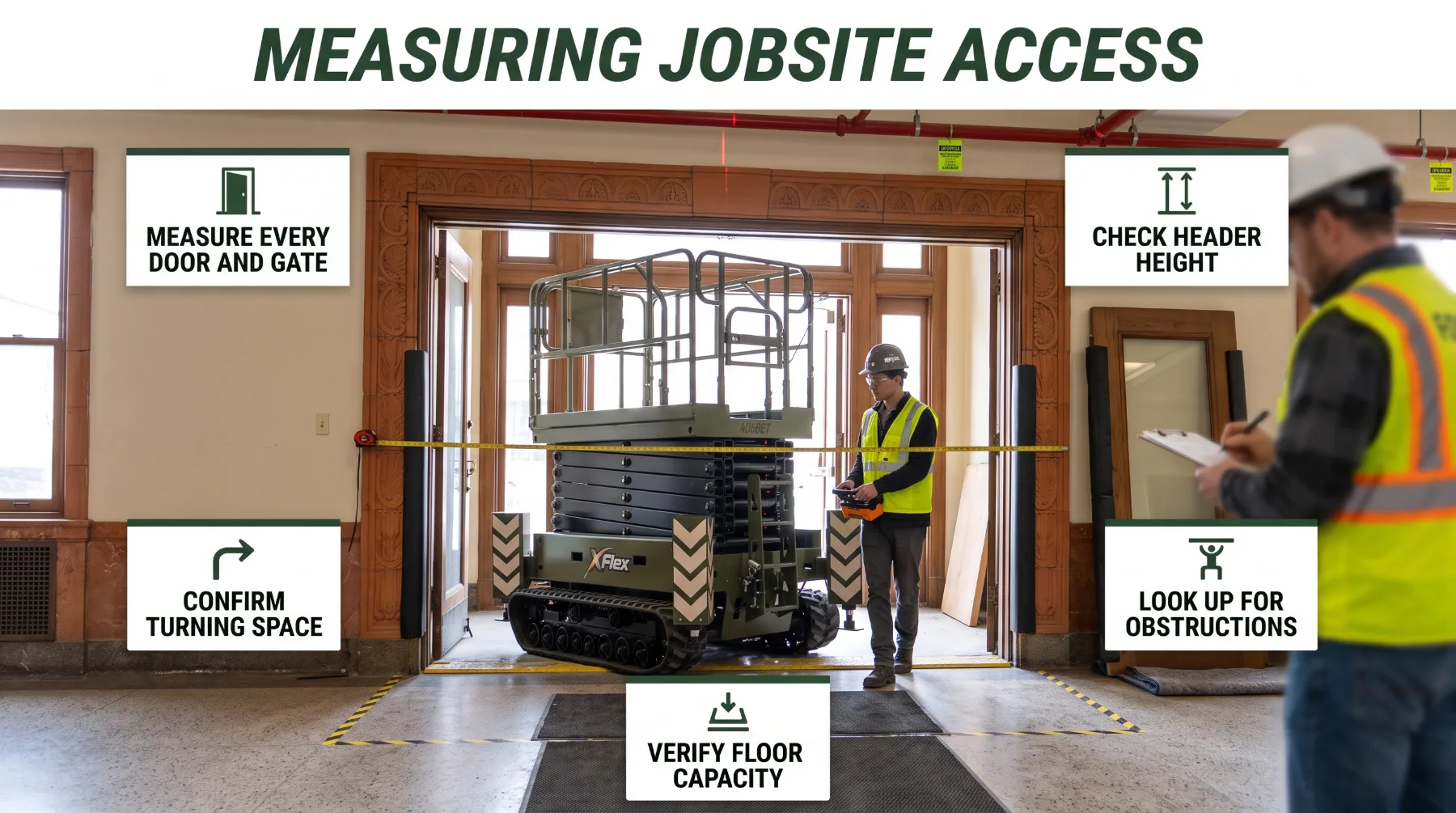
Overhead obstructions must also be considered during route planning. Low ceilings, beams, pipes, lighting fixtures, and temporary structures can restrict movement even when the lift's transport height appears suitable. Site personnel should inspect the complete route and identify hazards that could contact the machine or interfere with safe travel. Where overhead clearance is uncertain, the route should be measured and verified before movement begins.
Temporary site conditions can change access requirements throughout a project. Construction materials, parked vehicles, stored equipment, and waste containers may narrow travel paths that were previously clear. Contractors should coordinate with other trades to keep access routes open and establish alternative routes when necessary. If the available clearance is insufficient, the team should select suitable equipment or revise the delivery plan rather than attempt to force the lift through a restricted area.
Ground Conditions and Mobility
Ground conditions affect a scissor lift's ability to travel safely and remain stable during operation. The surface must be suitable for the machine's weight and wheel loading, particularly when moving across temporary access roads, compacted soil, concrete slabs, or elevated floors. Contractors should confirm that the supporting surface can carry the equipment and account for any restrictions associated with underground utilities, trenches, suspended slabs, or other structural features.
Soft soil, loose gravel, mud, potholes, and construction debris can interfere with traction and steering. Uneven surfaces may also create instability or cause the machine to become stuck. Operators should inspect travel routes before moving the lift and remove avoidable obstructions. Where ground conditions are unsuitable, the team should establish an approved access route or use an alternative machine that is designed for the environment.
Slopes and changes in elevation require particular caution. Scissor lifts have manufacturer-defined limits for travel on gradients and for operating on inclined surfaces. These limits can differ depending on the model and whether the platform is raised or lowered. Operators must follow the specific machine's instructions and should never assume that a lift can safely cross a slope simply because it can travel over the surface.
Indoor and outdoor applications may require different mobility considerations. Some scissor lifts are designed primarily for smooth, level floors, while other models are equipped for more demanding outdoor conditions. Tire type, ground clearance, drive configuration, and permitted operating surfaces influence suitability. Selecting equipment for the actual terrain and work environment helps prevent mobility problems and supports safer positioning at the required work location.
Maneuvering Through Restricted Areas
Compact scissor lifts can be useful in confined work areas where access space is limited. Their dimensions may allow them to pass through narrower entrances and move between fixed structures, making them practical for indoor maintenance, electrical installation, ceiling work, and facility repairs. However, compact size does not remove the need to verify turning space, overhead clearance, and the condition of the travel surface.
Operators should plan the travel route before moving the machine through restricted areas. The route should account for corners, doorways, floor transitions, nearby equipment, and potential obstructions. When visibility is limited, a trained spotter can help guide movement from a safe position using agreed signals or communication equipment. Operators should stop immediately if instructions are unclear or the route becomes obstructed.
Pedestrian safety is another important consideration in crowded jobsites. Workers may be moving tools, carrying materials, or operating other machinery near the lift's travel path. Designated routes, warning signs, controlled access, and clear communication can reduce the risk of collisions. Operators should maintain a suitable speed, remain alert to changing conditions, and avoid moving the machine when people are too close to its wheels or travel path.
Overhead and surrounding hazards must be considered during both travel and positioning. Door frames, suspended pipes, electrical installations, beams, and other structures may create contact risks. Operators should follow the manufacturer's travel procedures, keep the platform in the required position for movement, and use only approved methods for navigating restricted areas. If safe clearance cannot be maintained, movement should stop until the route or equipment arrangement has been corrected.
Selecting a Suitable Transport Vehicle
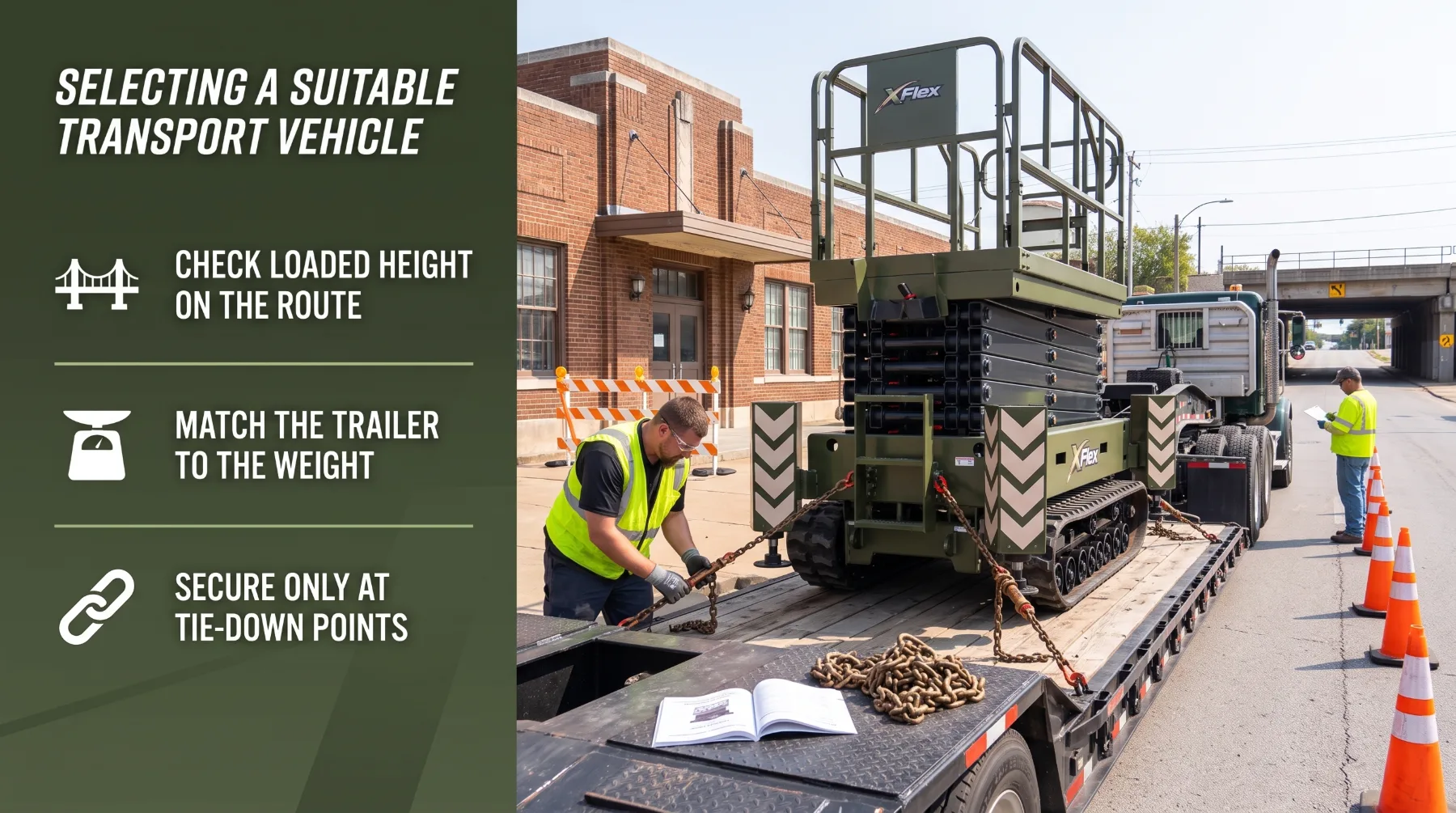
Scissor lifts often require trailers or other suitable transport vehicles when moving between jobsites. The selected transport arrangement must accommodate the lift's dimensions, weight, loading configuration, and securement requirements. Contractors should verify the transport vehicle's rated capacity and ensure that the lift can be loaded, positioned, and secured according to the instructions provided by both manufacturers.
Trailer deck dimensions and loading height can affect the ease and safety of equipment delivery. The lift must fit within the available deck space without creating an unsuitable load position or interfering with required securement points. Loading ramps must be appropriate for the machine's weight and configuration, and the loading area should provide stable ground and sufficient space for controlled movement. Loading procedures should follow the manufacturer's instructions, including any restrictions on ramp angle or travel direction.
Proper load securement is essential during road transportation. The lift should be secured using approved tie-down points and suitable equipment in accordance with the manufacturer's requirements and applicable transport regulations. Before departure, the responsible person should confirm that the load is stable, the securement system is correctly fitted, and no component can shift or become damaged during transit. Transport planning should also account for legal vehicle weight limits and any applicable height or width restrictions.
Unloading requires the same level of preparation as loading. The destination should have adequate space for the transport vehicle to position safely, deploy ramps, and release the equipment without exposing workers to traffic or unstable ground. Personnel should remain clear of the unloading path and follow an established communication procedure. Confirming these arrangements before dispatch helps reduce delays and prevents hurried unloading decisions when site conditions are unsuitable.
Pre-Delivery Planning and Inspection
Pre-delivery planning helps ensure that the scissor lift can be unloaded and moved to the intended work area without unnecessary delays. Contractors should confirm delivery times, entrance dimensions, unloading space, ground conditions, and the availability of suitable transport equipment. Coordination with site managers and other trades can help prevent access routes from being blocked when the machine arrives.
The intended operating location should also be evaluated before delivery. Contractors need to confirm that the floor or ground can support the lift, that sufficient space is available for positioning, and that overhead hazards have been identified. Work near openings, trenches, loading docks, or changes in floor level requires additional assessment and suitable protective measures. The selected lift should match both the access route and the conditions where the work will take place.
Before use, operators should complete the inspections required by the manufacturer. Mobility-related checks may include tires or wheels, steering, brakes, drive systems, controls, and visible structural components. Platform gates, emergency controls, warning devices, and other safety features should also be checked according to the applicable inspection procedure. Any defect that could affect safe travel or operation must be reported and corrected before the lift is used.
Documentation and operator preparation complete the pre-delivery process. The equipment specifications, operating instructions, transport requirements, and applicable site procedures should be available to the responsible personnel. Operators must be trained and authorized for the equipment they use, including its travel limits, controls, and emergency procedures. Combining route verification with proper inspection and training helps ensure the lift can reach the work area and perform its intended tasks safely.
Conclusion
Transport dimensions and jobsite mobility determine whether a scissor lift can be delivered, maneuvered, and positioned safely for its intended application. Contractors should verify the machine's overall length, width, height, and weight while checking doorways, turning areas, overhead clearance, transport vehicle capacity, and loading arrangements. Ground conditions, slope limitations, pedestrian traffic, and surrounding obstructions also influence how the lift can move around a worksite. Completing these checks before delivery helps prevent access problems, equipment damage, and unnecessary delays. Combined with pre-use inspections, trained operators, and compliance with manufacturer instructions, careful mobility planning supports safer equipment handling and more efficient project operations.
Frequently Asked Questions
Which scissor lift dimensions matter for transport?
Overall length, width, stowed height, and machine weight all matter, along with transport configuration. Stowed height changes significantly depending on whether the guardrails are up or folded. Weight affects trailer selection, ramp ratings, floors, and elevators. Always use the manufacturer's published figures for your exact model, and add the trailer deck height to calculate the loaded height for the haul route.
Why should contractors measure access routes?
Doorways, gates, corners, and overhead obstacles may prevent a lift from reaching the work area. A lift that fits through an outer entrance may not fit through inner doors, under a low header, or around a tight turn. Measuring the full route before delivery helps you choose the right model, plan door removal or floor protection, and avoid damage to the building and the machine.
Can a scissor lift travel over uneven ground?
Only within the specific model's permitted travel conditions and ground limits. Slab lifts are designed for smooth, firm, level surfaces, while rough-terrain models handle more varied ground within their rated limits. Both have gradeability and side slope limits that apply in the stowed position, and most require nearly level ground when the platform is raised. Avoid soft soil, fresh backfill, and holes, and keep pothole protection clear and working.
What should be checked before moving a scissor lift?
Verify the route, inspect tires, brakes, steering, pothole protection, platform gates, and controls, and test emergency stops and the tilt alarm. Walk the route for soft spots, debris, overhead hazards, and pedestrians, and assign a spotter where visibility is limited. Tag out the lift if any defect affects safe travel.