Daily Dumper Inspection Checklist for Safety and Preventive Maintenance
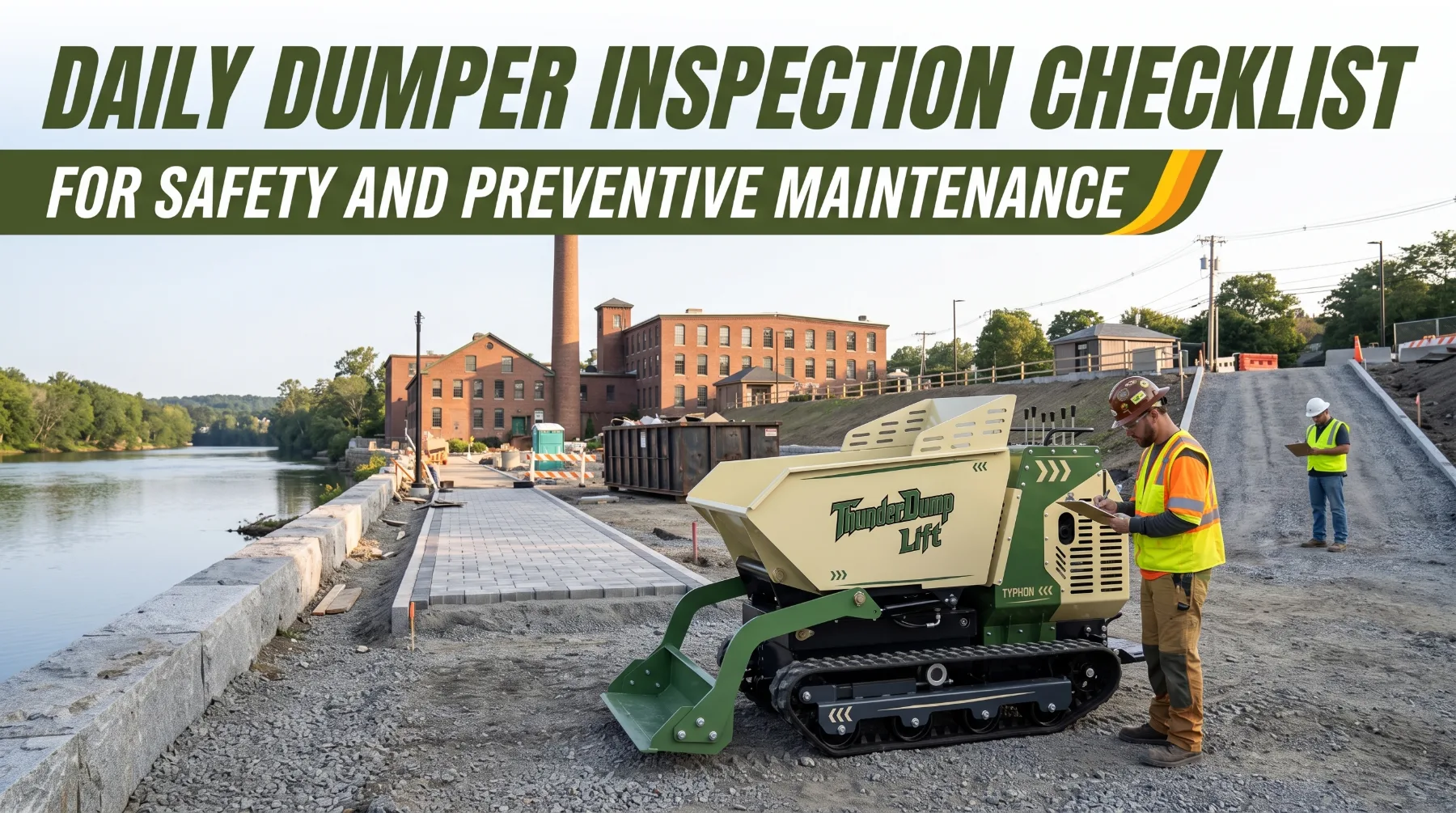
Dumpers transport gravel, soil, demolition debris, and other materials across construction sites where uneven ground, slopes, and changing surface conditions can increase operating risks. Regular inspections help identify developing faults before they cause equipment damage, unexpected downtime, or injuries. When several operators share a machine, assigning clear responsibility for each pre-use check is essential to prevent defects from being overlooked.
Tracks, rollers, brakes, steering, hydraulic hoses, and the dump body all require attention before work begins. Packed mud can restrict undercarriage movement, worn braking components can reduce stopping ability, and damaged hydraulic hoses may lead to leaks or system failure. Warning alarms, lights, and other safety devices must also function correctly so operators can control the machine and remain aware of nearby hazards.
An effective daily inspection uses the manufacturer's checklist and involves physically checking each item rather than relying on previous records or assumptions. Operators should document defects, report concerns promptly, and keep the dumper out of service when faults affect critical systems until qualified personnel complete the necessary repairs. Safe parking, suitable ground conditions, and clear communication between operators and supervisors help maintain reliable performance throughout the working day.
Checking Tires, Tracks, and Undercarriage
The inspection begins where the machine meets the ground. Tires and tracks carry every load, provide traction on slopes and soft ground, and absorb the impact of rough haul routes. A problem here affects stability, braking, and steering, so it deserves a careful look before anything else. Start every inspection with the dumper parked on firm, level ground, the body fully lowered, the parking brake applied, the engine off, and the key removed.
On wheeled dumpers, inspect each tire for cuts, punctures, bulges, exposed cords, and embedded objects such as rebar, nails, or sharp stone. Check the tread for abnormal wear, which can point to incorrect inflation, misalignment, or worn steering components. Where the tires are pneumatic, confirm inflation with a gauge according to the manufacturer's specification rather than judging by eye, since an underinflated tire can look normal while affecting stability on a slope. Look at the wheel rims for cracks and dents, and check that wheel nuts are present and secure. Never attempt to repair a damaged tire or rim yourself. Tire and rim servicing carries serious hazards and belongs with trained personnel using the correct equipment.
Tracked dumpers require a different set of checks. Inspect rubber tracks for cuts, missing lugs, exposed steel cords, and damaged guide lugs. Look for signs that the track is running out of line, such as uneven wear on one side. Check track tension following the manufacturer's procedure, since a track that's too loose can derail and one that's too tight speeds wear on rollers, idlers, and sprockets. Confirm that the rollers turn freely and look for oil around their seals, which often signals a failing roller.
The undercarriage should be clear of material that could interfere with movement or conceal developing problems. Mud, clay, gravel, and debris packed around rollers, sprockets, and track frames can stop components from turning and hide cracks or leaks, exactly as the river silt did on the promenade project. Clear buildup with a shovel or scraper, never with your hands near moving parts, and only with the machine shut down and secured. In wet or freezing conditions, cleaning at the end of each shift prevents material from hardening overnight and makes the morning inspection faster and more accurate.
Key takeaway: Inspect tires for damage, wear, and correct inflation, check tracks for damage, tension, and debris, and keep the undercarriage clean so nothing restricts movement or hides a developing problem.
Inspecting the Dump Body and Lifting System
Next comes the system that does the dumper's real work. The dump body and lifting system raise and discharge heavy loads hundreds of times each week, often with uneven or sticky material. Small defects here can grow quickly, and failures can be dangerous for anyone near the machine.
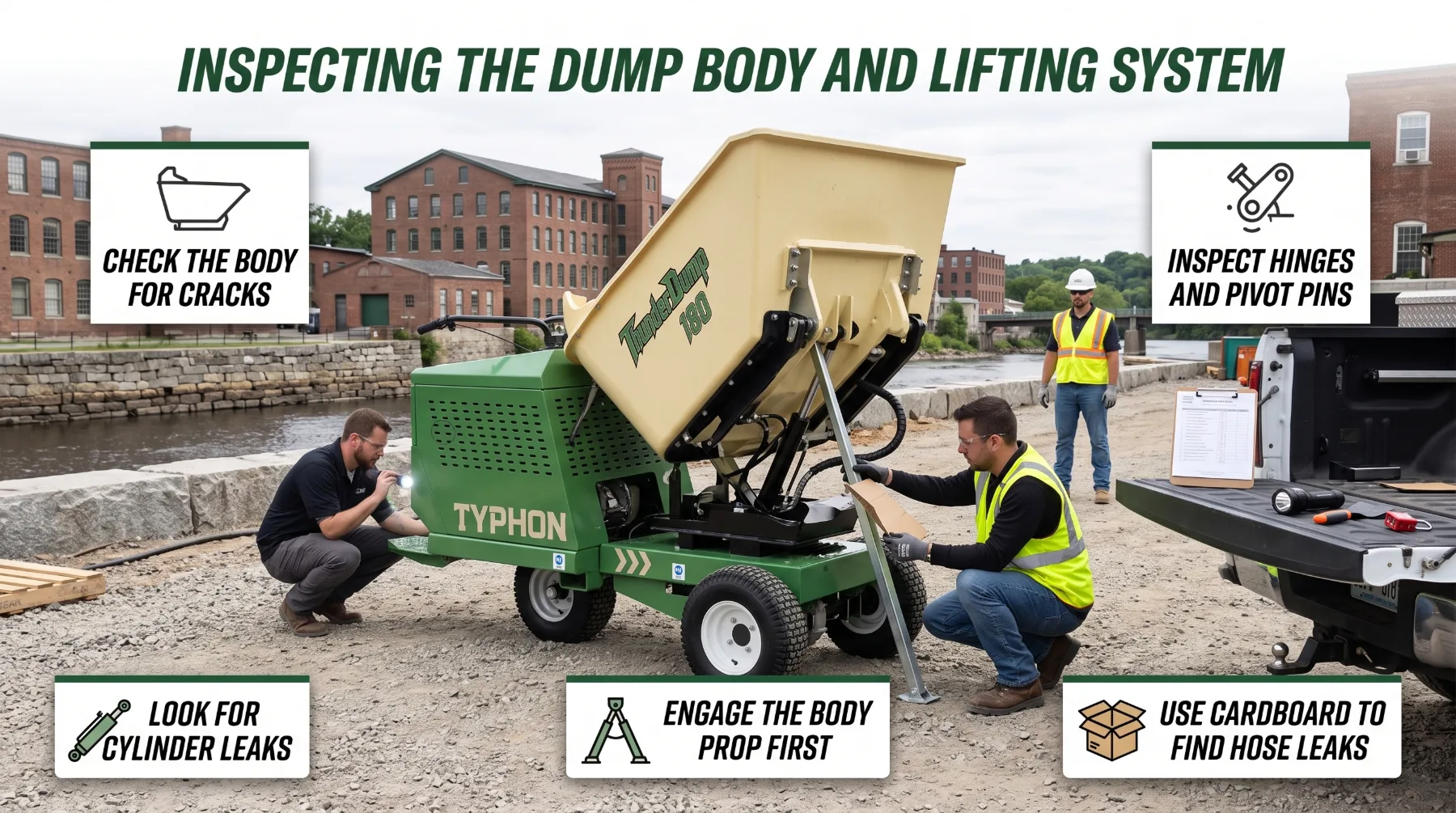
Check the dump body for cracks, bent panels, damaged welds, and loose or missing fasteners, paying close attention to the hinge area, body mounts, and the floor where impact from loading is greatest. Inspect pivot pins and hinges for excessive play, missing retainers, and signs of wear such as fresh metal shavings or elongated holes. Look for material buildup that could affect discharge. Dried clay and concrete left in corners and along the floor trap future loads, add weight, and can cause the body to release material unevenly. On swivel-skip dumpers, check the rotation mechanism and its locking device as well.
Hydraulic cylinders, hoses, fittings, and lifting components should be inspected for leaks or visible damage. Look at the cylinder rods for scoring, pitting, and bends, and watch for a ring of oil or caked dust around the cylinder gland that signals a slow leak. Follow each hose along its length and look for cracks, abrasion, bulges, and kinks, especially where hoses flex as the body moves or pass close to brackets and the chassis. A hose that rubs against metal, like the one on the promenade dumper, may look fine from a distance until its cover wears through. Check fittings for dampness and confirm that hose clamps and guards are in place.
Many inspections can be completed with the body fully lowered. When a check requires the body to be raised, the rule is absolute. Operators should never work beneath a raised body unless the manufacturer's approved mechanical support, such as a body prop or safety strut, is engaged and the machine is isolated according to the manufacturer's procedure. Hydraulic pressure alone isn't a support. A hose failure, a valve leak, or an accidental bump of the control can bring the body down without warning. Learn where your machine's body prop is stored, how it engages, and how to confirm it's seated before anyone reaches beneath the body.
Key takeaway: Check the dump body, hinges, and pivot pins for cracks, wear, and buildup, inspect cylinders and hoses for leaks and damage, and never work beneath a raised body unless the approved mechanical support is engaged and the machine is isolated.
Testing Brakes and Steering
Brakes and steering are the controls that keep a dumper where the operator intends it to be. On slopes, ramps, haul roads, and confined areas, a small loss of braking or steering performance can turn a routine trip into an emergency. These systems deserve a functional test every day, not just a visual check.
Operators should check the controls and test both systems according to the manufacturer's instructions, in a safe area, before entering the work zone. Choose open, level ground away from people, excavations, and other equipment. With the operator seated and the seat belt fastened, confirm that the service brake brings the empty machine to a smooth, straight stop without pulling to one side. Many dumpers use hydrostatic drives, where releasing the travel control slows the machine, so learn how your model's braking system is designed to work. Test the parking brake as the manual directs. Some manufacturers specify a hold test, such as attempting to drive gently against the applied brake or confirming the machine holds on a defined grade. A parking brake that slips even slightly, as the promenade crew discovered, can't be trusted on a ramp.
Steering should respond smoothly and evenly through its full range. On articulated wheeled dumpers, turn from lock to lock and confirm there's no binding, excessive play, or delay. On tracked dumpers, confirm that each travel control responds correctly and that the machine tracks straight when both controls are applied evenly. Check that every control returns to neutral when released. Articulated machines often include a frame lock bar for transport and service, so confirm that it's removed and stowed before operation, and remember to install it before anyone works near the center joint.
Any unusual response, warning light, or abnormal noise should be investigated before the machine is used. A soft or spongy pedal, a brake that grabs, steering that wanders, grinding or squealing, or a dashboard warning all point to problems that can worsen under load. Stop, park safely, and report the issue. A dumper with faulty brakes or steering should stay out of service until a qualified technician confirms it's safe.
Key takeaway: Test the service brake, parking brake, and steering in a safe area following the manufacturer's instructions before entering the work zone, and investigate any unusual response, warning light, or noise before using the machine.
Checking Engine, Fluids, and Hydraulic Systems
The engine and hydraulic system power everything a dumper does, from travel to tipping. Fluid checks take only a few minutes, yet they catch many of the problems that lead to overheating, hydraulic failure, and expensive engine damage. Engine oil, coolant, hydraulic fluid, fuel, and other service items should be checked according to the machine's maintenance procedure.
Fluid checks should be performed with the machine in the specified condition and only when it's safe to do so. Most manufacturers call for the dumper to be parked on level ground with the engine off, and many specify checking hydraulic fluid with the body fully lowered so the reading reflects the correct level. Check engine oil using the dipstick and confirm the level sits within the marked range. Inspect the coolant level at the overflow or expansion tank, and never remove a radiator or pressure cap while the engine is hot, since scalding coolant can spray out under pressure. Check the hydraulic fluid level through the sight glass or dipstick and look at its condition. Cloudy, milky, or dark fluid with a burnt smell can signal water contamination or overheating. Use only the fluid types and grades the manufacturer specifies when topping up.
Look beyond the fluid levels as well. Inspect the engine compartment for oil, fuel, or coolant leaks, loose or damaged hoses, frayed wiring, and debris packed around the radiator and cooler fins. Check the drive belt for cracks and correct tension where the design allows. Look at the air filter restriction indicator, if fitted, since a clogged filter reduces power and increases wear in dusty conditions. Confirm the fuel level, and keep the fuel cap clean so dirt doesn't enter the tank.
Leaks, damaged hoses, loose connections, and abnormal exhaust conditions may indicate a problem. Fresh drips under the machine, a damp film on hydraulic components, heavy black or white smoke, or unusual engine noise all deserve attention. When checking for hydraulic leaks, never run your hand along a hose or fitting. Pressurized fluid can penetrate skin and cause serious injury that requires immediate medical attention. Use a piece of cardboard instead, and wear gloves and eye protection. Keep hands and tools clear of fans, belts, and hot surfaces whenever the engine compartment is open.
Key takeaway: Check engine oil, coolant, hydraulic fluid, and fuel with the machine in the condition the manufacturer specifies, look for leaks, damaged hoses, and abnormal exhaust, and never search for a hydraulic leak with your hands.
Recording Defects and Reporting Problems
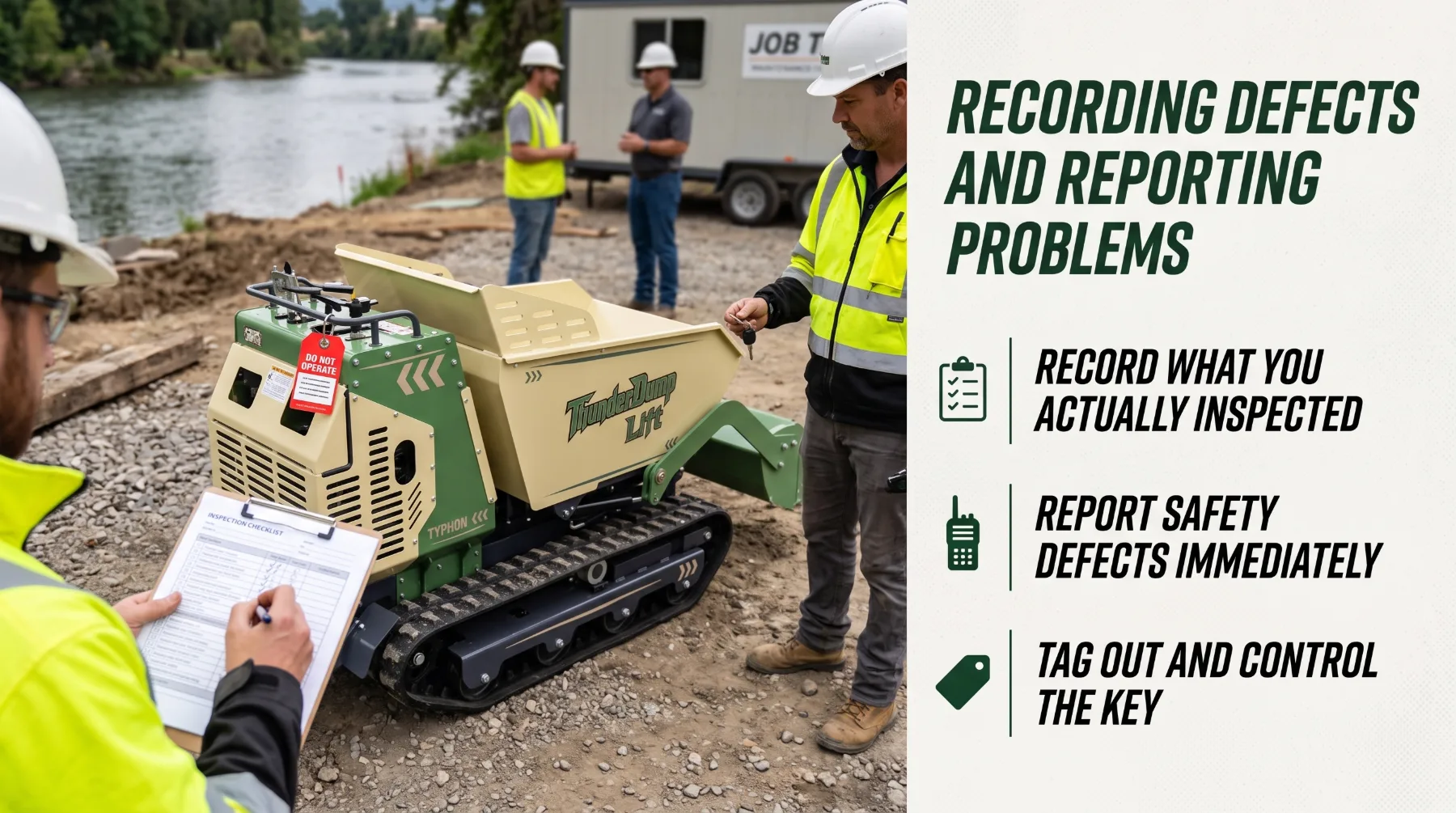
An inspection is only as useful as what happens after it. Inspection findings should be documented using the site's required checklist or reporting system, and every entry should reflect what the operator actually saw and tested. A row of checkmarks completed from memory, like the one on the promenade project, creates a record that looks reassuring while hiding real problems.
Write clear, specific notes. Instead of "hose bad," record which hose, where it's located, and what's wrong, such as a weeping fitting at the left tipping cylinder or abrasion against a bracket. Include the date, the hour meter reading, and the name of the person completing the inspection. Sign only for checks you personally performed. When several operators share a machine, assign one person to complete the inspection at the start of each shift, or require each operator to complete their own, so responsibility never falls between people.
Defects that could affect safe operation must be reported promptly, and the dumper should not be operated until critical issues are corrected. Problems with brakes, steering, the lifting system, the rollover protective structure, the seat belt, or warning devices fall into this category. Notify the supervisor or maintenance team right away, tag the machine out of service, and keep the key under control so no one starts it before the repair is complete. Minor issues that don't affect safety should still be recorded and reported, since a small leak or a worn tire often becomes a larger problem within days.
Operators should report defects rather than attempting unauthorized repairs. Adjusting brakes, replacing hydraulic hoses, or working on the lifting system requires training, proper tools, and the manufacturer's procedures. Qualified technicians should complete those repairs using parts that meet the manufacturer's specifications. Clear records then become a valuable maintenance tool. They help teams spot recurring faults, track wear trends, order parts ahead of time, and schedule preventive servicing between jobs instead of in the middle of a deadline.
Key takeaway: Record findings accurately using the site's required checklist, report safety-critical defects immediately and keep the dumper out of service until they're corrected, and leave repairs to qualified technicians.
Conclusion
A daily dumper inspection helps operators confirm that the machine is safe before work begins and identify developing faults before they cause breakdowns or incidents. Checking tires, tracks, and the undercarriage helps maintain traction and stability, while inspecting the dump body, hinges, pivot pins, and lifting system reveals cracks, wear, leaks, or material buildup that could affect operation. Testing the service brake, parking brake, and steering confirms that the machine responds correctly before entering the work area. Fluid checks and hydraulic inspections help prevent overheating and system failures, while functioning safety devices improve operator protection and awareness around the machine. Before each shift, park on firm, level ground, lower the dump body fully, apply the parking brake, shut off the engine, and remove the key. Inspect tires for cuts, wear, and correct inflation, or tracks for damage, tension, and packed debris. Clear undercarriage buildup only after the machine is shut down and secured. Examine cylinders, hoses, and fittings for leaks or abrasion, using cardboard rather than hands to check for pressurized leaks. Never work beneath a raised dump body unless the approved body prop is engaged and the machine is properly isolated. Check engine oil, coolant, hydraulic fluid, and fuel according to the manufacturer's specified conditions. Confirm that the rollover protective structure is undamaged and correctly positioned, and that the seat belt latches securely. Test the horn, lights, beacon, backup alarm, mirrors, and cameras, cleaning lenses and windows as needed. Record inspection results accurately, report defects promptly, and remove the dumper from service if a problem affects safe operation. Following the manufacturer's checklist consistently helps prevent unexpected downtime, extend equipment life, and maintain dependable material-handling performance.
Frequently Asked Questions
What should be checked first during a dumper inspection?
Start with a walk-around inspection of the tires or tracks, dump body, visible leaks, structural condition, and surrounding area, with the machine parked on firm, level ground, the body lowered, and the engine off. Then complete the required system checks, including fluids, safety devices, brakes, and steering, following the manufacturer's checklist.
Why is the hydraulic lifting system important to inspect?
Hydraulic faults can affect the raising and lowering of the dump body and may create safety hazards or cause downtime. Leaking cylinders, chafed hoses, and worn pivot pins can lead to slow lifting, a body that drifts down, or a sudden failure under load. Daily checks catch these problems while they're still simple to fix.
Should a dumper be used if its brakes are faulty?
No. The machine should be removed from service until the brake problem has been assessed and corrected by a qualified technician. Tag the dumper out, keep the key under control, and record the defect so no other operator uses the machine before it's repaired.
How should inspection defects be documented?
Record the issue using the site's required process, with a clear description of the defect, its location, the date, the hour meter reading, and your name. Notify the responsible supervisor or maintenance team before operation continues, and sign only for checks you actually performed.