Skid Steer Bucket Capacity and Material Handling Performance
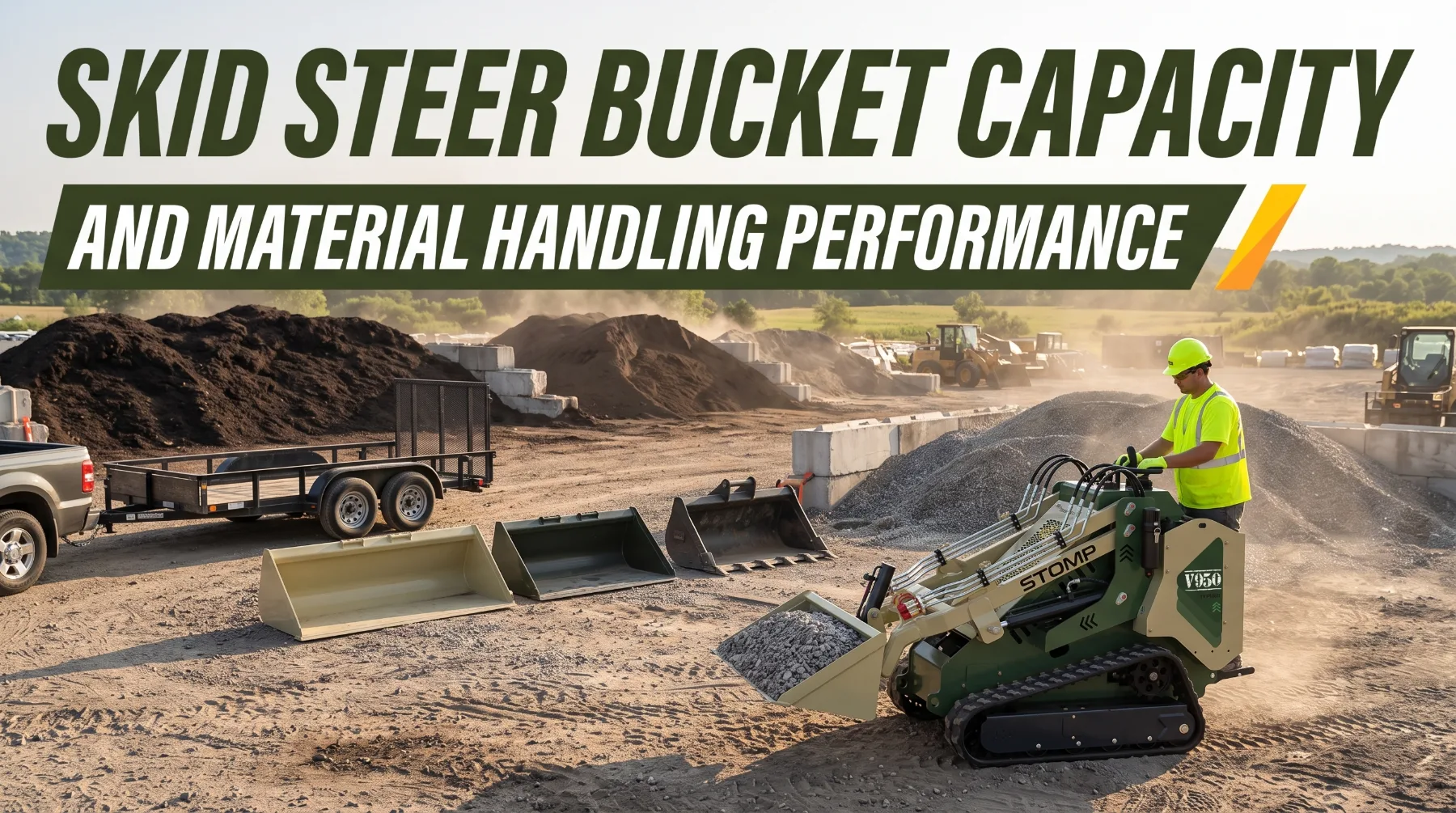
Loading different materials with the same bucket can produce very different results because material weight changes even when the bucket volume stays the same. A light-material bucket may work efficiently for mulch but place too much weight on the skid steer when filled with crushed stone or damp soil. If the attachment is not matched to the material, excessive payload can affect machine stability, handling, and safe travel.
Bucket capacity describes the volume a skid steer can carry in one loading cycle, but volume alone does not determine the actual load weight. Material density, moisture content, bucket fill level, machine rated capacity, and attachment design all influence the load placed on the machine. Understanding the relationship between material density and volume helps operators estimate how different materials will affect lifting and carrying performance.
Selecting a bucket based on both its capacity and the material being handled can improve efficiency and control. Operators should stay within the machine's rated capacity, consider material density and moisture, and use an attachment suited to the intended application. Matching bucket size and loading technique to the material can reduce unnecessary strain while supporting safer and more productive loading cycles.
Understanding Bucket Capacity
Bucket capacity describes the volume of material a bucket can hold and is usually measured in cubic feet or cubic yards. Manufacturers commonly provide both struck and heaped capacity. Struck capacity refers to material level with the bucket's top edges, while heaped capacity includes material piled above the edges at a standard angle of repose. Heaped capacity is the larger figure and is often the number shown in specifications, but actual loading depends on the material. Loose, dry materials may heap easily, while wet, sticky, or rounded materials may not fill the bucket as effectively and can spill during travel. Bucket design also affects capacity, with general-purpose buckets suited to everyday digging and loading, low-profile buckets improving cutting-edge visibility for grading, light-material buckets providing greater volume for low-density materials such as mulch and snow, and heavy-duty or rock buckets built for dense, abrasive materials.
Bucket capacity tells you how much space is available, but it does not tell you how much the material weighs. Material density determines the weight of a given volume, so a bucket filled with dense rock can weigh much more than the same bucket volume filled with mulch or wood chips. When evaluating bucket capacity, consider both the bucket's volume and the density of the material being handled to make sure the loaded weight remains within the skid steer's rated operating capacity.
Key takeaway: Bucket capacity describes the volume of material the bucket can hold, and it provides a starting point for estimating how much material can be handled during each loading cycle.
Material Density Changes Load Weight
Two buckets filled to the same volume can weigh very different amounts. Density, the weight of a material per unit of volume, determines how heavy each load actually is. This is the factor most often overlooked when operators choose or fill a bucket.
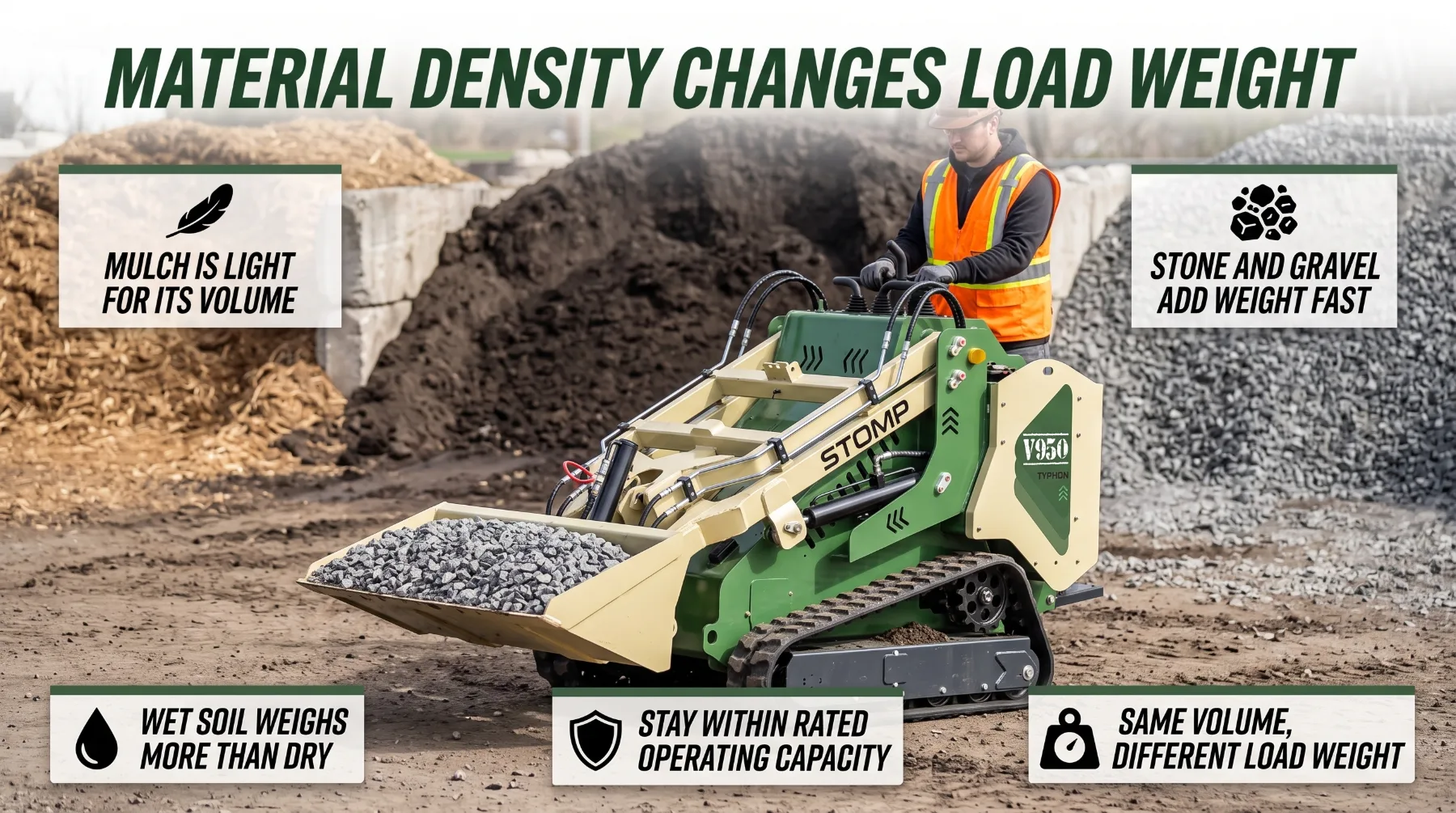
Approximate loose densities show how wide the range can be:
Mulch and wood chips: Often a few hundred pounds per cubic yard to well under 1,000 pounds
Dry topsoil: Commonly around 2,000 pounds per cubic yard or more
Sand and gravel: Often in the range of roughly 2,400 to 3,000 pounds per cubic yard
Crushed stone: Typically in a similar range to gravel, depending on rock type
Wet clay or saturated soil: Can be heavier still, as moisture adds significant weight
These figures vary with material source, moisture, and compaction, so treat them as general references. Your material supplier can often provide density figures for specific products.
A simple example shows why this matters. Picture a bucket that holds about half a cubic yard. Filled with mulch, it may weigh only a few hundred pounds. Filled with crushed stone, the same volume may weigh well over 1,000 pounds. A bucket that's comfortable for mulch can push the machine past its rated limits when filled with dense aggregate.
Moisture deserves special attention. Rain can make the same pile of topsoil or sand much heavier than it was the day before. Adjust your loading to the conditions, and remember that a full bucket of wet material is a heavier load than it looks.
Key takeaway: Material density determines how much a full bucket weighs, so dense aggregate and wet soil can place far more load on the machine than lighter materials of the same volume.
Bucket Size and Machine Capability
A larger bucket can move more material per cycle, but the skid steer must have enough capacity to handle the resulting load safely. The key specification is rated operating capacity, or ROC, which represents the manufacturer's specified load limit for operation. ROC is based on a percentage of the machine's tipping load, where the rear of the machine begins to lift, and the applicable percentage can vary between wheeled and tracked machines. Always use the ROC listed in the operator's manual and on the machine's capacity decal. To determine whether a bucket is suitable, estimate its realistic working volume, multiply that volume by the approximate material density, and add the bucket's own weight because the attachment counts toward the machine's capacity. Compare the total with the skid steer's ROC before deciding how much material to carry.
If the estimated load approaches or exceeds the machine's ROC, use a smaller bucket or reduce the fill level for that material. Overloading can reduce stability, particularly when the loader arms are raised or the machine is working on a slope, and it can place additional stress on the hydraulic system, drivetrain, axles, and loader structure. Signs such as the rear of the machine becoming light, difficulty lifting, or excessive bouncing during travel indicate that the load may be too heavy. Reducing the load and staying within the manufacturer's rated capacity helps protect the machine and maintain safer operation.
Key takeaway: A larger bucket carries more volume, but the machine must have enough rated operating capacity to safely handle the resulting load, so match bucket selection to the skid steer's rated capacity and application.
Loading Technique
Good loading technique helps fill the bucket efficiently, reduce spillage, and keep each cycle controlled and productive. When approaching a pile, drive straight in with the machine level and the bucket flat on the ground, using steady momentum rather than ramming the material. As the bucket enters the pile, curl it gradually while lifting slightly to help fill the bucket and reduce tire spin or track slip. Once loaded, back away smoothly with the bucket kept low. During travel, carry the load just high enough to clear the ground, slow down over rough or uneven surfaces, and follow the manufacturer's guidance when traveling on slopes, generally keeping the heavy end uphill. Avoid sharp turns with a raised or full bucket, and raise the bucket to dumping height only when close to the truck, trailer, or designated dump point.
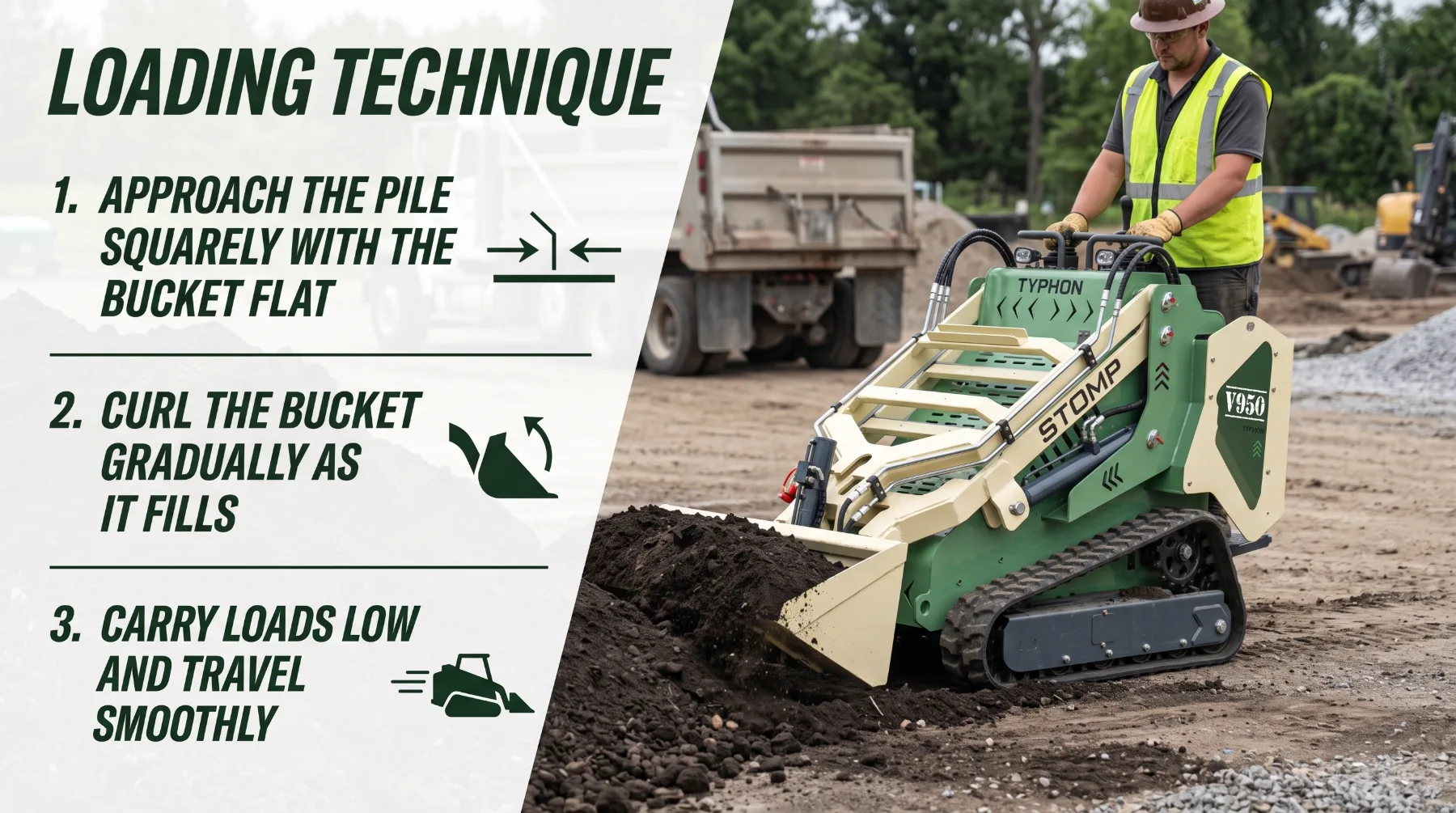
Keep the face of the material pile worked evenly to maintain a consistent loading surface, and watch for undercutting that could cause material to slide toward the machine. Keep pedestrians away from the loading and travel area, and always follow the machine's safety procedures before operation. Fasten the seat belt, lower the safety bar, and confirm the work area is clear before starting each shift. Controlled loading and travel not only improve productivity but also help maintain machine stability and reduce unnecessary wear.
Key takeaway: Approaching piles correctly, filling the bucket effectively, and avoiding unnecessary spillage help maintain productive loading cycles and safe machine handling.
Matching the Bucket to the Job
The right bucket should match the material, skid steer, and work area. Dense aggregate and wet soil may require a smaller or heavy-duty bucket, while mulch, snow, and wood chips are better suited to larger light-material buckets. Consider the required volume, how quickly material needs to move, and whether the loaded bucket and its own weight remain within the machine's rated operating capacity. Work areas with tight gates or low clearances may require a narrower or low-profile bucket, while general-purpose buckets work well for everyday digging and loading, low-profile designs support grading, and reinforced buckets are better suited to rock or demolition work. Also confirm that the machine has enough lift height and reach to safely clear the sides of the trucks or trailers being loaded.
Some contractors keep multiple buckets available so they can match the attachment to changing materials and tasks. A general-purpose bucket can handle routine work, while light-material and heavy-duty buckets cover more specialized conditions. Whenever changing buckets, follow the proper coupler procedure and confirm that the locking mechanism is fully engaged before lifting the attachment. Inspect the cutting edge, teeth, side plates, and mounting points regularly, and replace worn wear parts before they reduce digging performance. Matching the bucket to the job from the start helps maintain productivity while keeping the machine within its operating limits.
Key takeaway: Consider material type, required volume, machine capacity, and the work area before selecting a bucket, since different materials and applications call for different bucket designs and capacities.
Cycle Time and Productivity
Bucket capacity affects how much material a skid steer can move per cycle, but overall productivity also depends on how quickly and consistently each cycle is completed. A typical cycle includes filling the bucket, traveling to the dump point, unloading, and returning to the pile. Travel distance, loading conditions, dumping time, ground conditions, and operator technique all affect cycle time. Loose, dry material may load quickly, while compacted or sticky material can take longer. Longer travel routes, muddy or uneven ground, and high-sided trucks can also add time, while smooth and consistent operation helps reduce unnecessary delays. For example, moving 60 cubic yards of topsoil with a 0.5-cubic-yard bucket requires about 120 cycles, while a 0.75-cubic-yard bucket requires about 80 cycles if the heavier load remains within the machine's rated capacity. At one minute per cycle, that difference could save about 40 minutes.
A larger bucket only improves productivity when the machine can handle the load without slowing down the work. If an oversized load causes spillage, excessive bouncing, slower travel, or stability concerns, the additional capacity may not provide a real benefit. Keep stockpiles and dump points as close together as practical, maintain smooth travel routes, and monitor how much material the machine moves per hour. Comparing actual production with bucket size and cycle time can help identify the most efficient setup for the job without exceeding the machine's operating limits.
Key takeaway: Bucket capacity affects how much material moves in each cycle, but total productivity also depends on travel distance, loading conditions, dumping time, and operator technique.
Conclusion
Skid steer bucket capacity affects material-handling productivity, but safe and efficient loading depends on bucket volume, material density, attachment weight, and the machine's rated operating capacity. Struck and heaped bucket volumes describe how much material the bucket can hold, while dense or wet materials can make a full bucket significantly heavier than expected, so selection should account for the heaviest material being handled rather than volume alone. Before operation, operators should confirm the rated operating capacity, inspect the bucket cutting edge, teeth, side plates, mounting points, coupler, pins, and locking components, and verify that the attachment is fully engaged. Loading should be controlled and the bucket carried low during travel to support stability, while tire pressure or track condition should be suitable for the expected ground conditions and load. Stockpile locations, travel distance, dump points, and cycle time should also be considered because an oversized bucket may increase payload risk without improving overall productivity. Matching bucket size and style to the material, machine capability, work area, and cycle requirements helps improve output while reducing unnecessary strain and stability risks.
Frequently Asked Questions
What does skid steer bucket capacity mean?Bucket capacity refers to the volume of material the bucket is designed to hold. It is commonly listed as struck capacity and heaped capacity, usually measured in cubic feet or cubic yards. Understanding both capacities helps operators compare buckets and select one that suits the machine and intended material.
Does material type affect bucket loading?Yes. Material density determines how much a bucket of a given volume will weigh. Dense aggregate, gravel, and wet soil can create much heavier loads than lighter materials such as mulch, dry soil, or snow. Operators should consider material density and stay within the machine's rated operating capacity.
Is a larger bucket always better?No. Bucket size should match the skid steer's rated operating capacity, hydraulic performance, material type, and application. A larger bucket may carry more volume, but dense material can quickly increase the load beyond the machine's safe capacity. The right bucket balances capacity, material weight, and machine performance.
How does bucket capacity affect productivity?A suitable bucket can move an appropriate amount of material during each loading cycle, potentially reducing the number of cycles needed for a job. However, total productivity also depends on travel distance, loading and dumping time, material density, operator technique, and site conditions. The best bucket is not necessarily the largest one, but the one that matches the machine and task.