Stone Crusher Feed Size and Material Processing
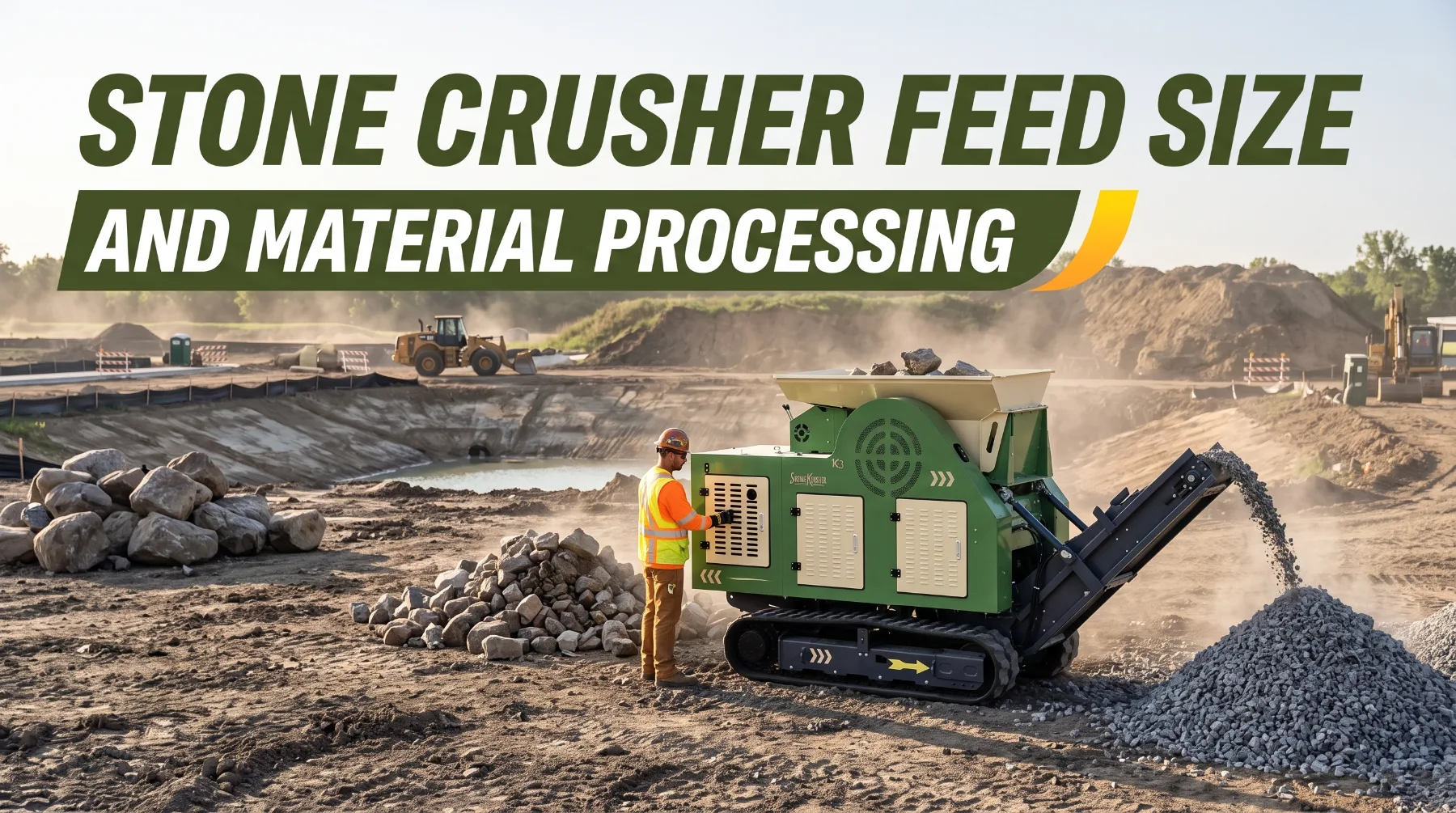
Processing excavated rock on site can become difficult when the material entering the crusher varies too much in size and condition. Large blocks may jam the feed opening, flat pieces can produce inconsistent crushing, and wet clay attached to the rock can contaminate the finished material. Feeding mixed material too quickly can further reduce control over the crushing process and affect the quality of the final aggregate.
Feed material has a direct effect on how consistently a stone crusher can operate. Rock size, shape, moisture, soil contamination, and feed rate all influence how material moves through the crushing chamber and onto the discharge conveyor. Material should be compatible with the crusher's feed opening and crushing design, while oversized or heavily contaminated pieces may need to be sorted or prepared before processing.
Preparing the feed pile and maintaining a controlled loading rate can help keep production more consistent. Crews can separate clay-heavy material, reduce oversized blocks, remove unsuitable debris, and pace the loader so the crusher receives a steady supply. These practices can reduce blockages and unnecessary wear while helping produce cleaner aggregate that better matches the project's required specification.
Large Rock and Pre-Processing
Excavation, demolition, and ripping often produce material that varies in size, including pieces larger than the crusher's rated feed opening. Oversized rock should be prepared before reaching the hopper. An excavator-mounted hydraulic breaker can reduce large blocks and slabs to a suitable size, while pieces that cannot be efficiently reduced can be set aside, removed from the site, or used for another approved purpose such as riprap. Establish a separate pre-processing area so breaking activities do not interfere with loading or crusher operation, and maintain clear exclusion zones around both work areas.
If oversized material causes a blockage, safety must take priority. Never reach into the hopper or crushing chamber or attempt to clear a jam while the crusher is operating. Shut down and lock out the machine according to the manufacturer's procedures before working in or around the feed area. Proper material preparation reduces the chance of blockages, protects the crushing equipment, and helps keep the crew away from unnecessary hazards.
Key takeaway: Oversized rock may require breaking or other preparation before entering the crusher, which helps prevent unsuitable material from disrupting the crushing process.
Feed Opening Requirements
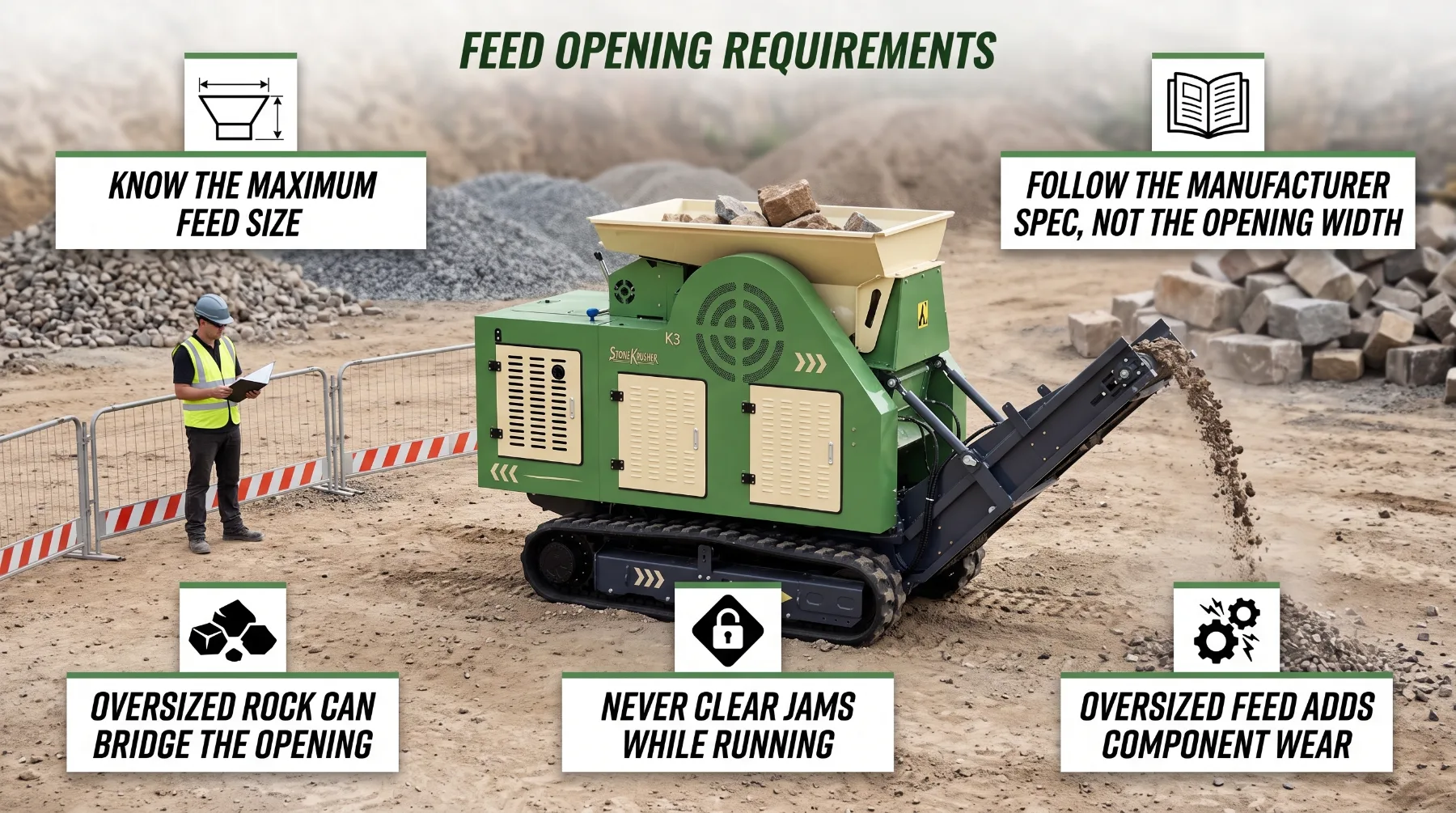
The feed opening is where material enters the crusher, making its size an important factor in the crushing process. Each machine has a manufacturer's specified maximum feed size that should be followed rather than simply judging whether a piece can physically fit through the opening. Properly sized material helps the crusher grip and process the feed more consistently.
Oversized material can create several problems, including blockages, poor gripping, increased component stress, and production delays. The required feed size can also vary between crusher designs, so operators should review the specific machine's specifications before preparing material for processing.
Maximum Feed Size: Follow the manufacturer's stated feed-size limit rather than relying on the physical opening size.
Material Flow: Properly sized material helps reduce bridging and maintain consistent movement into the crushing chamber.
Material Engagement: Oversized pieces may not be gripped or broken effectively inside the chamber.
Component Stress: Excessively large feed can increase stress and wear on crushing and drive components.
Crusher Compatibility: Match material preparation to the specific crusher design and its operating requirements.
Key takeaway: The feed opening determines the maximum material dimensions the crusher can accept, so understand the manufacturer's feed requirement before preparing material for processing.
Material Shape and Consistency
Material size is only one factor affecting crusher performance. The shape and consistency of incoming material can also influence how evenly the chamber fills and processes each load. Blocky, angular rock generally feeds and breaks predictably, while flat slabs may slide or lodge at an angle. Elongated pieces can pass through lengthwise and remain larger than intended, while broken aggregate may already be close to the desired size. Mixed loads containing rock, concrete, soil, and debris can behave less consistently. A steady mix of sizes and shapes helps maintain a more predictable crushing cycle and keeps the finished product closer to the target range.
Sorting and blending can help create a more consistent feed. Where practical, combine material so each load contains a similar range of sizes and separate pieces that already meet the target size instead of crushing them unnecessarily. Fines can also be removed before crushing through a process known as scalping, which can reduce excess fine material in the finished product. Consistent feed preparation helps the crusher operate more evenly and can improve overall processing efficiency.
Key takeaway: Material shape and consistency affect how evenly the crusher receives and processes each load, so sorting and blending feed supports a more predictable crushing cycle.
Feeding Rate
A crusher performs best when material enters the processing area at a steady, manageable rate. Feeding too quickly can overload the hopper, cause material to back up, increase the chance of blockages, and place additional strain on crushing components. Feeding too slowly can leave the chamber partly empty, reducing productive use of the machine and lowering hourly output. To maintain a consistent rate, match the loader bucket size and cycle time to the crusher's intake capacity, keep the prepared feed pile close enough to reduce loading travel, and add material in controlled amounts rather than large bursts. Monitor the hopper level and adjust the loading pace as conditions change, while keeping communication between the loader and crusher operators clear through radios or agreed signals.
Many tracked crushers are equipped with a feeder or vibrating grizzly that helps control how material enters the crushing chamber. When available, operate and adjust the feeder according to the manufacturer's instructions and monitor how evenly material is moving into the chamber. A consistent rhythm between the loading machine, feeder, and crusher helps keep production steady while reducing unnecessary stress and the risk of blockages. Maintaining this balance is one of the simplest ways to improve crusher efficiency and protect the equipment during continuous operation.
Key takeaway: A crusher performs best with a suitable, consistent feeding rate, since excessive feeding can overload the processing area and insufficient feeding reduces productive use of the machine.
Matching Feed to the Application
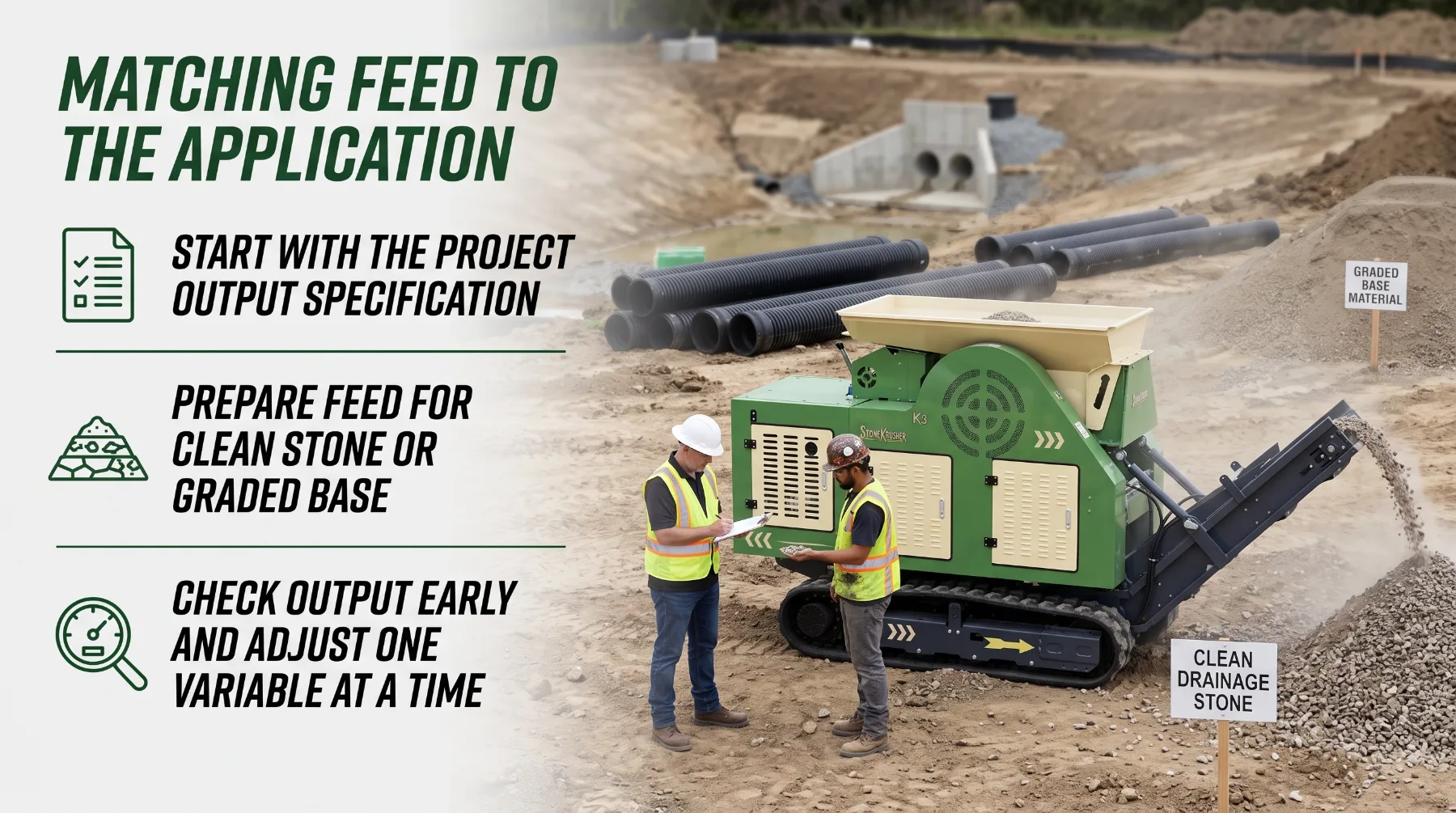
Feed preparation should start with the finished material the project requires. Drainage stone typically needs clean material with soil, clay, and excess fines removed, while road and pad base may require a controlled range of sizes to achieve the desired gradation. General fill may allow a wider range of material depending on the project specifications, while landscaping and pathway applications may require specific sizes, colors, or appearance. Before crushing, confirm the required output size, gradation, and limits on fines, clay, or organic material, then work backward to determine what feed material to use, what needs to be removed, which oversized pieces require pre-processing, and how the feed pile should be staged.
The incoming material and finished product should both be checked throughout production. Inspect the output early and at regular intervals to confirm it remains within the project requirements. If the product begins to fall outside the specification, review the feed material first, then check the crusher settings and make one adjustment at a time so the effect can be identified. When the suitability of a material is uncertain, consult the project engineer or equipment supplier before continuing production. Matching feed preparation to the target product helps create a more controlled and efficient crushing process.
Key takeaway: Feed preparation should reflect the desired finished material and project requirements, since understanding both incoming material and expected output creates a more effective crushing process.
Material Characteristics
Material with the same general size range can behave very differently in a crusher because hardness, moisture, density, and contamination all affect how it moves and breaks. Hard rock requires more crushing force, can increase component wear, and may reduce throughput, while softer or weathered material can break more easily but may produce more fines. Wet material, especially when mixed with clay or fines, can stick to surfaces and pack inside the chamber, restricting material flow. Density also affects the weight of each load, loader cycle requirements, and how much material can safely enter the hopper. Contaminants such as wood, steel, rebar, plastic, soil, and clay can damage components and reduce the quality of the finished product.
Inspect the feed pile before each shift and pay particular attention to changes after rain. Remove unwanted contaminants before loading and keep clay-heavy material separate when clean stone is required. On demolition projects, confirm that the crusher is designed to process reinforced concrete before feeding material containing steel or rebar. When working with an unfamiliar material source, start with a controlled test run and inspect the output before moving into full production. Understanding the material before crushing helps reduce blockages, protect the machine, and maintain more consistent results.
Key takeaway: Hardness, moisture, density, and contamination influence material processing, so evaluate these characteristics when planning crushing work.
Conclusion
Stone crusher feed size is a key factor in reliable material processing because the feed opening determines the maximum material the machine can accept. Oversized rock should be reduced or set aside before reaching the hopper, while material shape, consistency, hardness, moisture, density, and contamination can affect crushing behavior and production. A steady, measured feed helps keep the crushing chamber operating efficiently, while sorting and preparing the material can reduce blockages, uneven processing, and unnecessary wear. Contractors should confirm the maximum feed size and required output specifications, inspect the feed pile for oversized pieces, flat slabs, mixed material, moisture, soil, clay, wood, steel, and rebar, and position prepared material close to the crusher. Loader bucket size and cycle time should match the crusher's intake without causing overloading, while exclusion zones and proper blockage-clearing procedures should be maintained. Matching feed dimensions, material preparation, loading rate, and output requirements supports efficient production and more consistent finished material.
Frequently Asked Questions
Why is feed size important for a stone crusher?Feed size determines whether the material is suitable for entering and being processed by the crusher. Material within the machine's specified feed range supports efficient crushing, steady material flow, and fewer blockages. Keeping feed size consistent also helps the crusher operate closer to its intended performance.
Can large rocks be processed directly?Only if the rocks fall within the crusher's specified feed size requirements. Material that is too large may not enter the crushing chamber properly and can cause blockages or excessive strain. Oversized rocks may need to be broken or otherwise pre-processed before entering the hopper.
Does material consistency affect crushing?Yes. Consistent material helps maintain a more predictable crushing cycle and steady material flow through the machine. Large variations in feed size, hardness, or composition can change how the material breaks and may affect the finished product. More consistent feed conditions generally support more uniform output.
What other factors affect material processing?Material hardness, moisture, density, contamination, feed rate, and crusher design can all influence crushing performance and output quality. Hard or abrasive material may increase wear, while excessive moisture can affect material flow. Proper feeding and machine settings should match the material and the crusher's operating requirements.