Why Hydraulic Oil Capacity Matters for Heavy-Duty Skid Steer Work
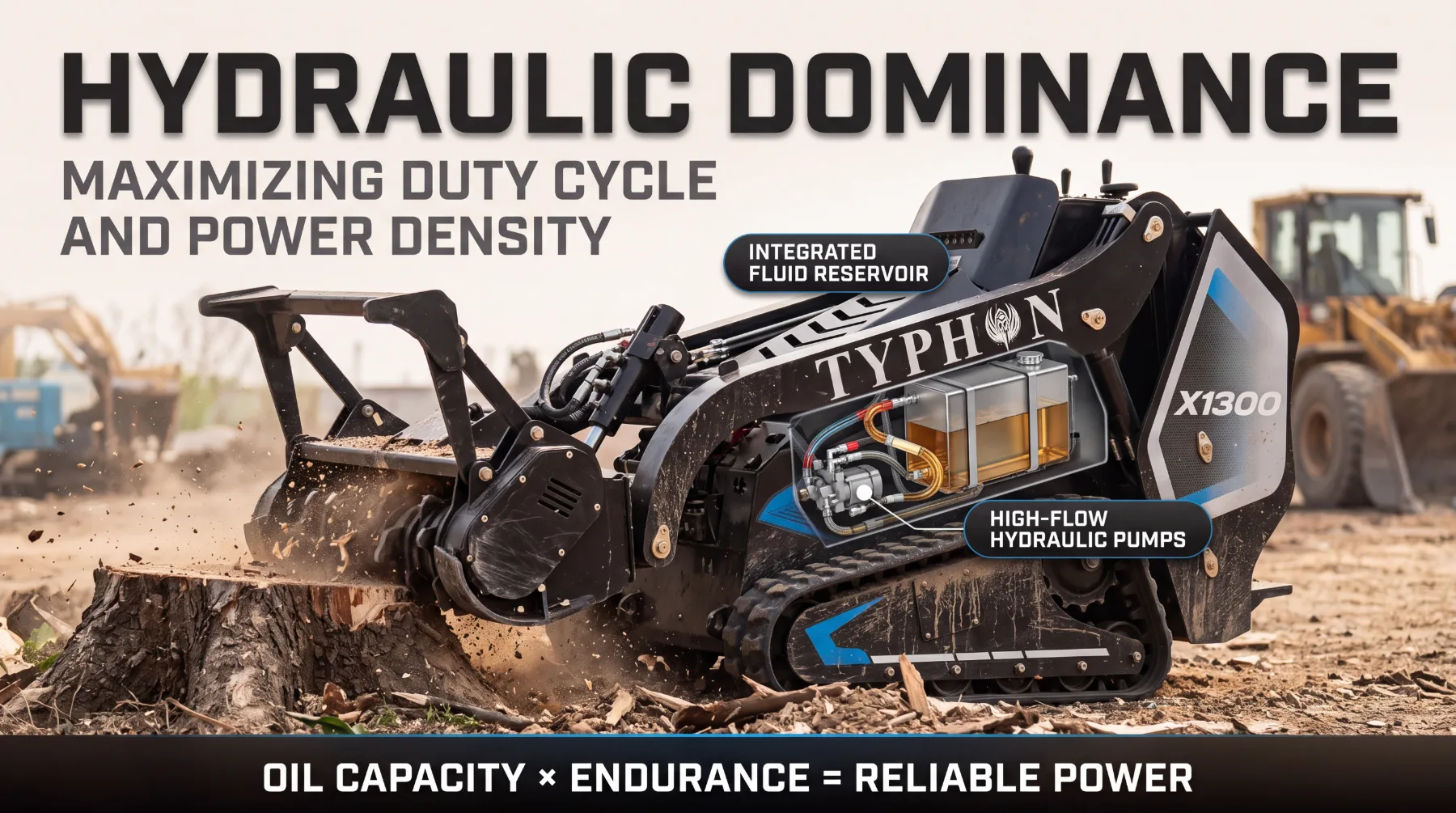
Hydraulic oil capacity rarely tops the list of specs buyers study when comparing skid steers, yet it quietly shapes how well the machine handles the toughest jobs. Every lift, dig, grind, and push relies on hydraulic fluid moving through the system under pressure, and the amount of oil available influences how smoothly and reliably that happens. When you push a skid steer through long shifts with demanding attachments, the size and health of the hydraulic reservoir can be the difference between steady, dependable output and a machine that overheats, sputters, or wears out early. This guide explains what hydraulic oil capacity actually means, how it supports heavy-duty operation, its role in managing heat, how it keeps critical components working, and how to choose the right capacity for your machine and workload.
What Is Skid Steer Hydraulic Oil Capacity?
Hydraulic oil capacity refers to the total amount of hydraulic fluid a skid steer's hydraulic system and reservoir are designed to hold. It covers the oil sitting in the tank plus the fluid circulating through the pumps, valves, cylinders, hoses, and motors during operation. This fluid is the lifeblood of the machine, transferring the power the engine produces into the physical force that lifts arms, curls buckets, and drives attachments. Without enough of it, the system simply cannot deliver consistent performance. Sufficient oil does more than just fill the tank. It supplies every hydraulic component with the volume of fluid needed to operate smoothly and reliably, keeping pressure stable and movements predictable. When the reservoir holds an adequate reserve, the pump always has fluid to draw from, even during rapid or continuous cycles that pull oil through the system quickly. Capacity also gives the fluid room to do its secondary jobs. Beyond transmitting power, hydraulic oil lubricates moving parts, carries away contaminants, and absorbs heat generated under load. A reservoir with enough volume allows the oil to rest briefly, shed heat, and let air bubbles and debris settle before recirculating. Consider what proper capacity supports:
- Steady pressure: the pump always has fluid available to draw
- Smooth movement: components receive consistent flow for predictable control
- Fluid conditioning: oil has time to cool and let contaminants settle
When capacity is too low, the fluid works harder, heats faster, and degrades sooner. Understanding what capacity really represents is the first step toward matching a skid steer to the demands you plan to place on it.
How Oil Capacity Supports Heavy-Duty Operation
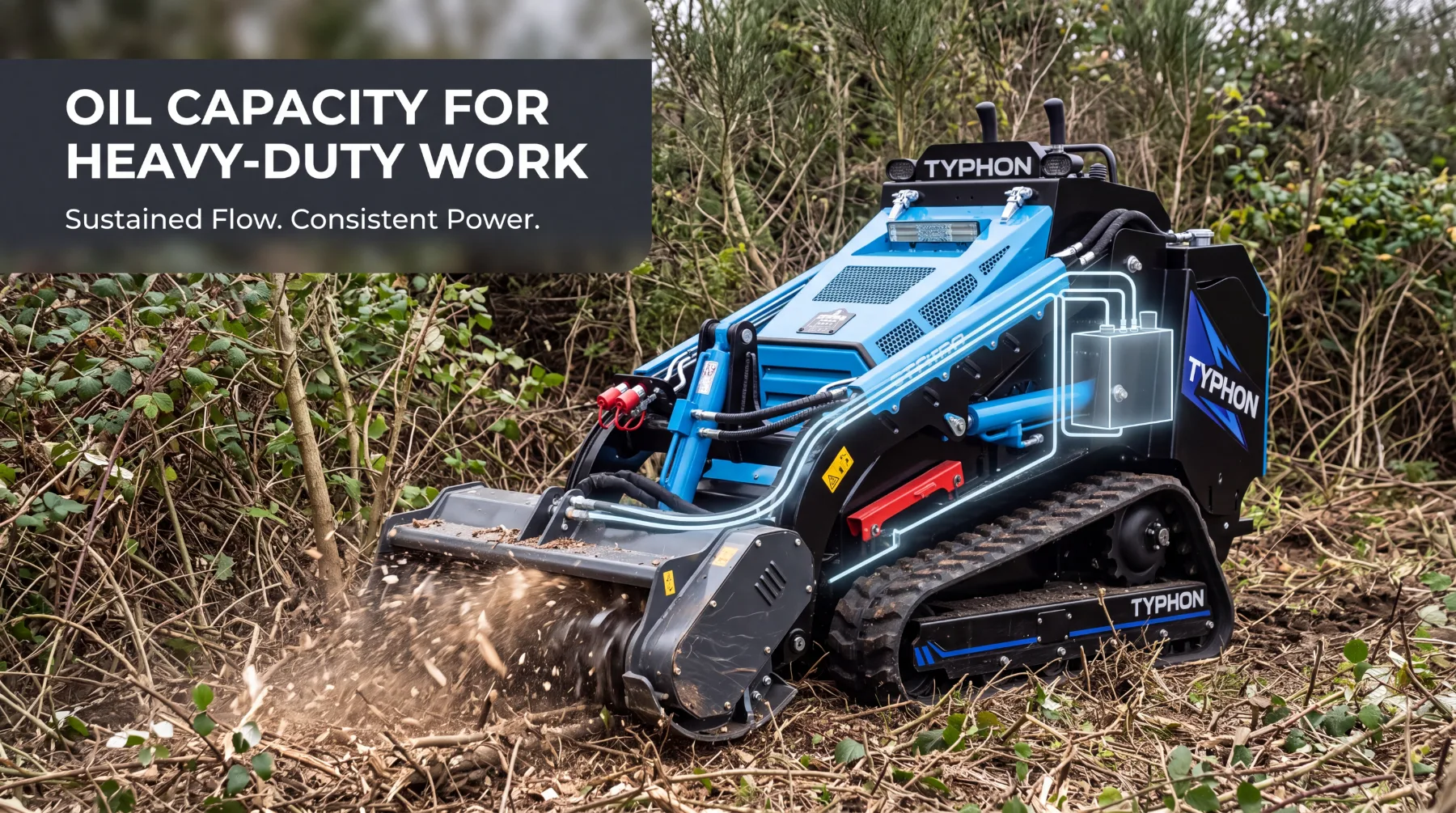 Heavy-duty work asks a great deal from a skid steer's hydraulic system, and oil capacity plays a direct role in meeting those demands. Attachments like mulchers, cold planers, augers, and high-flow brooms draw fluid continuously, cycling large volumes of oil through the system for extended periods. Each of these tools relies on a steady, uninterrupted supply of fluid to hold its speed and force. A properly sized reservoir helps maintain that supply, keeping the machine productive through long, punishing work cycles rather than fading as the shift wears on. The connection between capacity and endurance comes down to circulation and reserve. During demanding tasks, oil moves quickly and heats up as it works. A larger reserve means the system isn't running the same small volume of fluid over and over in rapid succession, which helps the oil stay within a healthy operating range and keeps performance consistent. When capacity is marginal, the fluid recirculates faster, climbs in temperature, and loses some of its ability to transmit power efficiently. Heavy-duty operation also involves sudden spikes in demand, breaking out a heavy load, driving an auger through hard ground, or powering an attachment through dense material. Adequate capacity gives the system the fluid headroom to absorb these peaks without starving the pump. A few things a well-sized reservoir supports during tough work:
- Sustained flow: high-flow attachments keep their rated speed and force
- Peak demand: the system handles sudden load spikes without hesitation
- Reduced strain: the pump and components work under stable, predictable conditions
For operators who run their machines hard, this reliability translates directly into fewer interruptions and more work completed. Capacity that comfortably matches the workload keeps a skid steer performing at its best when the job demands the most from it.
Hydraulic Oil Capacity and Heat Management
Heat is an unavoidable byproduct of hydraulic work. Every time fluid moves under pressure through pumps, valves, and lines, friction and resistance generate warmth, and that warmth builds quickly during heavy-duty tasks. Running high-flow attachments for extended periods pushes temperatures higher still, and excessive heat is one of the fastest ways to degrade hydraulic oil and damage components. This is where oil capacity becomes a quiet but powerful ally in keeping a skid steer healthy. A larger volume of oil helps the system manage that heat more effectively. When there is more fluid in the reservoir, the heat generated during operation spreads across a greater mass, which slows the rate at which temperatures climb. The oil also spends slightly more time in the tank between cycles, giving it a chance to release heat before it circulates again. Adequate capacity works hand in hand with the cooler and reservoir design to distribute and dissipate heat, supporting more consistent performance over long runs. Keeping temperatures in check protects both the fluid and the machine. Overheated oil thins out, loses its lubricating strength, and breaks down faster, which accelerates wear on seals, pumps, and cylinders. Consistent operating temperatures, by contrast, help the oil hold its properties and keep the whole system running predictably. Consider how proper capacity contributes to heat control:
- Thermal buffer: a larger fluid mass absorbs heat more gradually
- Cooling time: oil rests briefly in the tank to shed warmth before recirculating
- Fluid longevity: steadier temperatures slow oxidation and breakdown
While capacity alone doesn't replace a well-designed cooling system, it forms an important part of the machine's overall ability to stay within a safe temperature range. For operators pushing high-flow tools shift after shift, that thermal cushion helps protect performance and extend the life of expensive hydraulic components.
Supporting Hydraulic Components and Attachments
The hydraulic system is the muscle behind nearly everything a skid steer does. It powers the lift arms that raise and lower loads, the bucket that digs and curls, and the wide range of auxiliary attachments that turn a single machine into a versatile tool carrier. Every one of these functions depends on hydraulic fluid arriving at the right pressure and volume. Maintaining the correct oil level and capacity helps ensure that pumps, valves, cylinders, and motors all receive the proper lubrication and flow they need to work as intended. Each component relies on the fluid in a specific way. Pumps need a steady supply to draw from without cavitating, valves depend on clean fluid to direct flow precisely, cylinders require consistent pressure to move smoothly, and hydraulic motors count on adequate volume to spin attachments at their rated speed. When oil capacity is sufficient and the level is properly maintained, each part operates within its designed range, reducing strain and wear across the system. When the level drops or capacity falls short, air can enter the system, pressure becomes erratic, and components work harder to compensate. Attachments raise the stakes even further, because they add another layer of hydraulic demand on top of the machine's core functions. A high-flow attachment competes for the same fluid that powers the lift and drive systems, so the reservoir must hold enough to serve everything at once. A few points worth keeping in mind:
- Proper lubrication: correct fluid levels keep moving parts protected
- Consistent flow: valves and motors receive the volume they're designed for
- Attachment readiness: the system supports auxiliary tools without shortchanging core functions
Keeping the hydraulic system properly filled and matched to its workload protects the components you rely on most. It's a straightforward way to safeguard performance, reduce downtime, and get the full value out of every attachment in your fleet.
Choosing the Right Hydraulic Oil Capacity
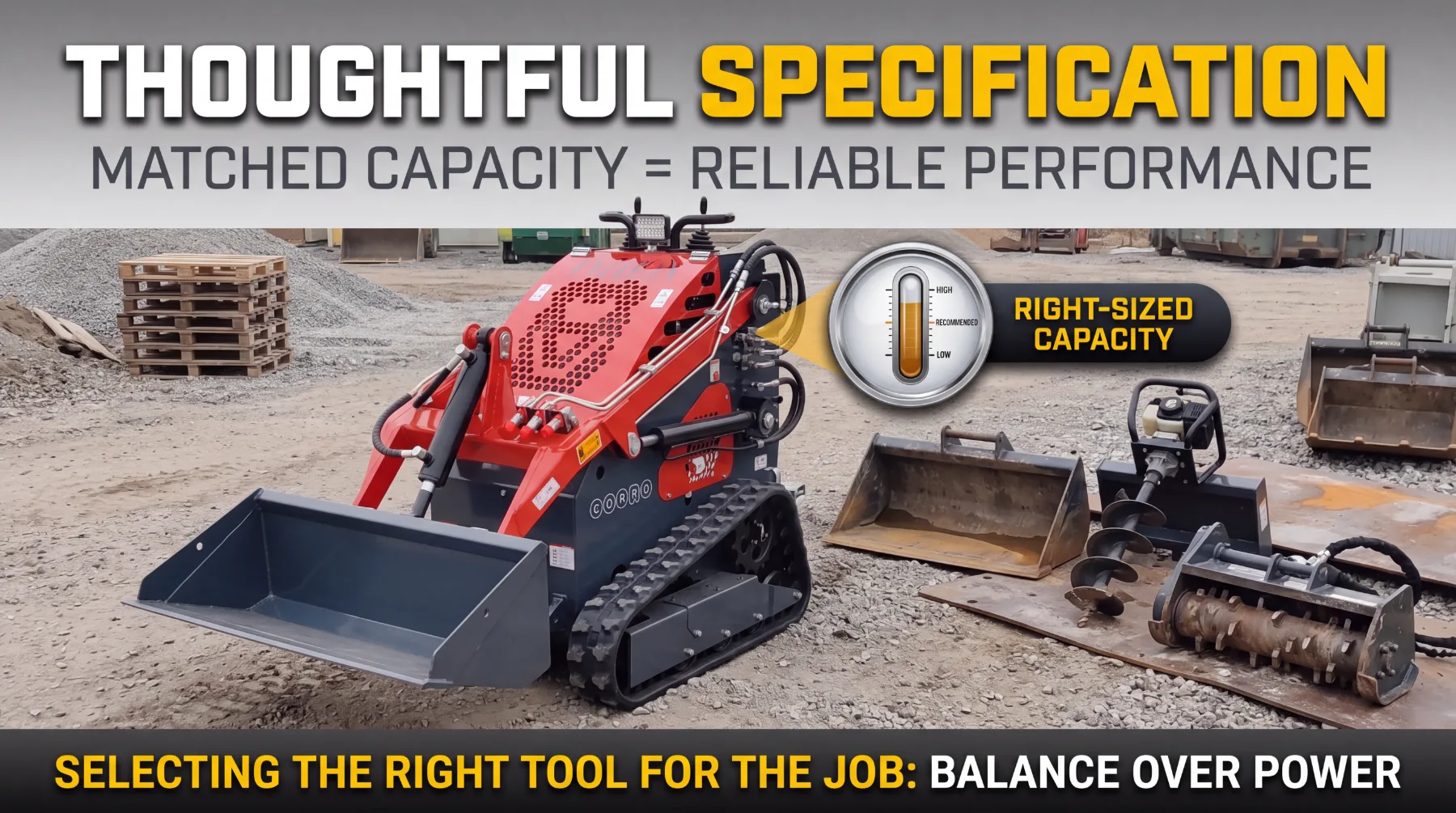 It's tempting to assume that a bigger hydraulic tank is always better, but that isn't how it works in practice. A larger reservoir isn't automatically the right choice for every skid steer, and oversizing carries its own drawbacks, including added weight, wasted space, and unnecessary cost. The goal is not maximum capacity but the right capacity, the volume that matches the machine's hydraulic system and the way you actually plan to use it. Getting this balance right delivers reliable performance without paying for capacity you'll never need. Several factors shape the ideal capacity for a given machine. The design of the skid steer's hydraulic system sets the baseline, since manufacturers engineer the pump, cooler, and reservoir to work together as a matched set. Your operating requirements matter too: an operator running light standard-flow work has very different needs than one running high-flow attachments through demanding, continuous cycles. Attachment type is especially important, because tools like mulchers and cold planers pull far more fluid than a standard bucket ever will. The most reliable guide is always the manufacturer's specifications. These figures reflect careful engineering and testing, and staying within the recommended range keeps the system balanced and protected. When choosing or evaluating a machine, weigh these considerations:
- System design: match capacity to how the machine is engineered to run
- Workload: heavier, continuous use benefits from ample reserve
- Attachment demands: high-flow tools require greater fluid volume
- Manufacturer specs: follow recommended capacity and fluid guidelines
Rather than chasing the largest tank available, focus on aligning capacity with your real-world work. A skid steer with hydraulic capacity properly matched to its system and tasks runs cooler, performs more consistently, and holds up better over time. Thoughtful matching turns a single spec into a genuine advantage on the job.
Conclusion
Hydraulic oil capacity influences far more than a number on a spec sheet — it shapes how well a skid steer performs under pressure, how effectively it manages heat, and how long its critical components last. Adequate capacity keeps fluid flowing steadily to pumps, valves, cylinders, and motors, supports high-flow attachments through demanding cycles, and provides the thermal cushion that protects the system during long, heavy-duty shifts. Yet more isn't always better; the right capacity depends on the machine's hydraulic design, your operating requirements, the attachments you run, and the manufacturer's specifications. By matching capacity to real-world demands, you get a machine that runs cooler, works more reliably, and delivers the dependable performance heavy-duty work requires.
Frequently Asked Questions
1. What does hydraulic oil capacity actually mean on a skid steer? Hydraulic oil capacity is the total amount of hydraulic fluid the skid steer's system and reservoir are designed to hold. This includes the oil resting in the tank plus the fluid circulating through the pumps, valves, cylinders, hoses, and motors during operation. That fluid transfers engine power into the force that lifts arms, curls buckets, and drives attachments. Sufficient capacity also gives the oil room to lubricate parts, carry away contaminants, and shed heat between cycles. In short, it's the volume of fluid the machine relies on to operate smoothly, reliably, and safely. 2. Why does oil capacity matter more for heavy-duty work? Heavy-duty tasks place continuous demands on the hydraulic system, cycling large volumes of fluid and generating significant heat. Attachments such as mulchers, cold planers, and augers draw fluid nonstop for extended periods, so the reservoir must supply a steady, uninterrupted flow. A properly sized capacity keeps performance consistent through long shifts, absorbs sudden spikes in demand without starving the pump, and prevents the oil from overheating too quickly. When capacity is marginal, fluid recirculates faster, climbs in temperature, and loses efficiency — exactly the conditions that undermine hard, sustained work. 3. How does hydraulic oil capacity help manage heat? Hydraulic systems produce heat whenever fluid moves under pressure, and that heat builds quickly during demanding work, especially with high-flow attachments. A larger volume of oil spreads that heat across a greater mass, which slows the rate at which temperatures rise. The fluid also spends slightly more time in the reservoir between cycles, giving it a chance to release warmth before recirculating. Working alongside the cooler and reservoir design, adequate capacity helps distribute and dissipate heat, keeping temperatures steadier. This protects the oil's properties and slows the wear that overheating causes to seals, pumps, and cylinders. 4. Can too little hydraulic oil damage a skid steer? Yes. When capacity is insufficient or the fluid level drops too low, several problems can follow. Air may enter the system, causing erratic pressure and jerky movements. The oil heats faster, thins out, and loses lubricating strength, which accelerates wear on pumps, valves, cylinders, and motors. Components then work harder to compensate, increasing strain and the risk of premature failure. Low fluid can also starve the pump and reduce an attachment's performance. Maintaining the correct oil level and capacity is a simple, essential way to protect the machine and avoid costly downtime. 5. Is a bigger hydraulic tank always better? Not necessarily. A larger reservoir isn't automatically the right choice, and oversizing can add unnecessary weight, cost, and wasted space without improving performance. The ideal capacity depends on the skid steer's hydraulic system design, your operating requirements, the attachments you run, and the manufacturer's specifications. High-flow tools and continuous heavy-duty use benefit from ample reserve, while lighter standard-flow work needs far less. The best approach is to match capacity to your real workload and follow the manufacturer's recommended figures, since those reflect the engineering that keeps the whole system balanced and protected.