Why Excavator Radiator Size Matters Under Heavy Hydraulic Loads
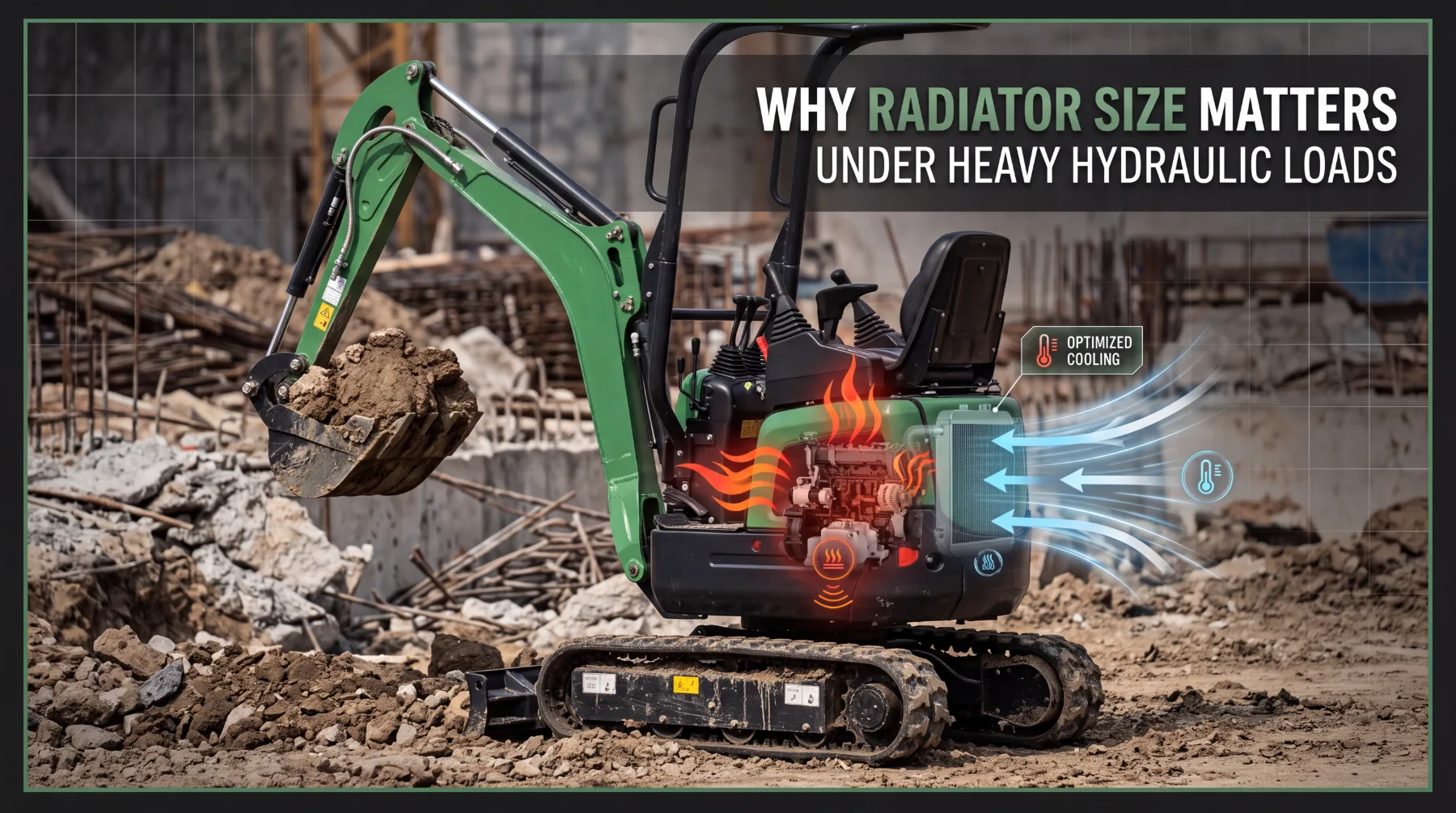
Operators often judge an excavator by its digging force, reach, or engine power, yet one component quietly protects all of those capabilities: the cooling system. Under heavy hydraulic loads, an excavator generates a great deal of heat, and the radiator is what keeps that heat in check. When the cooling capacity falls short, performance drops, wear accelerates, and downtime follows. Understanding why radiator size matters helps you choose a machine that holds up through long, demanding shifts rather than one that fades when the work gets hard.
Heavy Hydraulic Work Creates More Heat
Every hydraulic function on an excavator produces heat as a byproduct of doing work. When oil moves under pressure through pumps, valves, cylinders, and hoses, friction and resistance turn some of that energy into thermal energy. During light or occasional tasks, the amount of heat stays manageable. But continuous digging, lifting, and attachment use pushes the hydraulic system far harder, and the heat builds quickly as a result.
Think about a machine working a full shift in tough conditions. It curls the bucket into compacted soil, swings loaded, lifts material, and repeats the cycle hundreds of times an hour. Each of those movements draws heavily on the hydraulic system, and the oil absorbs heat with every stroke. Running a demanding attachment such as a breaker or auger adds even more, since these tools keep the system working almost constantly without the brief pauses of a normal dig cycle.
This is why effective cooling becomes essential during long work cycles rather than optional. The longer and harder an excavator runs, the more heat it generates, and that heat has to go somewhere. If the cooling system cannot remove it fast enough, temperatures climb steadily throughout the shift. The hydraulic oil grows hotter, the engine works in warmer conditions, and the whole machine operates closer to its thermal limits. A cooling system sized for the real workload keeps that heat under control, allowing the excavator to sustain heavy hydraulic effort without the temperature creeping into a range that threatens performance or longevity.
Larger Radiators Improve Heat Dissipation
The radiator's core job is to remove heat, and its size has a direct effect on how much heat it can shed. A larger radiator offers more surface area and greater cooling capacity, which means it can transfer more thermal energy from the hydraulic oil and engine coolant into the passing air. Under demanding conditions, that extra capacity is what keeps operating temperatures stable instead of allowing them to climb.
The principle is straightforward. Heat moves from the hot fluid, through the radiator, and into the surrounding air. The more surface area available for that exchange, and the more airflow moving across it, the faster heat leaves the system. A properly sized radiator provides enough of both to match the machine's heat output during heavy work. A radiator that is too small simply cannot dissipate heat quickly enough once the hydraulic system runs hard for extended periods.
Several factors work alongside radiator size to influence cooling performance:
- Surface area: more core area gives the system more room to release heat into the air.
- Airflow: an effective fan and unobstructed air path moves heat away efficiently.
- Cooling for both systems: the radiator must handle engine coolant and hydraulic oil heat together under load.
When these elements are matched to the machine's demands, the excavator maintains stable temperatures even through long, continuous cycles. That stability protects both the engine and the hydraulic components, keeping them within their designed operating range. A generously sized cooling system also provides valuable headroom for the hottest days and the heaviest jobs, so the machine keeps performing when conditions push it hardest rather than forcing operators to slow down and let it recover.
Hydraulic Oil Temperature Affects Performance
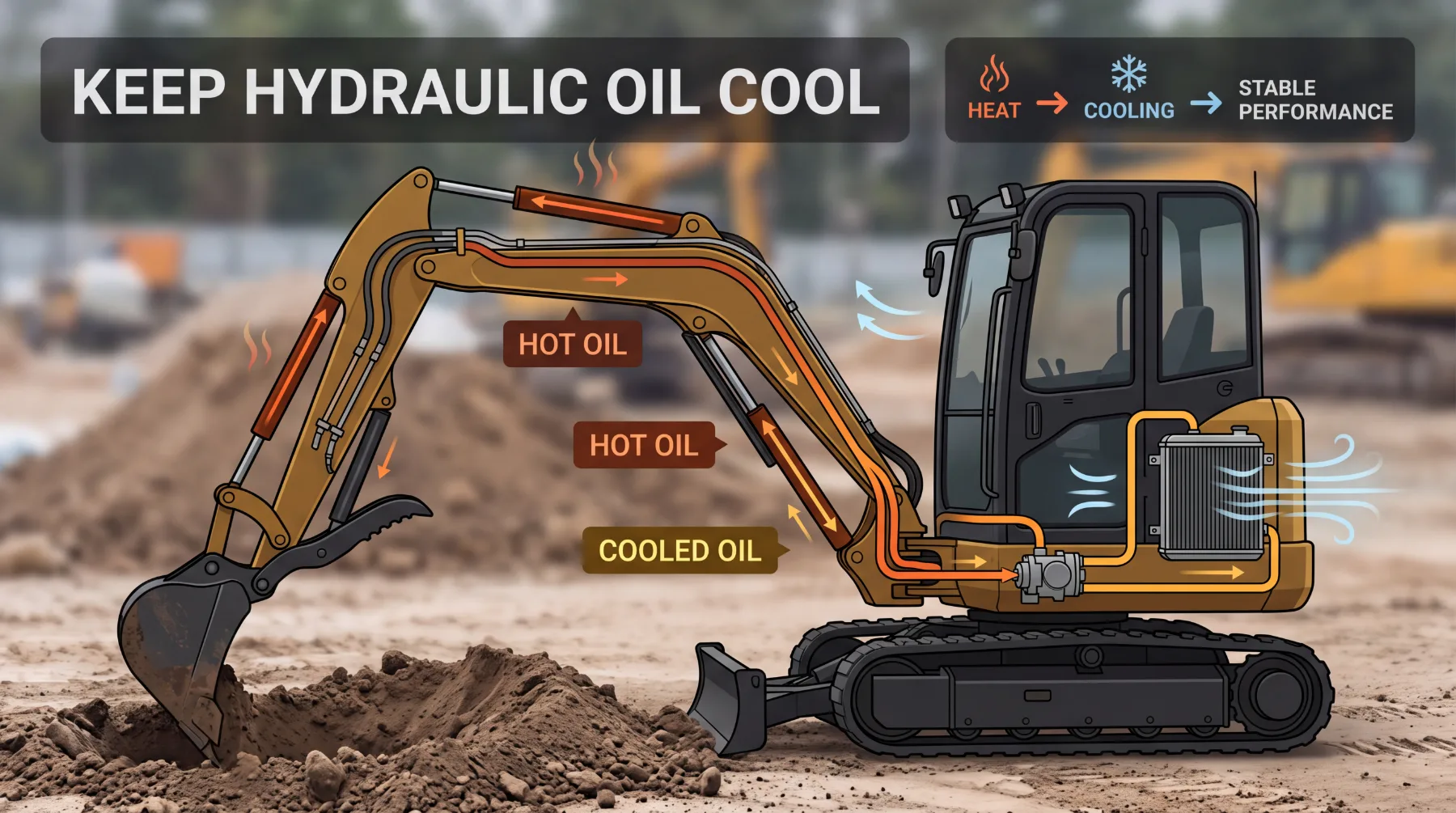
Hydraulic oil does more than transfer force. Its physical properties depend heavily on temperature, and when the oil gets too hot, the entire system feels the effect. The most important property here is viscosity, which describes how thick or thin the oil is. As hydraulic oil heats up, it thins out, and that change alters how the system behaves under load.
Oil that becomes too thin struggles to maintain the film needed to protect and seal components. This can reduce efficiency, allow internal leakage past seals and clearances, and make hydraulic response feel less crisp. An operator may notice slower or less consistent movements as the oil overheats, even though nothing mechanical has failed. The system is simply working with fluid that no longer performs the way it should. Over time, excessive heat also degrades the oil itself, shortening its service life and encouraging the formation of deposits that can harm sensitive components.
Consistent hydraulic response depends on keeping oil temperature within a sensible range, and that is exactly what a well-sized cooling system provides. When the radiator removes heat effectively, the oil stays close to its ideal operating temperature, holding its viscosity and protecting the components it flows through. The result is an excavator that responds predictably shift after shift, whether it started the day cool or has been digging hard for hours. Stable oil temperature also protects your maintenance budget, since fluid that runs cooler lasts longer and the components it lubricates wear more slowly. Cooling is not just about avoiding overheating warnings. It is about preserving the steady, reliable hydraulic performance that productive work depends on.
Compact Radiators Can Struggle Under Continuous Loads
A smaller cooling system is not automatically a poor one. For light-duty or intermittent work, a compact radiator can be perfectly adequate, shedding heat comfortably during short cycles and the natural pauses between tasks. The trouble appears when the same system faces prolonged, heavy operation. Continuous work never gives a small radiator the chance to catch up, and heat begins to accumulate faster than it can be removed.
During sustained heavy digging or continuous attachment use, the hydraulic system produces heat without letup. A compact radiator that copes fine with stop-and-start work can fall behind when the demand becomes relentless. Temperatures rise gradually through the shift, and the machine edges toward the upper end of its thermal range. At that point, operators may need to ease off or pause to let the system cool, which cuts directly into productivity.
Outside conditions can make the situation worse, and several are common on real jobsites:
- Restricted airflow: debris, mud, or a clogged core blocks the air the radiator needs to shed heat.
- High ambient temperatures: hot weather leaves less of a gap between the air and the fluid, slowing heat transfer.
- Dusty conditions: fine dust packs into the radiator fins, insulating them and reducing cooling efficiency.
These factors compound the limits of an undersized system. On a hot, dusty site with the machine working flat out, a compact radiator can quickly reach the point where it no longer keeps up. Understanding this helps buyers avoid choosing a cooling system based on light-duty assumptions when the real work will be far more demanding. Matching the radiator to the toughest expected conditions, not the easiest, prevents heat from becoming a recurring obstacle.
Cooling Capacity Must Match Machine Demand
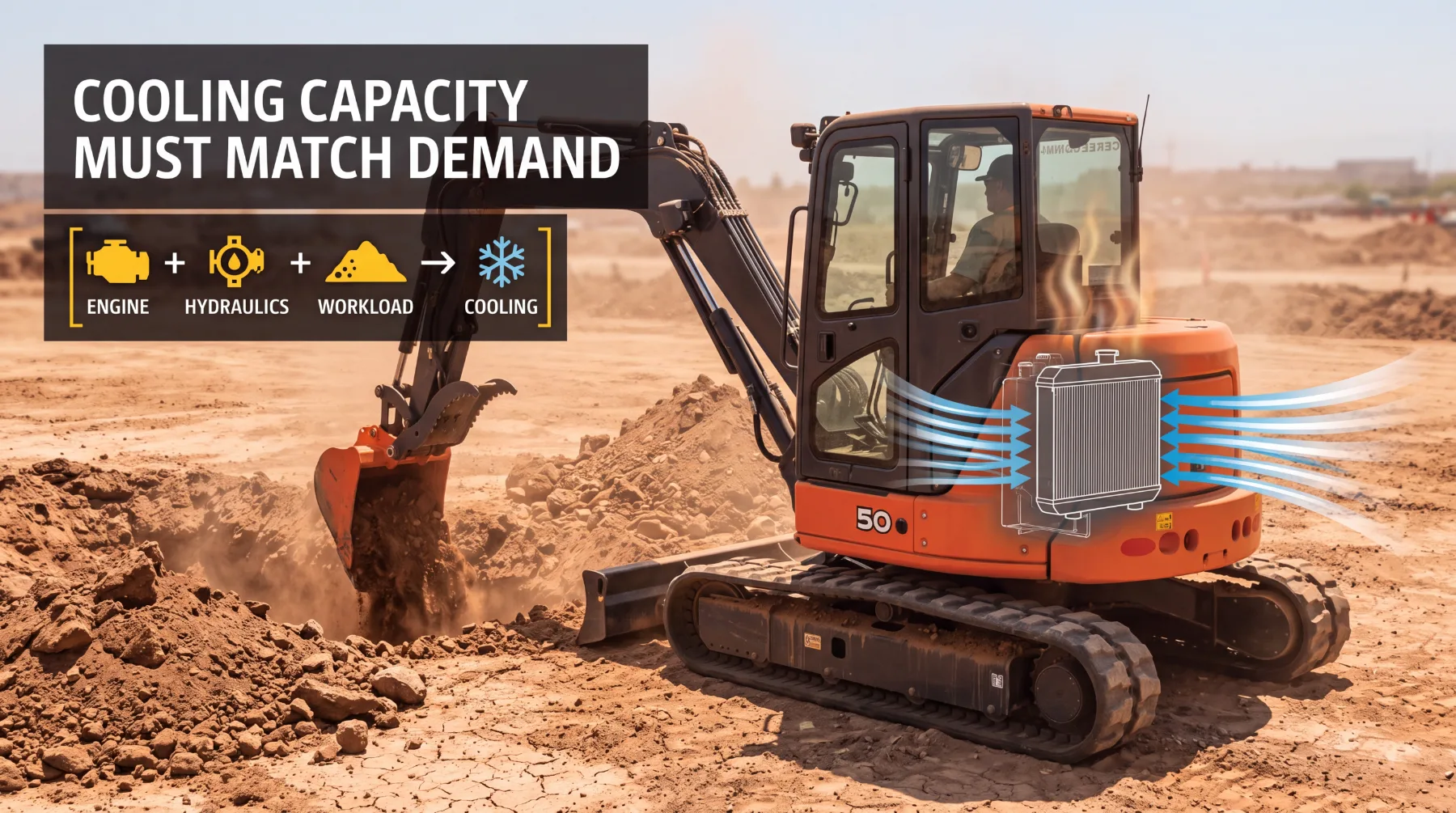
Radiator size should never be considered in isolation. The right cooling capacity depends on how much heat the machine actually produces, which ties directly to its engine power, hydraulic flow, operating pressure, and the workload it will handle day to day. A cooling system sized to match those demands keeps temperatures in check, while one chosen without regard to them can leave the machine overheating exactly when it is working hardest.
Start with the machine's power and hydraulic characteristics. A high-output engine driving a large pump at high pressure generates more heat than a smaller, lighter-duty system. The cooling capacity has to scale with that output. Then factor in the work itself. An excavator that digs continuously in dense ground, or that runs demanding hydraulic attachments for hours, produces far more heat than one handling occasional, lighter tasks. The radiator must be sized for the heat the machine will realistically generate, not a best-case scenario.
Environmental conditions belong in the calculation too. A machine destined for hot climates or dusty sites needs more cooling headroom than one working in cool, clean conditions, since both heat and airflow restriction work against the radiator. Building in that margin protects performance on the worst days rather than only the average ones.
The goal is balance across the whole system. Engine power, hydraulic flow, operating pressure, workload, and cooling capacity all have to work together, so the radiator can handle the machine's heat output without excessive temperature buildup. When these elements are matched thoughtfully, the excavator sustains heavy hydraulic loads reliably. A machine chosen this way keeps working when conditions turn demanding, giving you dependable performance instead of forced slowdowns.
Conclusion
Radiator size plays a far larger role in excavator performance than its modest appearance suggests. Heavy hydraulic work generates significant heat, and the cooling system is what keeps that heat from undermining the machine. A properly sized radiator dissipates heat effectively, holds hydraulic oil at a stable temperature, and preserves consistent response through long, demanding shifts. Compact systems can fall behind under continuous loads, especially in hot, dusty conditions. The dependable choice is a cooling system matched to the machine's engine power, hydraulic flow, operating pressure, and real workload. Weigh cooling capacity alongside these factors, and your excavator will hold its performance when the work is hardest.
Frequently Asked Questions
1. Why does an excavator generate so much heat during heavy hydraulic work?
Heat is a natural byproduct of hydraulic operation. As oil moves under pressure through the pump, valves, cylinders, and hoses, friction and resistance convert some of that energy into thermal energy. During continuous digging, lifting, and attachment use, the hydraulic system works almost without pause, so heat builds up quickly. Demanding attachments like breakers and augers add even more, since they keep the system loaded constantly. The harder and longer the machine works, the more heat it produces, which is why effective cooling becomes essential during extended, heavy cycles.
2. Does a larger radiator really improve cooling performance?
Yes. A larger radiator provides more surface area and greater cooling capacity, allowing it to transfer more heat from the hydraulic oil and engine coolant into the surrounding air. Combined with adequate airflow from the fan, this extra capacity keeps operating temperatures stable during heavy work. A radiator that is too small cannot shed heat fast enough once the system runs hard for long periods. A generously sized cooling system also gives valuable headroom for hot days and heavy jobs, so the machine keeps performing when conditions push it hardest.
3. What happens if hydraulic oil gets too hot?
When hydraulic oil overheats, its viscosity drops and it becomes too thin. Thin oil struggles to maintain the protective film that seals components and reduces internal leakage, so system efficiency declines. Operators may notice slower or less consistent movements even when nothing has mechanically failed, because the fluid no longer performs correctly. Prolonged high temperatures also degrade the oil itself, shortening its service life and encouraging deposits that can harm components. Keeping oil within its ideal temperature range preserves consistent hydraulic response and protects your maintenance budget.
4. Can a small radiator handle heavy-duty excavation?
A compact radiator can be perfectly adequate for light or intermittent work, where short cycles and natural pauses give it time to shed heat. Under prolonged, heavy operation, however, it can struggle. Continuous work never lets the system catch up, so temperatures climb through the shift. Restricted airflow, high ambient temperatures, and dusty conditions make the problem worse by reducing the radiator's efficiency. On a hot, dusty site with the machine working flat out, a small radiator may force operators to slow down or pause to let it cool.
5. How do I know if an excavator has enough cooling capacity?
Consider cooling capacity alongside the machine's engine power, hydraulic flow, operating pressure, and expected workload. A high-output machine running continuously in dense ground or driving demanding attachments generates far more heat than one handling lighter, occasional tasks, so the radiator must scale accordingly. Factor in your environment as well, since hot climates and dusty sites demand extra cooling headroom. The goal is a balanced system where the radiator can handle the machine's realistic heat output without excessive temperature buildup, keeping performance stable even under the most demanding conditions.