Why Can't a Forklift Lift Every Heavy Load
Rated Load Capacity
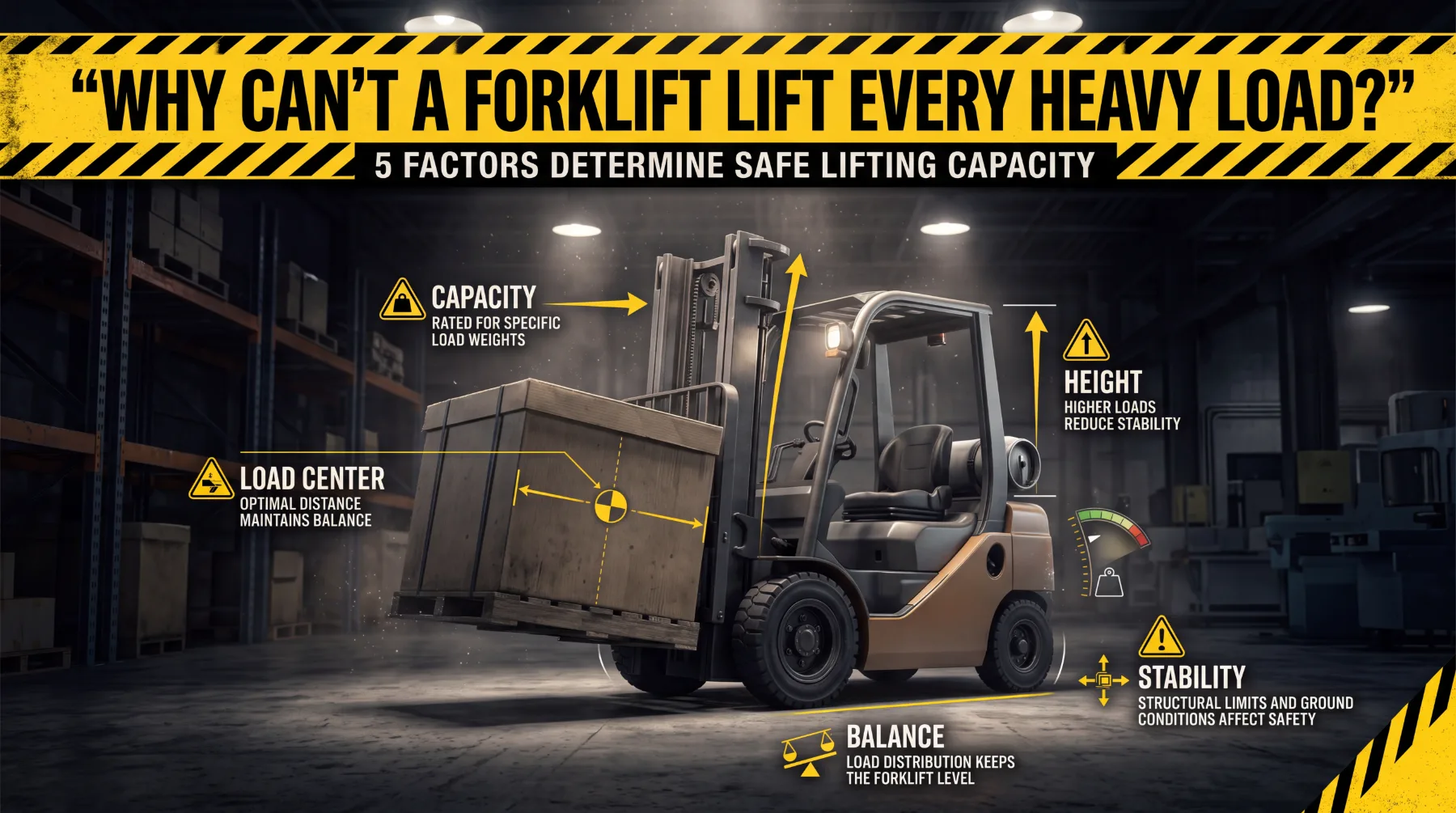
Every forklift is built with a maximum rated capacity, and that number is the starting point for safe lifting. Rated load capacity is the greatest weight the machine can lift and carry safely under specified conditions. Manufacturers determine this figure through careful engineering, accounting for the forklift's design, weight, and balance. It appears on the machine's data plate, and it exists for one clear reason: to tell the operator exactly how much the forklift can handle without becoming unsafe. Going beyond this limit is where trouble starts. When a load exceeds the rated capacity, the forklift loses the balance it depends on to stay stable. The excess weight at the front of the machine can overcome the counterweight at the rear, making the forklift prone to tipping forward. An overloaded machine may also strain its hydraulic system, mast, and other components, leading to mechanical failure or a dropped load. None of these outcomes is acceptable on a busy jobsite. Respecting the rated capacity is a fundamental part of safe operation. Operators should always know the weight of the load before lifting and confirm it falls within the machine's limit. When there's any doubt, checking the data plate and weighing the load are simple steps that prevent dangerous situations. A forklift can't lift every heavy load because its rated capacity sets a firm boundary, and staying within that boundary is what keeps the machine stable, the load secure, and everyone nearby safe. Treating the rated capacity as an absolute limit, rather than a suggestion, is the foundation of dependable forklift operation.
Load Center Matters
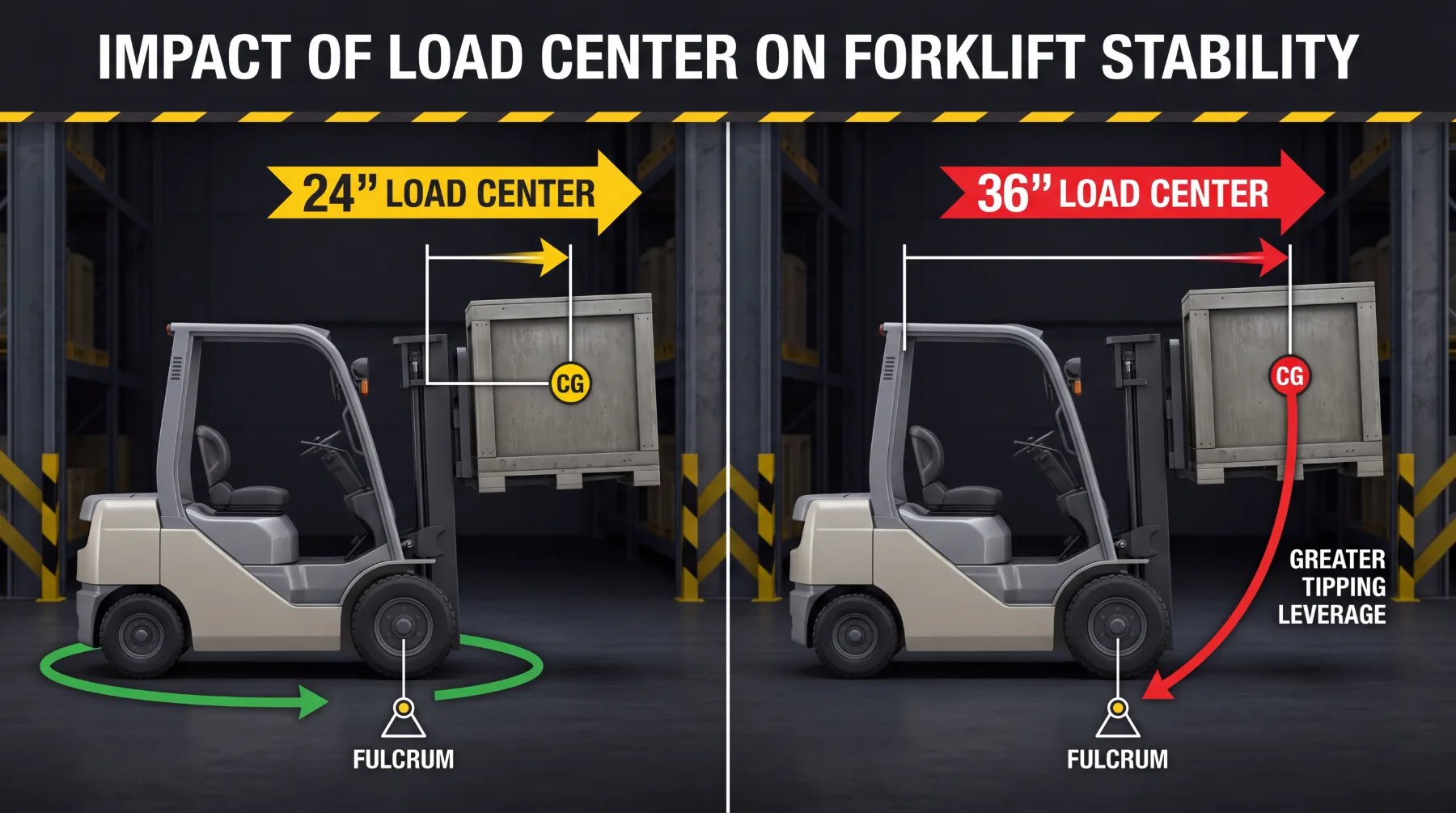 Weight alone doesn't tell the whole story of what a forklift can lift. A machine's true lifting capacity also depends on the load center, which is the distance from the face of the forks to the center of gravity of the load. Rated capacities are typically calculated at a standard load center, often 24 inches. When a load's center of gravity sits at or within that distance, the forklift can lift its rated weight safely. But when the load extends farther out, the situation changes significantly. The reason comes down to leverage. A load positioned farther from the forks creates a longer lever arm, which increases the tipping force acting on the front of the machine. The same weight becomes much harder to control as its center of gravity moves outward, because it exerts more turning force against the forklift's balance. As a result, a farther load center reduces the safe lifting capacity, sometimes dramatically. A load the machine could handle easily at 24 inches may be unsafe at 36 inches, even though the weight itself hasn't changed. This is why operators must consider both weight and load center together. A few practices help keep loads within safe limits:
- Position loads snugly against the fork backrest, keeping the center of gravity as close to the machine as possible.
- Account for deep or oversized loads, which naturally push the load center farther out and lower safe capacity.
- Check the capacity rating for the actual load center, not just the standard figure on the data plate.
When you understand that the load center directly affects capacity, you can load the forklift correctly and avoid the instability that comes from a load reaching too far forward.
Lifting Height
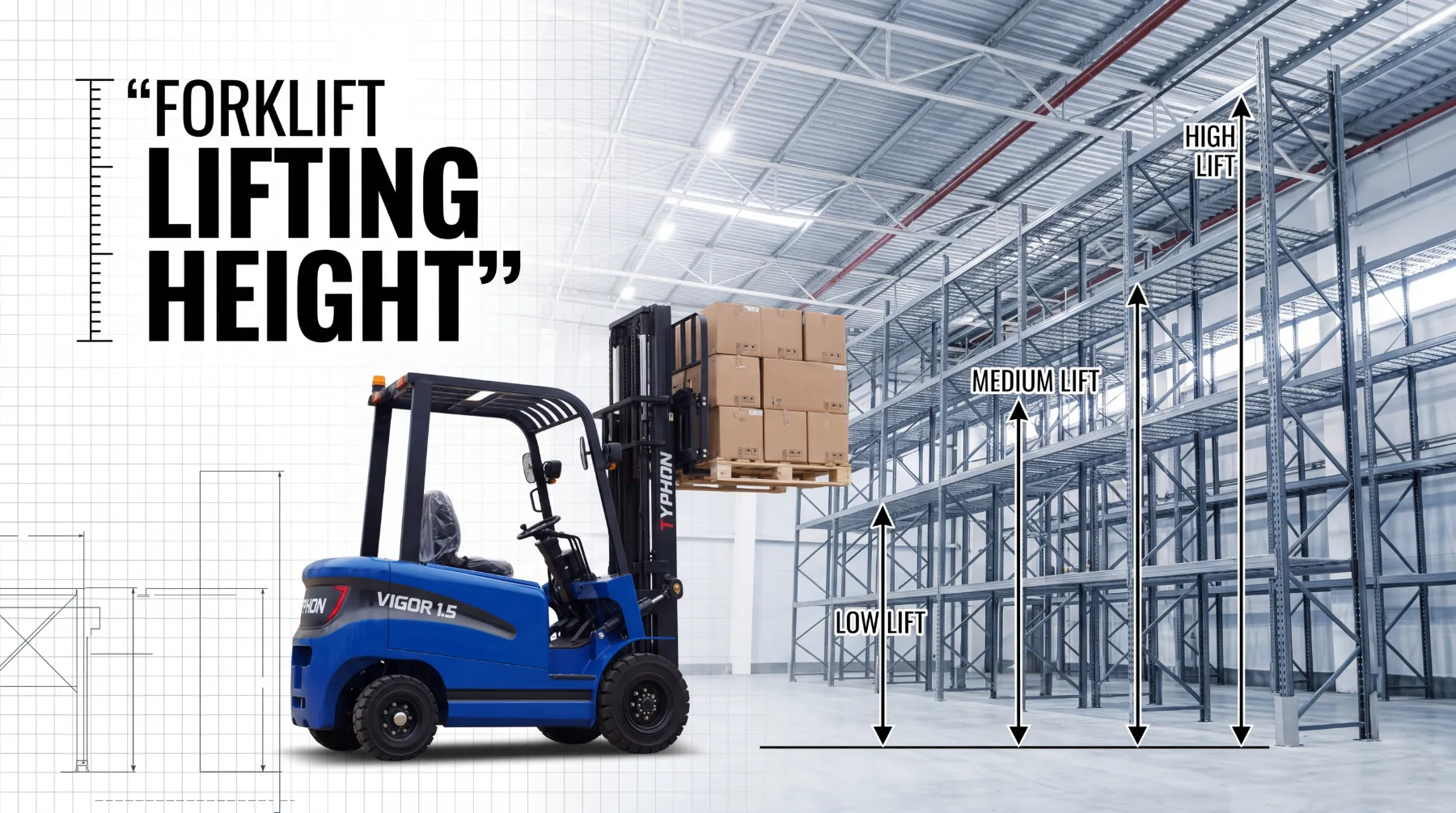
How high a load must travel is another factor that shapes what a forklift can safely lift. A machine's rated capacity is often stated at a specific lifting height, and as the forks rise higher, the safe lifting capacity may drop. Lifting a heavy load to full mast height is a very different task from carrying it low to the ground, and treating the two as equal is a mistake that can lead to a tip-over. The physics behind this are straightforward. When a load is raised high on the mast, the machine's center of gravity rises with it. A higher center of gravity makes the forklift less stable and more susceptible to tipping, particularly to the side. The higher the load goes, the smaller the margin for safe operation becomes, which is why many forklifts carry a reduced capacity rating at elevated heights. A load that's perfectly stable at ground level can become dangerous when hoisted to the top of the mast. Operators should never assume that the rated capacity applies at every height. Instead, they should check the machine's capacity rating for the intended lift height before raising the load. Many data plates provide capacity figures at different heights, and following those figures keeps the lift within safe limits. It's also wise to travel with loads kept low, raising them only when it's time to place or retrieve material. Keeping the load low maintains a lower center of gravity and greater stability during transport. A forklift can't lift every heavy load to every height because elevation reduces stability, and respecting the height-specific capacity is essential to lifting safely.
Load Shape and Balance
Not every load behaves the same way, even when the numbers on the scale look acceptable. The shape and balance of a load have a real effect on how safely a forklift can handle it. Long, awkward, uneven, or poorly balanced loads can shift the center of gravity in ways that make lifting more difficult, sometimes creating instability even when the total weight sits within the rated capacity. Weight is only part of the equation; how that weight is distributed matters just as much. Consider a long load that extends well beyond the forks, or an item that's much heavier on one end than the other. In these cases, the center of gravity may sit farther forward or off to one side than expected. That shift changes how the load acts on the forklift, increasing tipping forces and reducing control. An unbalanced load can pull the machine off center, while an unstable or shifting load can move during travel and throw the forklift off balance without warning. Handling irregular loads safely takes extra care and attention:
- Identify the load's center of gravity before lifting, especially for long or unevenly weighted items.
- Secure loose or shifting loads so they can't move during travel and destabilize the machine.
- Adjust positioning for uneven loads, keeping the heaviest portion close to the mast and centered on the forks.
When a load is oddly shaped or poorly balanced, slowing down and taking the time to position it correctly makes all the difference. A forklift can't lift every heavy load safely because balance and shape influence stability as much as weight does, and recognizing that helps operators handle difficult loads with confidence.
Counterweight and Stability
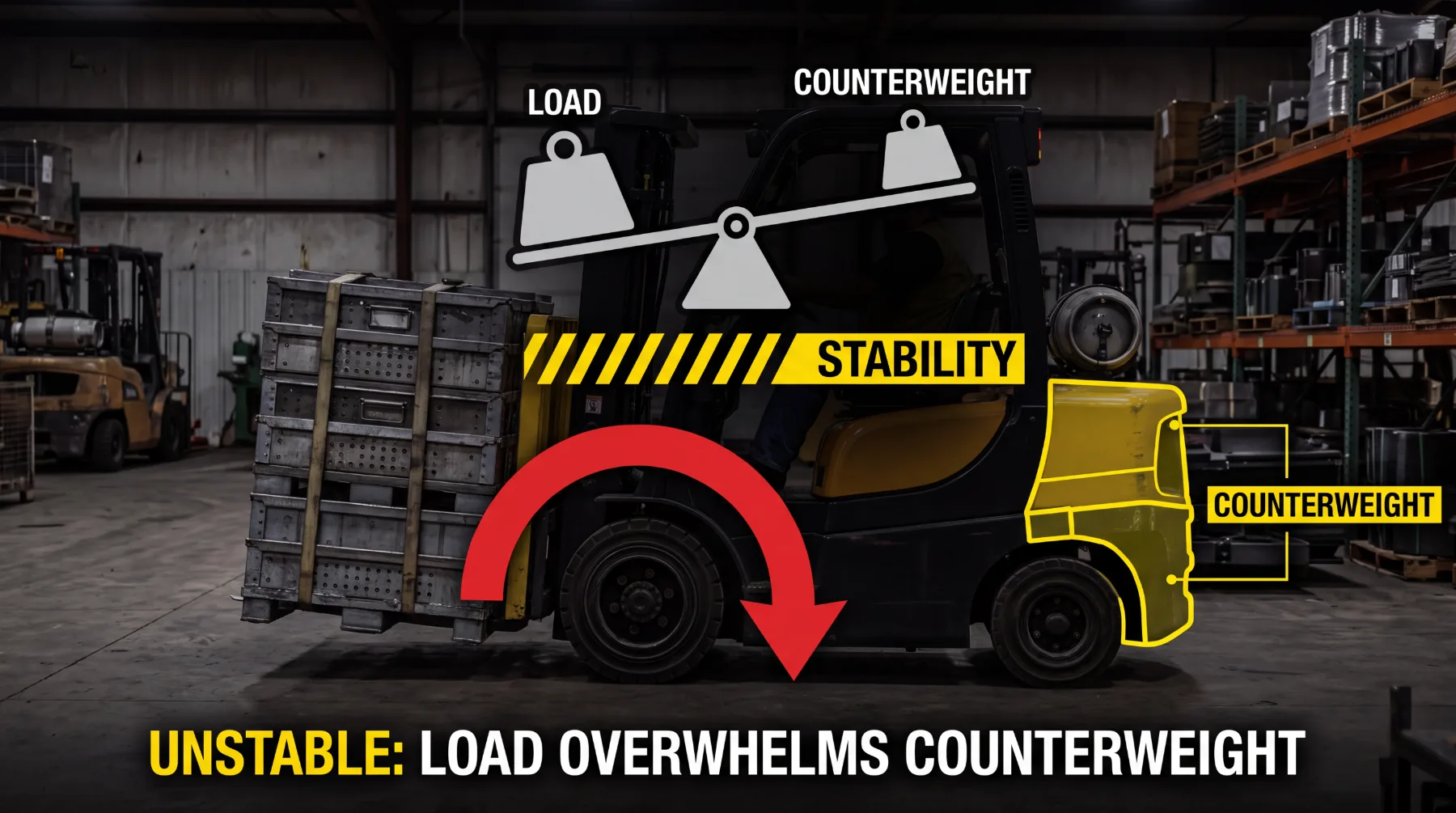 At the heart of every forklift's balancing act is its counterweight. Located at the rear of the machine, the counterweight offsets the weight of the load carried at the front, keeping the forklift stable as it lifts and moves material. This balance is what allows a relatively compact machine to handle heavy loads safely. The counterweight is a carefully engineered part of the forklift's design, sized to work in harmony with the machine's rated capacity. As effective as it is, the counterweight has limits. It can only balance loads up to a certain weight, and only when those loads are positioned correctly. When a load is too heavy, the weight at the front overcomes the counterweight's balancing effect, and the forklift can tip forward. The same danger arises when a load sits too far forward or is raised too high, because these conditions increase the tipping force that the counterweight must resist. Once that force exceeds what the counterweight can handle, stability is lost. Forward tipping is one of the most serious risks in forklift operation, and it happens precisely when the counterweight is overwhelmed. This is why every other factor discussed here connects back to stability. Staying within the rated capacity, keeping the load center close, limiting lifting height, and balancing the load correctly all work together to keep the counterweight doing its job. The counterweight provides the stability a forklift needs, but it can't compensate for a load that's too heavy or poorly positioned. Understanding its limits is what keeps the machine grounded and the operation safe.
Conclusion
A forklift can't lift every heavy load because safe lifting depends on far more than the machine's power. Its rated load capacity sets a firm limit that must never be exceeded, and that capacity shrinks as the load center moves farther from the forks or as the load is raised to greater heights. The shape and balance of a load matter too, since uneven or awkward loads can shift the center of gravity and create instability even at acceptable weights. Underpinning all of this is the counterweight, which keeps the machine balanced but has limits that, when exceeded, lead to dangerous forward tipping. These five factors work together to define what a forklift can safely handle. Before every lift, confirm the load's weight, check its position and height against the capacity rating, and account for its shape and balance. Operating within these limits protects your operators, your equipment, and everyone on the jobsite, ensuring dependable, safe performance every time you put the machine to work.