When Should You Replace Road Roller Drum Scrapers?
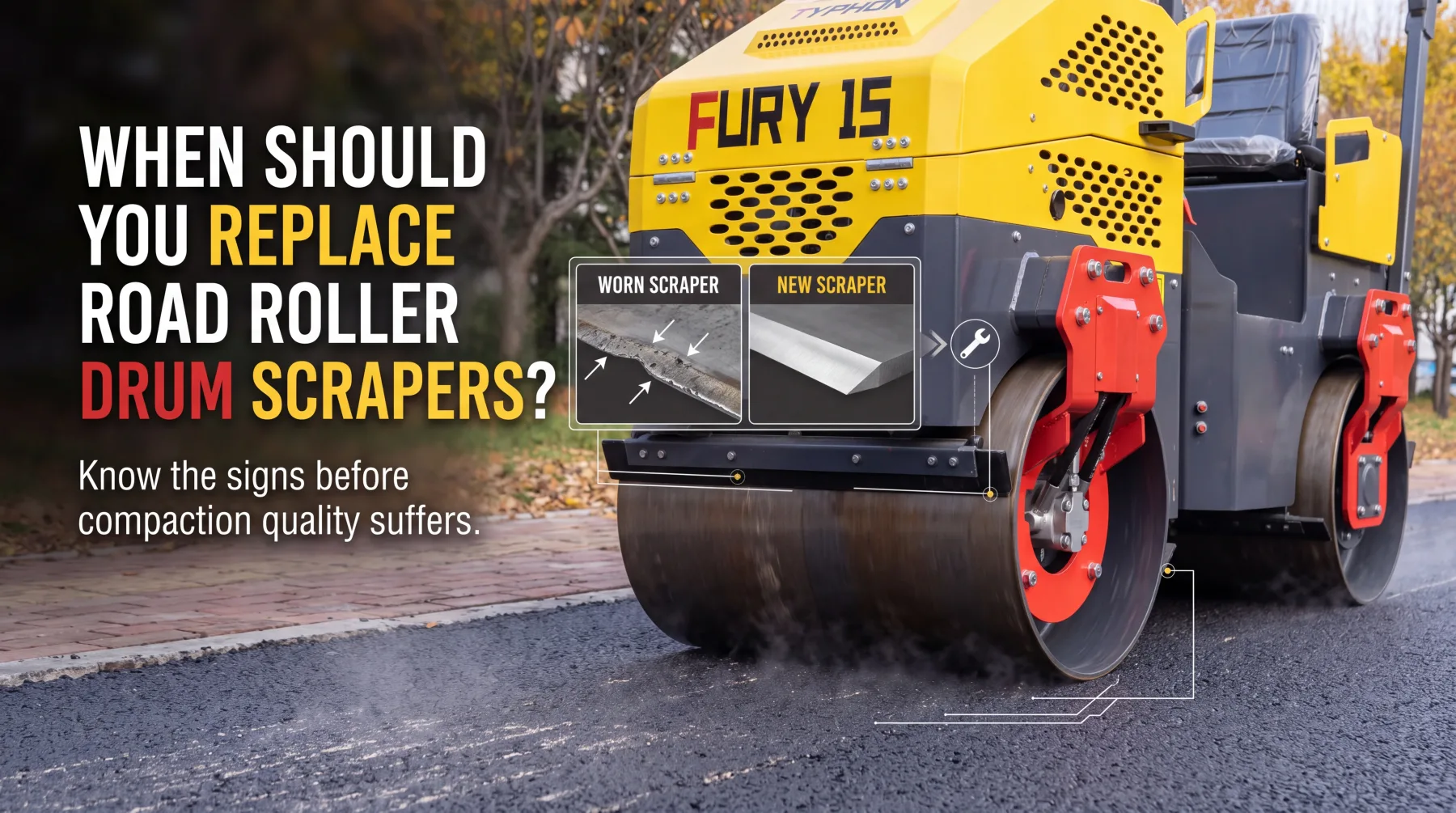
A road roller is only as good as the surface it leaves behind, and that surface depends on something many operators overlook: the drum scrapers. These small components work quietly through every pass, keeping the drum clean so it can compact evenly and reliably. When they wear out, compaction quality slips, extra passes pile up, and productivity suffers. Knowing exactly when to replace drum scrapers keeps your roller performing at its best and protects the quality of your finished work. This guide walks you through what scrapers do, the warning signs of wear, how failing scrapers affect compaction, the conditions that shorten their life, and how to choose dependable replacements that keep your machine running smoothly.
Understanding the Role of Road Roller Drum Scrapers
Drum scrapers may be modest in size, but they play an essential role in how well your roller performs. Mounted against the drum surface, they continuously clear away the material that accumulates during operation. As the roller moves over soil or fresh asphalt, dirt, mud, and sticky material naturally cling to the drum, and without scrapers to remove it, that buildup grows with every rotation. The scraper acts as a constant cleaning edge, wiping the drum clean so it can keep doing its job properly throughout the shift.
That cleaning function directly supports effective compaction. A clean drum maintains consistent, even contact with the surface beneath it, which is exactly what compaction depends on. When material builds up on the drum, that contact becomes uneven, and the pressure the roller applies grows patchy and unpredictable. Properly functioning scrapers prevent this by keeping the drum surface smooth and free of debris, so the machine delivers the uniform force needed for a dense, level result.
The materials scrapers routinely handle include several common culprits:
- Dirt and mud, which pack onto the drum when working over soil.
- Asphalt buildup, which sticks stubbornly to the drum during paving work.
- Loose debris, which clings to the surface on rough or dirty job sites.
By clearing these away pass after pass, scrapers ensure the drum stays in the condition compaction requires. Understanding this role makes clear why worn scrapers are more than a minor nuisance. A scraper that no longer cleans effectively lets material accumulate, and that buildup undermines the consistent drum-to-surface contact that quality compaction relies on. Keeping scrapers in good working order is a small, straightforward step that protects the performance of the entire machine.
Signs of Excessive Wear or Damage
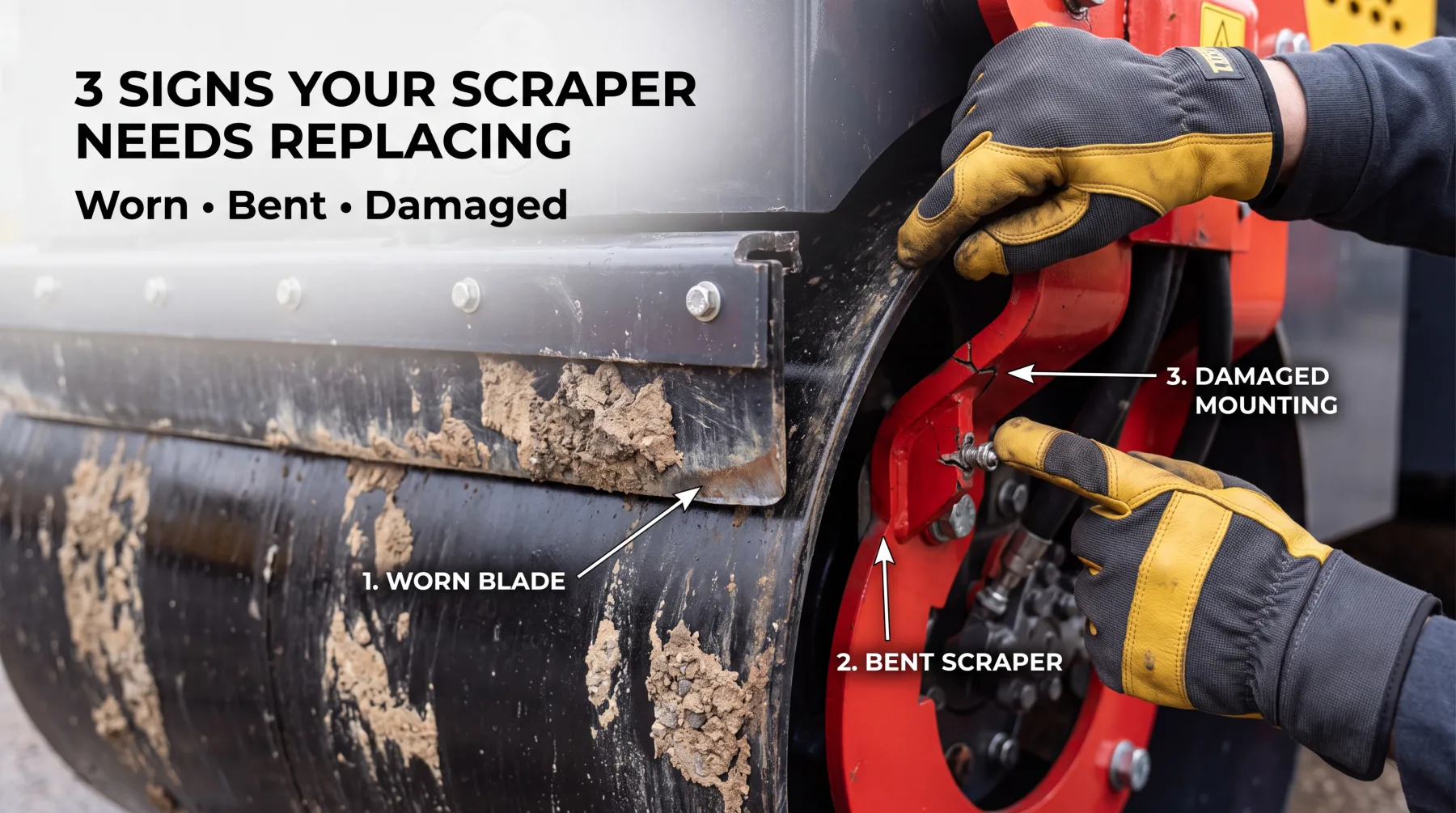
Because scrapers work in constant contact with the drum, they wear down over time, and recognizing the signs of that wear is key to timely replacement. A scraper in good condition sits flush against the drum and clears material cleanly, but as it ages or takes damage, its cleaning performance declines. Learning to spot the early warning signs lets you act before a worn scraper starts affecting your compaction results or the efficiency of the machine.
Several telltale conditions indicate a scraper needs attention:
- Worn blades, where the cleaning edge has thinned or rounded and no longer contacts the drum firmly.
- Bent scrapers, which sit unevenly and leave sections of the drum uncleaned.
- Cracked or damaged mounts, which loosen the scraper and reduce its effectiveness.
Any of these problems allows material to slip past and accumulate on the drum, which is the very outcome the scraper exists to prevent. When you notice buildup forming despite the scraper being in place, that itself is a strong signal the component is no longer doing its job.
Regular inspections are the most reliable way to catch these issues early. A quick visual check before or after operation lets you confirm that scrapers sit properly against the drum, that their edges remain sharp and straight, and that their mounts are secure. Making this a routine habit means you identify wear and damage while they are still minor, rather than discovering them only after compaction quality has already slipped. Catching a worn scraper early turns a simple, inexpensive replacement into a smooth part of ordinary maintenance instead of an urgent repair mid-project. For operators focused on keeping their roller dependable, consistent inspection is the practical foundation of good scraper care.
Reduced Compaction Performance and Surface Quality
The clearest reason to replace worn scrapers shows up in the quality of your compaction. When scrapers fail to remove debris effectively, material builds up on the drum and disrupts the even contact that good compaction demands. Instead of pressing down smoothly and uniformly, a fouled drum applies pressure unevenly, and that inconsistency shows in the finished surface. What should be a smooth, dense result becomes uneven, with soft spots or irregularities that compromise both appearance and performance.
This decline in performance carries a direct cost in productivity. When the roller cannot achieve proper density in the usual number of passes, operators are forced to go over the same ground again and again to make up for the uneven compaction. Consider a paving crew working to a tight schedule: if buildup on the drum leaves the mat unevenly compacted, the operator has to add extra passes to reach the required density. Those additional passes burn fuel, consume time, and slow the entire job, all because the scrapers were no longer keeping the drum clean.
Replacing worn scrapers restores the consistent contact that reliable compaction depends on. With fresh scrapers keeping the drum clean, the roller once again applies even pressure across its full width, reaching target density efficiently and leaving a smooth, uniform surface. The difference is immediate and measurable: fewer passes, better results, and a finish that meets the standard the job requires. Rather than fighting against a fouled drum, the operator works with a machine performing as intended. Viewing scraper replacement as a way to protect compaction quality, not just an equipment repair, makes it easy to justify. Keeping scrapers in good condition is one of the simplest ways to safeguard both the quality of your work and the productivity of your crew.
How Operating Conditions Affect Scraper Lifespan
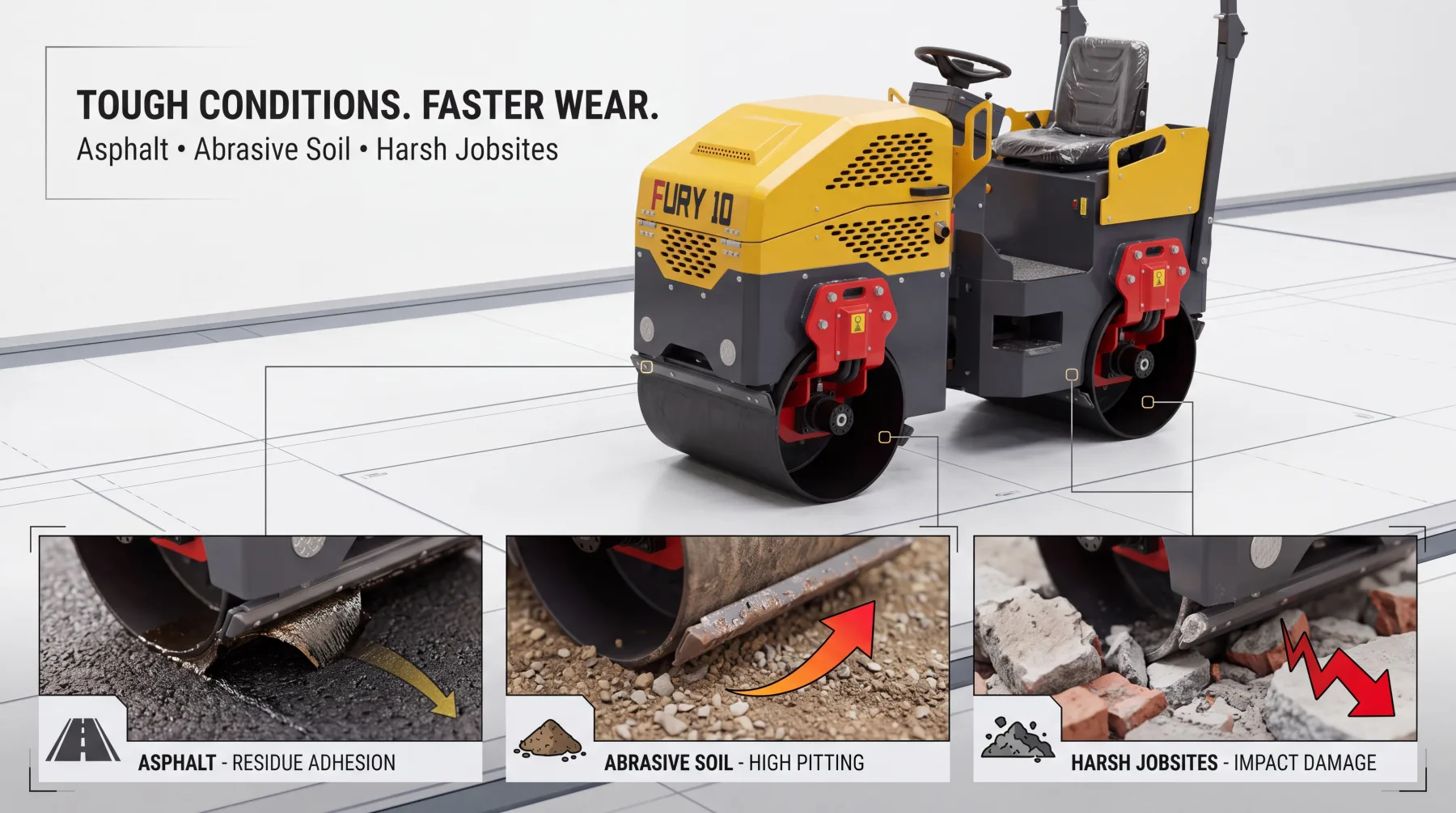
Scrapers do not wear at a fixed rate; how long they last depends heavily on the conditions they work in. The same component might serve for many months on one job and wear out far faster on another, simply because of the materials and environments involved. Understanding how your working conditions affect scraper lifespan lets you anticipate wear and plan replacements before performance begins to decline.
Certain conditions are especially hard on scrapers and shorten their service life:
- Sticky asphalt, which clings aggressively to the drum and forces the scraper to work harder against tough, adhesive buildup.
- Abrasive soil, where gritty, coarse material grinds against the scraper edge and wears it down quickly.
- Harsh job sites, where rough conditions, debris, and heavy continuous use accelerate wear across the board.
A roller working daily in these demanding environments will need its scrapers replaced far more often than one used for lighter, occasional work on gentler surfaces.
This is why matching your maintenance schedule to your actual working conditions makes such a difference. An operator who knows their machine spends long days on abrasive soil or sticky asphalt can plan to inspect and replace scrapers more frequently, staying ahead of the wear rather than reacting to it. By contrast, treating every machine to the same generic replacement interval risks either replacing good scrapers too early or running worn ones too long. The smarter approach is to observe how your conditions affect wear and adjust accordingly, scheduling proactive replacements at the point where performance would otherwise start to slip. This kind of condition-aware maintenance keeps the drum clean and the roller productive without unnecessary downtime or surprise failures. For operations working in tough environments, recognizing the link between conditions and scraper lifespan is essential to keeping the machine reliable through demanding work.
Choosing the Right Replacement Drum Scrapers
Selecting the right replacement scrapers is just as important as replacing them at the right time. Not every scraper suits every machine, and choosing a blade that does not fit or perform well undermines the very benefit you are trying to restore. The goal is to find durable, properly sized scrapers that match your roller drum and clean effectively, so the replacement delivers reliable performance rather than a repeat of the problem you set out to solve.
A few key factors should guide your choice:
- Proper sizing and compatibility, ensuring the scraper fits your specific roller drum and sits correctly against its surface.
- Durable materials, so the blade withstands the demands of your working conditions and holds its edge over time.
- Cleaning efficiency, confirming the scraper maintains firm, even contact to clear material effectively across the full drum width.
Getting these right means the new scraper works exactly as intended, keeping the drum clean and the compaction consistent from the moment it is installed.
Quality matters more than a low price when it comes to replacement parts. A cheap, poorly made scraper may wear out quickly, fit imperfectly, or fail to clean the drum properly, leading to more frequent replacements and the very buildup and compaction problems you were trying to avoid. A well-made scraper, sized correctly and built from durable material, lasts longer and performs more reliably, which reduces downtime and keeps your roller earning its keep. Investing in quality replacement parts is a straightforward way to extend equipment reliability and avoid the repeated interruptions that come with inferior components. For operators who depend on their roller day after day, choosing dependable, properly matched scrapers is a small decision that pays off in consistent performance and fewer headaches down the road.
Conclusion
Replacing road roller drum scrapers at the right time is essential for maintaining smooth operation and consistent compaction results. Worn scrapers allow material to build up on the drum, leading to uneven surfaces, extra passes, and lost productivity, all of which prevents timely replacement. By committing to regular maintenance, routine inspections, and proactive replacements matched to your working conditions, you keep the drum clean and the machine performing at its best. Choosing durable, properly sized replacement scrapers further protects reliability and reduces downtime. Together, these simple practices help you maximize productivity, safeguard the quality of every finished surface, and extend the service life of your roller for years to come.