How Track Size Affects Scissor Lift Stability and Mobility
Track size is easy to overlook when comparing crawler scissor lifts, yet it quietly shapes how safely and smoothly the machine performs. The dimensions of those tracks decide how the lift carries its weight, how firmly it grips the ground, and how confidently it moves across difficult terrain. Choose the right size and you gain a stable platform that travels reliably where wheeled models struggle. Choose poorly and you risk sinking into soft ground, marking delicate surfaces, or fighting the machine through tight spaces. This post explains what track size means on a scissor lift, how it influences stability and ground pressure, the way it affects mobility, and how to match track dimensions to the job in front of you.
What Is Track Size on a Scissor Lift?
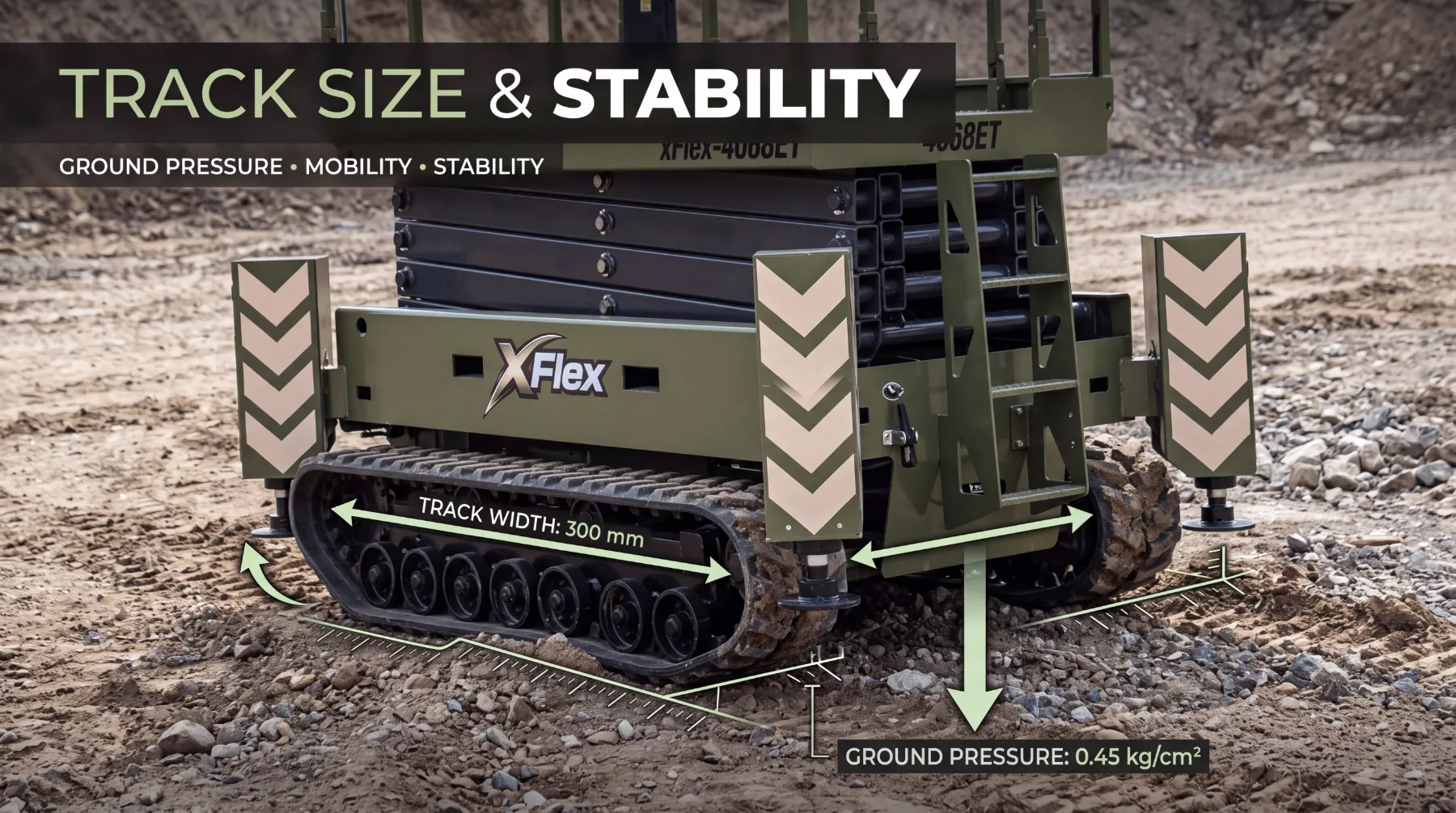
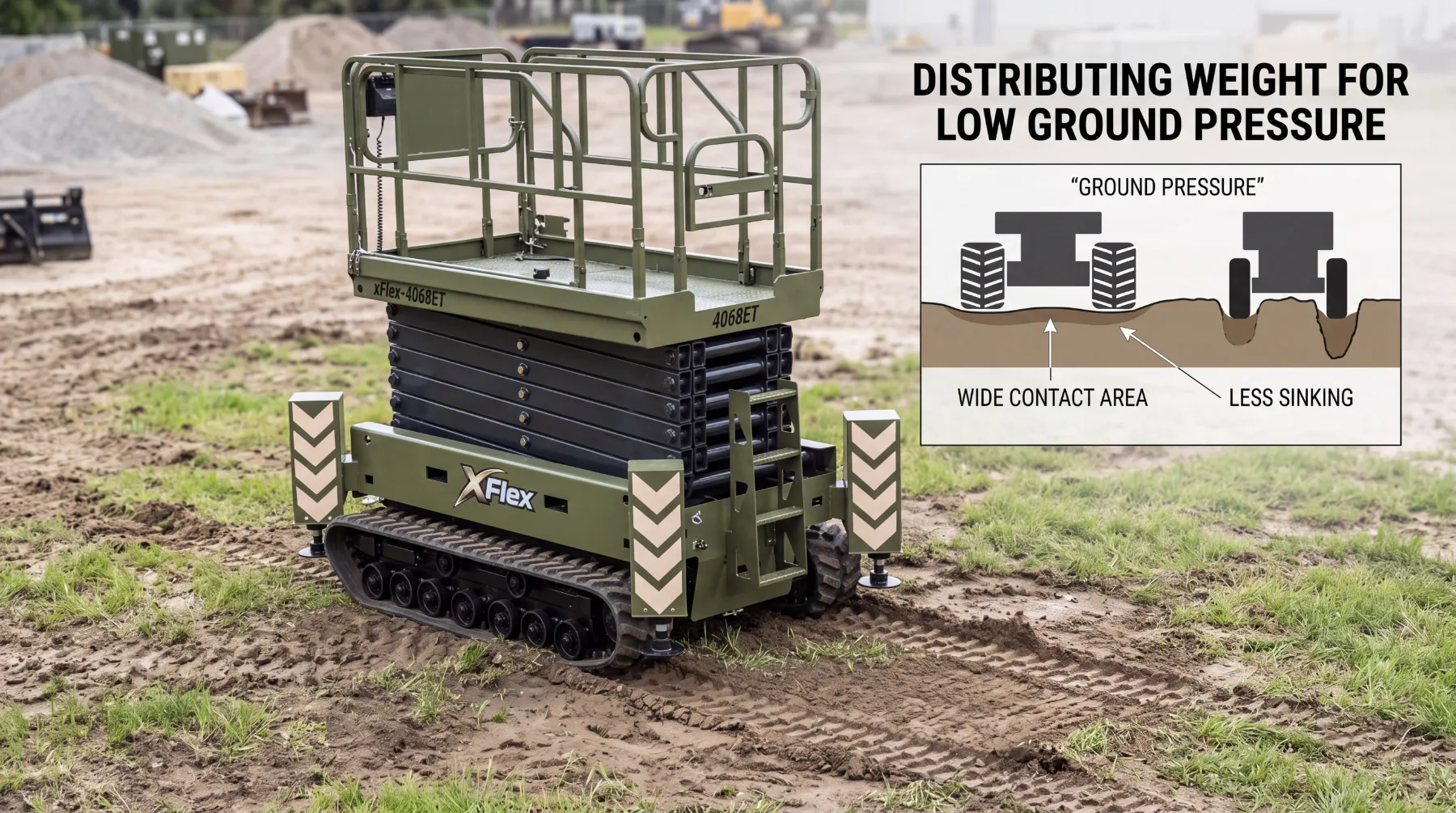 Track size refers to the dimensions and ground contact area of the tracks that support a crawler scissor lift. It covers the width of each track, the length that sits in contact with the ground, and the total contact area those two measurements create together. This footprint is more than a set of numbers on a spec sheet. It determines how the machine distributes its weight and how it behaves as it moves across concrete, gravel, soil, or turf. Each dimension contributes something specific to performance. Width affects how far the weight spreads from side to side, length influences fore-and-aft stability and traction, and the combined contact area shapes how gently or firmly the machine presses into the surface below. When these dimensions are well matched to the machine's weight and intended use, the lift travels predictably and supports elevated work with confidence. Here's how the core measurements shape day-to-day behavior:
- Track width: wider tracks spread weight and improve lateral stability
- Track length: longer ground contact aids traction and forward balance
- Contact area: the total footprint governs weight distribution and ground pressure
Track size never works in isolation. It interacts with the lift's overall weight, its working height, and the ground conditions on site to determine real-world performance. A track size that performs beautifully on a firm paved lot may behave very differently on soft, uneven soil. Understanding track size as the foundation of how a crawler scissor lift carries and moves itself is the first step toward selecting a machine that fits your work. From there, the connections to stability, ground pressure, and mobility become far easier to see and manage.
How Track Size Affects Stability
Stability is where track size proves its value most clearly, because the footprint of the tracks directly shapes how securely the machine stands. Larger tracks create a wider, longer base that anchors the lift to the ground and helps distribute machine weight across a broader surface. That wider footprint gives the machine a more planted stance, which matters a great deal when the platform rises and the operator works at height. The connection comes down to balance. A scissor lift stays stable when its center of gravity remains well within the support base formed by the tracks. A larger footprint expands that base, giving the center of gravity more room before it approaches the edge. This becomes especially important on uneven or softer terrain, where smaller footprints can allow the machine to lean, settle unevenly, or feel unsteady as the platform elevates. Several conditions make a generous track footprint especially valuable:
- Uneven ground: a wider base resists leaning on slopes and irregular surfaces
- Soft terrain: longer, wider tracks reduce uneven settling into the ground
- Elevated work: a broad footprint supports steadier platforms at height
In practice, this stability translates into operator confidence. A machine that feels solid at ground level and at full extension lets the crew focus on the task rather than on the equipment. Larger tracks won't overcome an overloaded platform or careless operation, and rated capacity and proper procedures still apply. But when the footprint suits the machine's weight and the terrain, track size delivers the steady, dependable base that safe elevated work demands. That reliable footing is one of the strongest arguments for choosing a crawler model over a wheeled alternative on challenging ground.
Track Size and Ground Pressure
Ground pressure describes how much force the scissor lift places on the surface beneath it, and track size plays a decisive role in that figure. The principle is straightforward: spreading the same weight across a larger contact area lowers the pressure at any single point. A machine with a generous track footprint presses more gently into the ground than one carrying the same weight on a smaller footprint or on narrow wheels. This matters most on surfaces that can't tolerate concentrated force. Soft soil, sand, gravel, mud, and manicured turf all respond poorly to heavy point loads. Narrow wheels can sink, rut, or leave deep marks in these conditions, stalling progress and damaging the surface. A larger track contact area reduces ground pressure enough that the machine floats across softer terrain rather than digging into it, which is exactly why tracked models suit environments where wheeled lifts falter. Consider what lower ground pressure delivers on sensitive ground:
- Reduced sinking: a broad footprint keeps the machine on top of soft soil
- Less surface damage: gentle pressure protects turf, landscaping, and finished ground
- Steadier travel: the lift moves without rutting or bogging down
There's a practical trade-off worth understanding. Lower ground pressure protects surfaces and improves flotation, but it comes from larger, heavier tracks that add to the machine's overall size. The goal isn't the lowest possible pressure in every case, but pressure appropriate to the ground you'll actually work on. On firm concrete, ground pressure is rarely a concern; on soft or delicate surfaces, it becomes a deciding factor. Matching track contact area to the surface ensures the lift supports its weight without sinking, marking, or losing stability where it counts most.
How Track Size Impacts Mobility
Mobility is the other side of the track size equation, and here the dimensions shape how the machine moves rather than how it stands. Track width and length influence traction, turning ability, and how easily the lift navigates tight or uneven work areas. The right dimensions help the machine grip the ground, pivot when needed, and thread through confined spaces without losing its footing along the way. Traction is the first payoff. Larger tracks with ample ground contact grip loose or slippery surfaces more effectively, letting the machine climb, crawl, and hold positions where smaller footprints might slip. That grip is what allows a crawler scissor lift to travel confidently across mud, gravel, and graded ground. Longer tracks tend to improve straight-line stability and traction, giving the machine a sure, planted feel as it advances over rough terrain. Turning and confined-space handling pull in a slightly different direction, though:
- Traction: larger contact area improves grip on soft or uneven ground
- Turning: track dimensions affect how tightly and smoothly the machine pivots
- Access: overall track width influences whether the lift fits through gates and aisles
Here's the trade-off in practice. Very large tracks boost traction and stability but can make the machine wider and harder to maneuver in tight spots, while a more compact footprint turns more nimbly but may give up some grip. The best track size balances these demands so the machine moves capably without becoming unwieldy. A lift that grips well yet still fits through the access points on your site keeps work flowing smoothly. Matching track dimensions to both the terrain and the space available lets the machine deliver the traction it needs while remaining practical to position throughout the job.
Choosing the Right Track Size for the Job
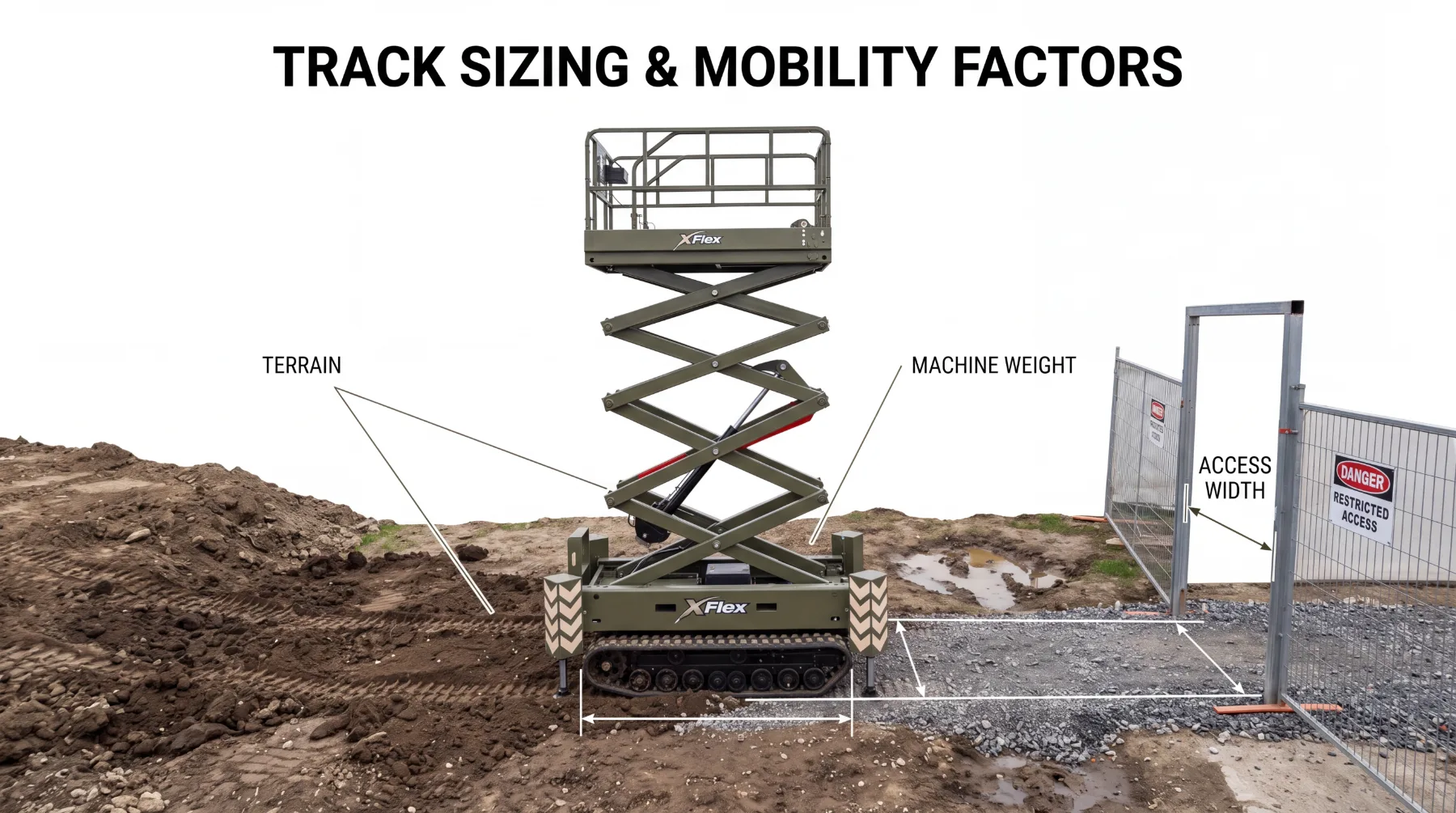 Selecting the right track size starts with an honest read of where and how the machine will work. The ideal dimensions depend on terrain, ground conditions, machine weight, access width, and the overall working environment. No single track size suits every situation, so the smart approach weighs these factors together rather than chasing the largest or smallest footprint available. Terrain and ground conditions usually lead to the decision. Soft, uneven, or delicate surfaces call for larger tracks that lower ground pressure and improve stability, while firm, level ground places fewer demands on the footprint. Machine weight matters too, since a heavier lift needs adequate contact area to distribute that load without sinking. Access width then acts as a practical limit: a track size that performs well on open ground is useless if the machine can't fit through the gates, doorways, or aisles your site requires. A practical routine helps translate these factors into a confident choice:
- Assess the terrain: identify whether the ground is firm, soft, uneven, or delicate
- Account for machine weight: ensure the contact area supports the load without sinking
- Check access width: confirm the machine fits through the site's entry points
- Consider the environment: factor in slopes, confined spaces, and surface sensitivity
The aim is to match track dimensions to the jobsite so the machine improves mobility while maintaining reliable support during elevated work. A well-matched track size grips where it needs to, spreads weight where surfaces are soft, and still moves practically through the space available. When the footprint suits both the ground and the access conditions, the crawler scissor lift performs at its best, giving operators a stable base and dependable movement across the full range of tasks the job demands.
Conclusion
Track size shapes nearly every aspect of how a crawler scissor lift performs, from the stability of its base to the pressure it places on the ground and the way it moves across a site. Larger tracks widen the footprint, lower ground pressure, and improve stability and traction on soft or uneven terrain, while a more compact footprint offers nimbler handling in tight spaces. The right choice always depends on terrain, ground conditions, machine weight, access width, and the working environment. By weighing these factors together and matching track dimensions to the actual jobsite, you gain a machine that stands steady during elevated work and moves reliably where wheeled models struggle, delivering dependable performance you can count on.
Frequently Asked Questions
1. What exactly does track size mean on a scissor lift? Track size refers to the dimensions and ground contact area of the tracks supporting a crawler scissor lift. It includes the width of each track, the length in contact with the ground, and the combined footprint those measurements create. Width spreads weight from side to side, length aids traction and forward balance, and the total contact area governs how the machine distributes its weight and presses into the surface. Together, these dimensions determine how the lift carries itself and how it behaves across concrete, gravel, soil, or turf, making track size a foundational factor in overall performance. 2. How does track size affect a scissor lift's stability? Larger tracks create a wider, longer base that helps distribute machine weight and anchors the lift more securely to the ground. A scissor lift stays stable when its center of gravity remains within the support base formed by the tracks, and a bigger footprint expands that base, giving the center of gravity more room before it nears the edge. This proves especially valuable on uneven or softer terrain, where smaller footprints can lean or settle unevenly. The result is a steadier platform at height. Rated capacity and proper operating procedures still apply, but a suitable footprint delivers the dependable base safe elevated work requires. 3. Why is ground pressure important, and how do tracks reduce it? Ground pressure is the force a scissor lift places on the surface beneath it. Spreading the same weight across a larger track contact area lowers the pressure at any single point, so a machine with a generous footprint presses more gently than one on narrow wheels. This matters on soft soil, sand, gravel, mud, or turf, where concentrated loads cause sinking, rutting, or surface damage. A larger contact area lets the lift float across softer ground instead of digging in. On firm concrete, ground pressure rarely matters, but on delicate or unstable surfaces, it becomes a deciding factor in track selection. 4. Do bigger tracks always mean better mobility? Not always. Larger tracks improve traction and straight-line stability by gripping loose or slippery ground more effectively, which helps the machine travel confidently over mud, gravel, and rough terrain. However, very large tracks can make the machine wider and harder to maneuver in tight spaces, while a more compact footprint turns more nimbly but may give up some grip. Overall track width also affects whether the lift fits through gates, doorways, and aisles. The best track size balances traction and stability against turning ability and access, so the machine moves capably without becoming unwieldy on your specific site. 5. How do I choose the right track size for my jobsite? Start by assessing the terrain and ground conditions, since soft, uneven, or delicate surfaces call for larger tracks that lower ground pressure and boost stability, while firm ground places fewer demands on the footprint. Factor in machine weight to ensure the contact area supports the load without sinking. Check access width to confirm the machine fits through your site's entry points, and consider the broader environment, including slopes and confined spaces. Matching track dimensions to these factors gives you a lift that improves mobility while maintaining reliable support during elevated work, performing well across the full range of tasks your job demands.