How to Safely Operate a Wheel Loader in Wet Conditions
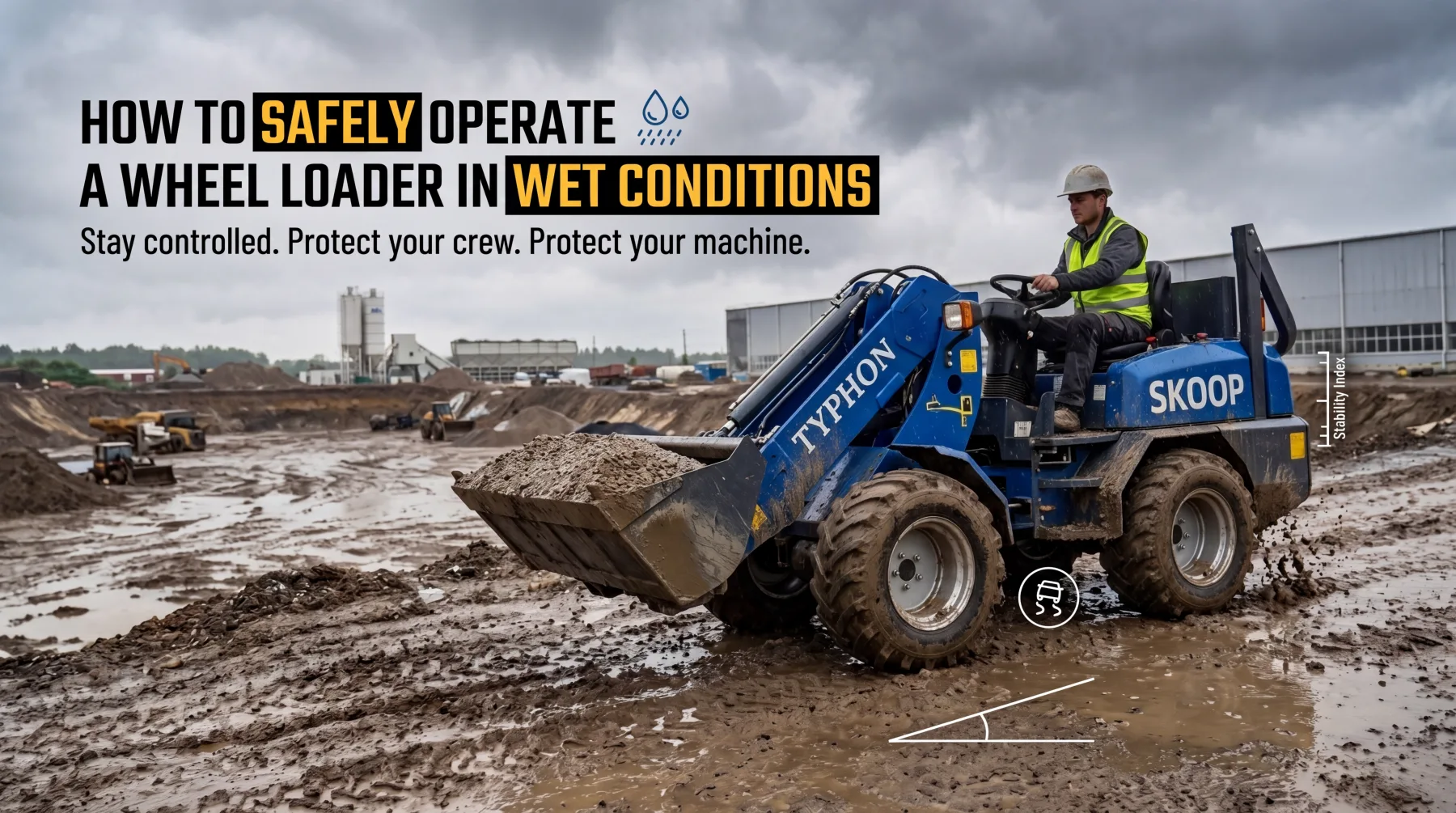
Wet weather changes everything about how a wheel loader behaves on the job site. Ground that felt firm yesterday can turn slick and unstable after a heavy rain, and a machine that normally handles with ease may suddenly feel unpredictable. Operating safely in these conditions takes more than experience; it takes careful planning, the right techniques, and a steady focus on control. This post walks through five practical areas that matter most when the ground is wet, from assessing the site before you start to handling loads, protecting the machine, and working slopes safely. Master these, and you can keep both your crew and your equipment protected through even the messiest conditions.
Assessing Jobsite Conditions Before Operation
Before a wheel loader ever moves, the wet job site deserves a careful, honest look. Rain and standing water transform a work area in ways that are not always obvious from the cab, creating slippery surfaces, reduced visibility, and unstable ground that can catch even seasoned operators off guard. Taking the time to walk the site and study the conditions is the single most important step in operating safely, because it lets you identify problems while you still have the freedom to plan around them rather than react to them under pressure.
A thorough inspection means looking closely at the specific hazards that wet weather tends to produce. Each one affects how the machine will handle and where it can safely travel:
- Mud, which reduces traction and can hide dips, ruts, or obstacles beneath the surface.
- Standing water, which may conceal soft spots, holes, or debris you cannot see from above.
- Soft soil, where the ground can give way under the weight of a loaded machine.
- Reduced visibility, from rain, spray, or fog that makes spotting hazards harder.
Noting where these conditions appear helps you map out safer routes and avoid the areas most likely to cause trouble.
This assessment is not a one-time task on a wet day. Conditions can shift quickly as rain continues, water pools, or repeated passes churn firm ground into mud. A smart operator checks the site before starting and stays alert to changes throughout the shift, adjusting plans as the ground evolves. By treating the pre-operation inspection as an essential habit rather than an optional step, you give yourself the information needed to work with confidence. Understanding exactly what you are dealing with turns an unpredictable, hazardous site into one you can navigate deliberately and safely.
Maintaining Proper Traction and Machine Control
Once you begin operating, wet ground demands a more deliberate approach to traction and control than dry conditions ever require. Moisture reduces the grip between the tires and the surface, and that lost traction makes the machine harder to steer, slower to respond, and more prone to sliding. Recognizing this change and adapting your driving is what keeps the loader stable and predictable, rather than allowing a routine maneuver to turn into a dangerous slide.
The foundation of good control in wet conditions is smoothness in everything you do. Sudden inputs are the enemy on slippery ground, because abrupt movements break traction and upset the machine's balance. Keeping your actions gentle and controlled preserves the grip you have and keeps the loader responding the way you expect:
- Use controlled movements, easing into acceleration, steering, and stops rather than acting sharply.
- Avoid sudden turns or braking, both of which can cause the tires to lose their footing and slide.
- Adjust driving speed, slowing down to give yourself more time to react and to maintain stability.
Each of these habits protects the connection between tire and ground that safe operation depends on.
Speed deserves particular attention, since it magnifies every other risk on wet terrain. A loader moving too fast has less time to respond to a slick patch or a hidden hazard, and stopping distances grow considerably when traction is reduced. Slowing down gives you the margin needed to stay in control, especially when the ground condition changes or visibility drops. Combined with smooth, deliberate inputs, a measured pace keeps the machine planted and responsive throughout the work. By treating traction as something you actively manage rather than take for granted, you maintain the steady control that keeps both the operator and everyone nearby safe in demanding wet conditions.
Managing Loads on Slippery Terrain
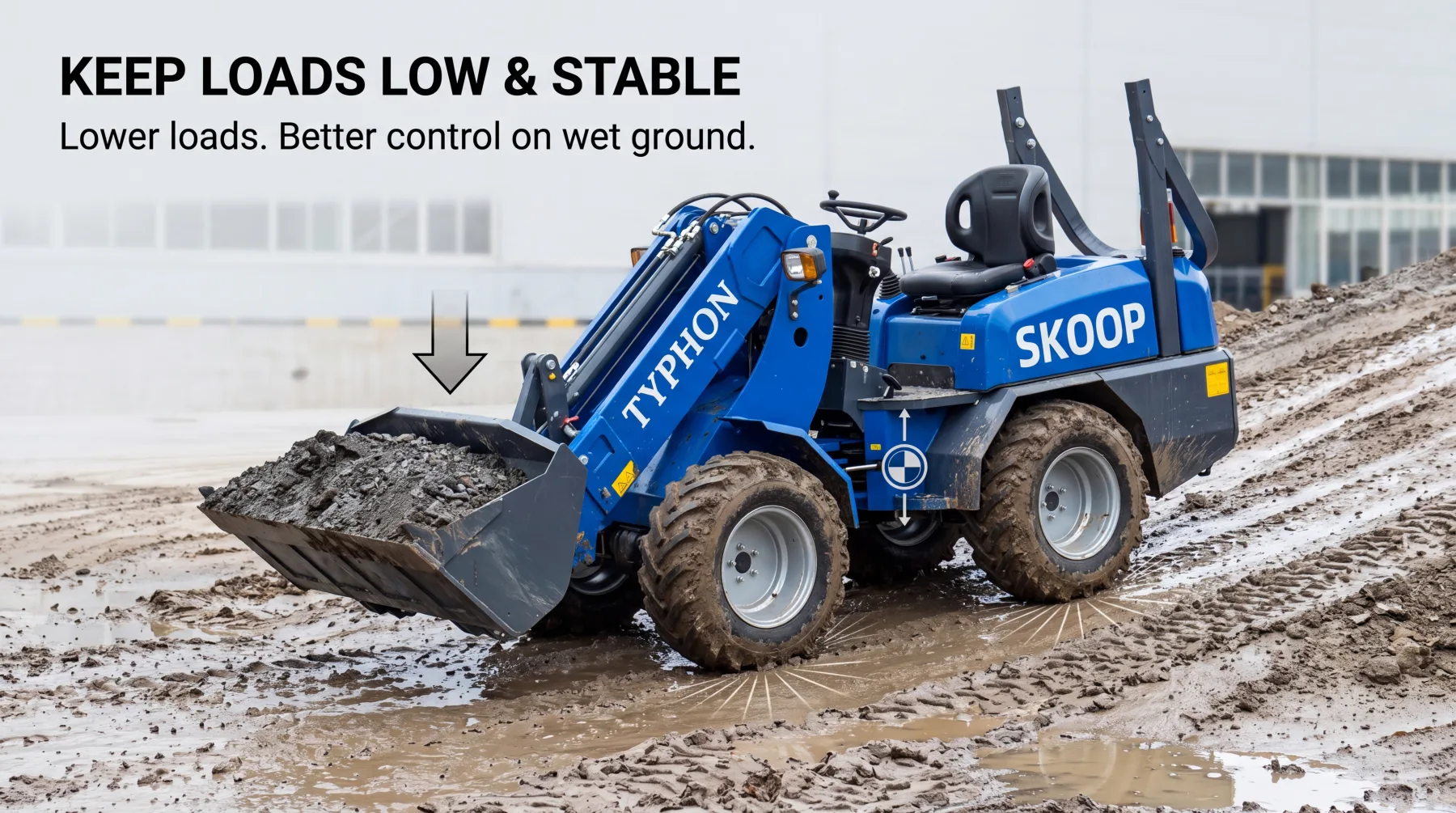
Handling loads on wet ground introduces a layer of risk that firm, dry conditions rarely present. A heavy load raises the machine's center of gravity and shifts its balance, and on slippery terrain that shift can quickly lead to tipping or a loss of control. Carrying material safely in these conditions requires extra caution and a clear understanding of how load handling affects stability, so that a routine task does not become the moment things go wrong.
The way you carry a load makes an enormous difference to how stable the machine stays. A few disciplined habits keep the loader balanced and reduce the chance of an accident:
- Keep loads low while traveling, which lowers the center of gravity and helps the machine stay planted.
- Avoid overloading the bucket, since excess weight strains stability and makes the loader harder to control.
- Approach piles or slopes carefully, moving slowly and deliberately as you load or climb.
Following these practices keeps the machine's weight where it belongs and preserves the balance that wet conditions constantly threaten.
Load height and weight work together to determine how safely the loader travels, and both call for restraint on slippery ground. Raising a full bucket high while moving across mud invites instability, so keeping the load low and the bucket within a sensible capacity gives you a far steadier machine. The approach to piles and slopes matters just as much, because rushing into a pile or climbing a grade with a heavy load on slick terrain can easily overwhelm the loader's grip. Taking these moments slowly, reading the ground as you go, and resisting the temptation to move more material per pass all protect against tipping and lost control. By managing loads thoughtfully on wet surfaces, you keep productivity steady while ensuring the machine remains balanced, controllable, and safe throughout the work.
Preventing Wheel Loader Damage in Wet Environments
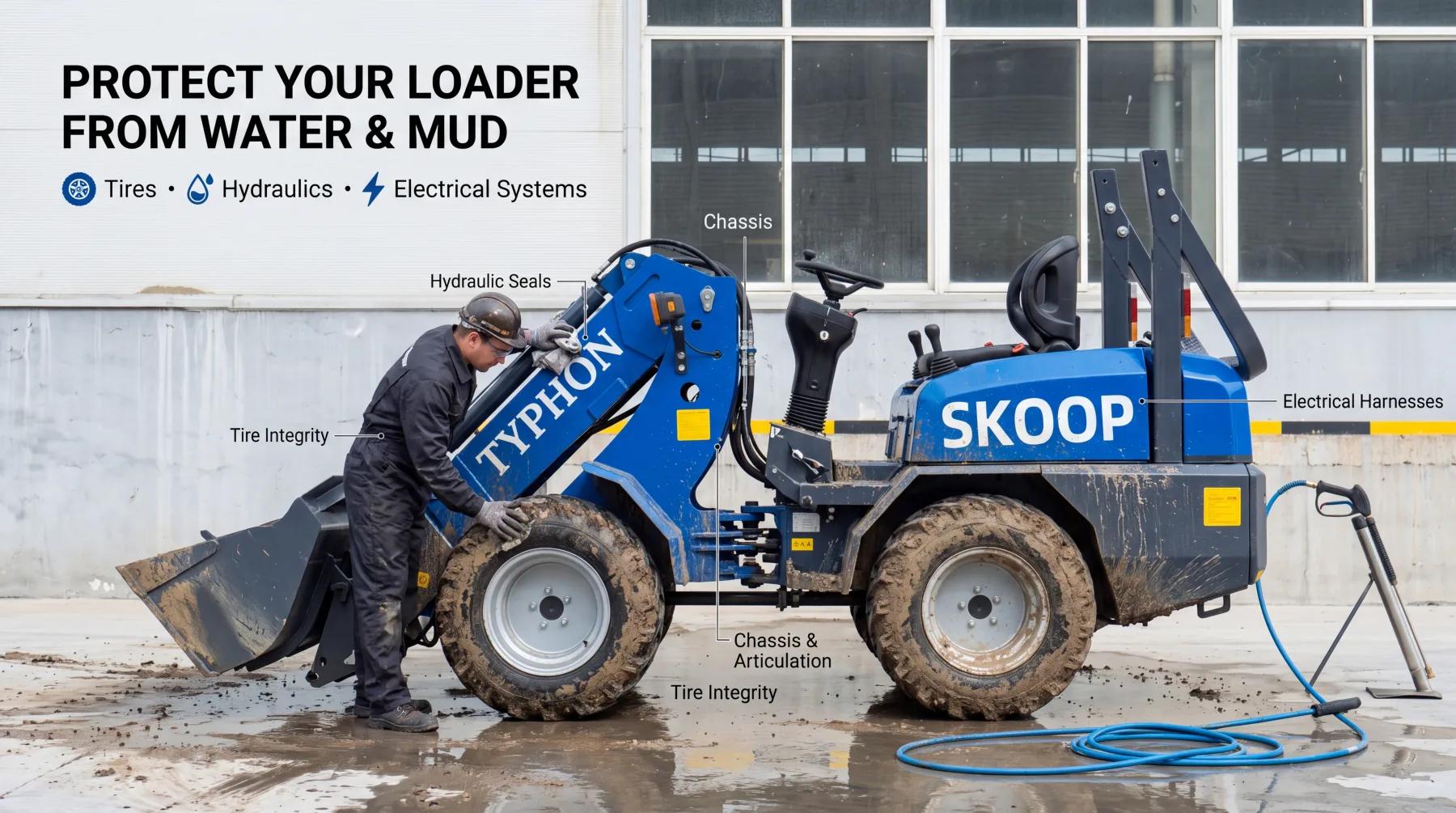
Wet conditions do not only threaten safe operation; they also take a toll on the machine itself if the effects of mud and water go unmanaged. Moisture and debris work their way into critical systems over time, and left unchecked they can cause wear, corrosion, and failures that pull the loader out of service. Protecting the machine in wet environments is as much a part of safe operation as good driving, because a well-maintained loader is a reliable and predictable one.
Several key systems are especially vulnerable to the moisture and grime that wet work produces, and each deserves attention:
- Tires, where mud packs into treads and reduces the grip you rely on for traction.
- Hydraulic components, where water and contaminants can compromise performance and lead to costly damage.
- Electrical systems, which are sensitive to moisture and prone to faults when water intrudes.
Understanding where wet conditions cause the most harm helps you focus your maintenance efforts where they matter most.
Consistent care is the answer to these risks, and it does not need to be complicated. Regular cleaning removes the mud and buildup that accumulate during wet work, restoring tire grip and keeping debris away from sensitive components. Routine inspections let you catch moisture-related problems early, before a minor issue becomes a major repair, while a disciplined maintenance schedule keeps hydraulic and electrical systems protected against the conditions they face. Cleaning the machine down at the end of a wet shift, checking for water intrusion, and staying ahead of servicing all combine to guard the loader against the wear that moisture inflicts. By treating machine protection as a regular priority in wet environments, you extend the life of your equipment, avoid unexpected downtime, and ensure the loader stays dependable through every rainy, muddy stretch of work.
Using Proper Techniques on Slopes and Uneven Ground
Slopes and uneven ground are challenging in the best conditions, and wet weather makes them considerably more dangerous. Water reduces traction on an incline dramatically, increasing the risk of sliding and cutting into the stability the machine needs to stay upright. Working these areas safely calls for specific techniques that respect how a loaded machine behaves on wet grades, because the margin for error narrows sharply the moment a slope turns slick.
The most important principle is to control the direction of travel relative to the slope. How you position and move the machine on an incline determines whether it stays stable or begins to slide:
- Travel straight up and down slopes whenever possible, which keeps the machine balanced along its strongest axis.
- Avoid sharp turns, since turning across a wet grade can break traction and pull the loader sideways.
- Adapt techniques to changing terrain, adjusting your approach as the ground shifts from firm to soft or level to sloped.
These practices keep the machine's weight distributed safely and greatly reduce the chance of a slide or rollover on wet ground.
Beyond direction, a measured and attentive approach ties everything together on difficult terrain. Moving slowly on wet slopes gives you time to feel how the machine responds and to react if traction begins to slip, while reading the ground ahead lets you anticipate soft spots or steeper sections before you reach them. Avoiding abrupt maneuvers and keeping loads low, as on any slippery surface, further protects stability as you climb or descend. Uneven ground demands the same care, since hidden dips and soft patches can unsettle the machine without warning. By combining straight-line travel, gentle inputs, and constant attention to the terrain, you can work slopes and rough ground confidently, keeping the loader stable and the operator safe even when wet conditions raise the stakes.
Conclusion
Operating a wheel loader in wet conditions requires careful planning, proper techniques, and regular machine checks. By adapting to changing ground conditions and maintaining control, operators can improve safety, productivity, and equipment reliability. Assess the site before you start, manage traction and loads with discipline, protect the machine from moisture, and handle slopes with proven techniques. Together, these practices help you work confidently through even the wettest, most demanding conditions, keeping both your crew and your equipment safe and dependable from the first pass to the last.