How a Built-In Skid Steer Trencher Changes the Way You Dig
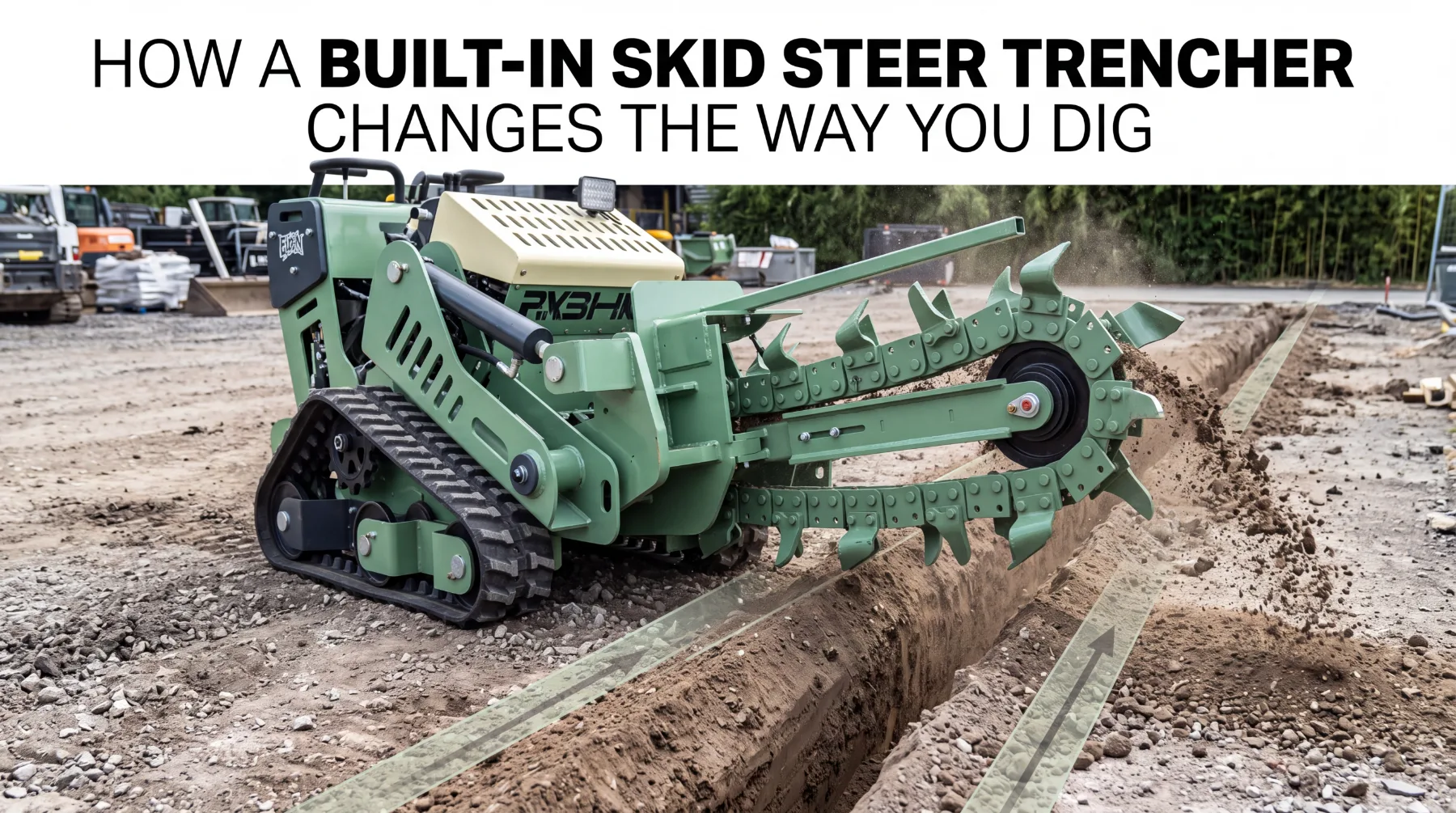
Trenching is one of the most demanding parts of any underground installation, and the tool you choose shapes the entire job. A built-in skid steer trencher takes a different approach from the bolt-on attachments many operators are used to. Instead of adapting a general-purpose machine to trenching work, it builds the trenching function directly into how the machine performs, delivering power and precision exactly where digging needs them.
This post explains how that integrated design changes your results on the ground. You will learn how a built-in trencher focuses the machine's power, holds consistent trench dimensions, simplifies daily operation, and cuts down on unnecessary excavation. If you regularly install cables, pipes, irrigation, or drainage, understanding these differences will help you dig faster, cleaner, and with far less rework.
Purpose-Built for Direct Trenching
A built-in trencher is engineered as an integrated part of the skid steer rather than depending on a separate attachment that mounts and dismounts. This distinction matters more than it first appears. When trenching is designed into the machine from the start, the power, controls, and cutting system all work toward a single purpose: cutting narrow, precise trenches efficiently. The result is a machine that treats trenching as its core job rather than an added capability.
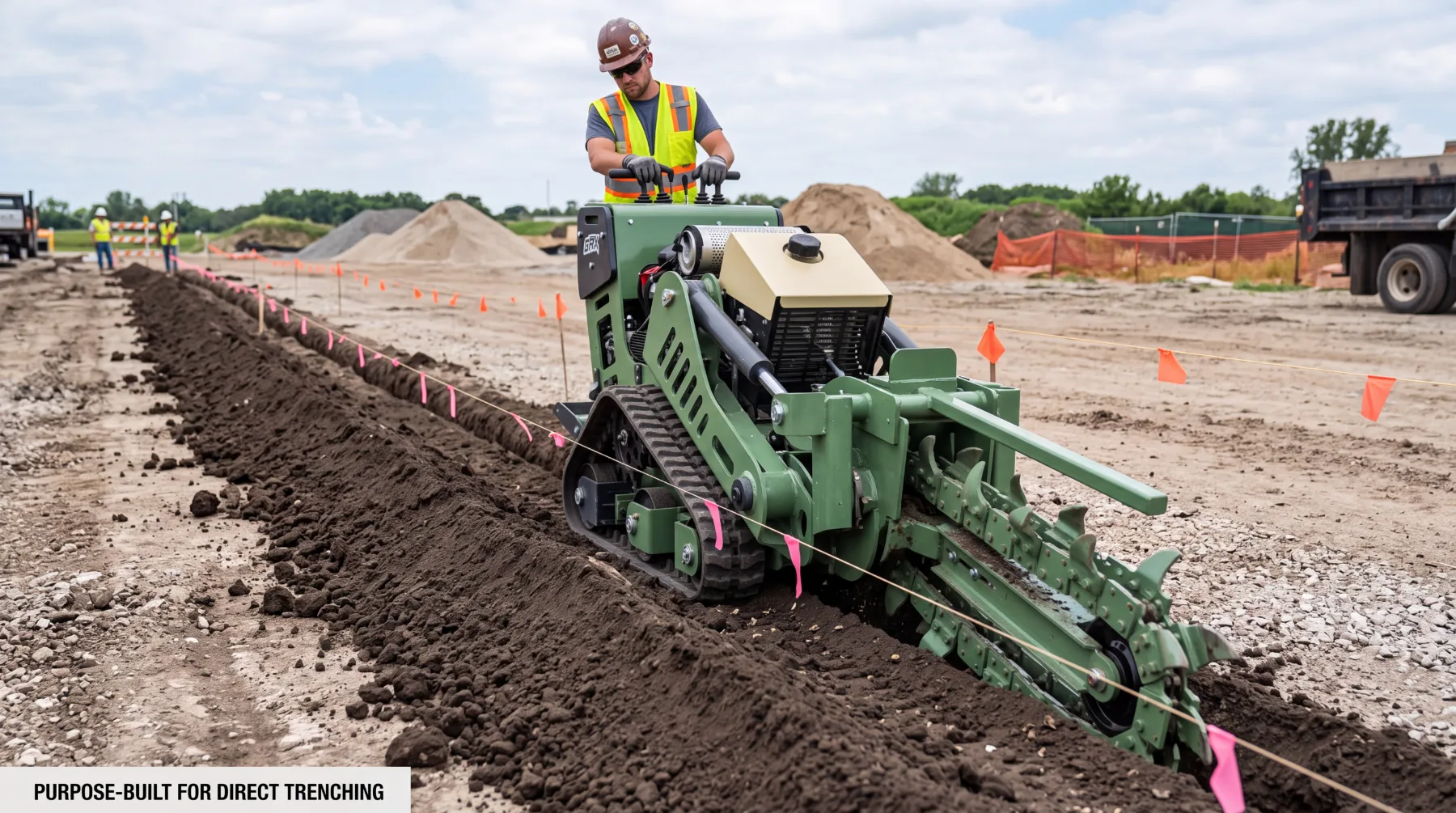
This focus shows up in how the machine handles the work. Because the trenching system is part of the design, the operator gets controls tuned specifically for digging, along with a power delivery path built around the cutting process. There is no compromise between general versatility and trenching performance, since the machine is committed to the task.
Consider what this direct approach delivers on a real jobsite:
- Controls dedicated to trenching, so the operator manages depth, speed, and cutting force with precision
- Power routed toward the cut, rather than shared across a broad range of unrelated functions
- A machine built to dig, which reduces the guesswork of adapting a multipurpose tool to a specialized job
For contractors whose work centers on underground installation, this purpose-built design translates into steadier, more predictable trenching. The machine does not fight the task or require workarounds to perform well. Instead, it applies its capability directly to the narrow, controlled digging that cable, pipe, and drainage work demands. When trenching is the priority, a machine designed around that priority gives you a foundation you can rely on shift after shift.
Consistent Trench Dimensions
The dedicated cutting system on a built-in trencher is designed to hold a defined trench width and depth as the machine moves forward. Consistency is one of the most valuable qualities in trenching, because the lines you install depend on a channel that matches their requirements from start to finish. A trench that varies in width or wanders in depth creates problems that ripple through the rest of the installation, forcing corrections that eat into the schedule.
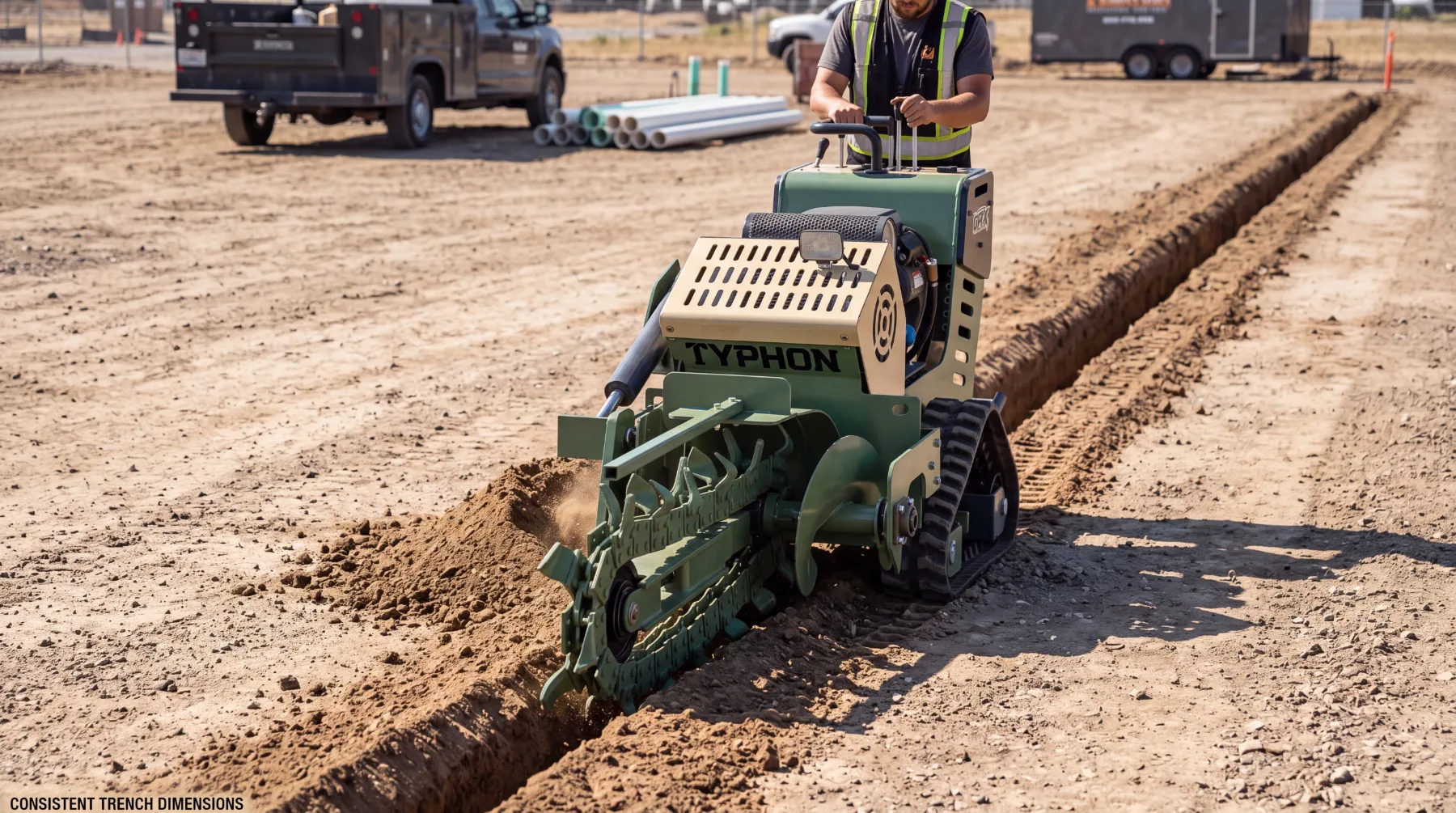
With an integrated cutting system, the machine maintains that steady profile across the entire run. As it advances, it carves a uniform channel rather than a ragged one, which means the pipe or cable drops neatly into place without constant reshaping. This reliability is especially important on longer runs, where holding a consistent depth by hand or with a poorly matched tool becomes difficult and slow.
Consistent dimensions serve a wide range of common installations:
- Electrical and communication cables, which need a protected channel cut to a reliable depth
- Water and drainage pipes, where a steady grade and even bedding keep the system working properly
- Irrigation lines, which run long distances and benefit from a uniform trench along the planned route
The practical payoff is a cleaner, faster installation with less cleanup and fewer surprises. When the trench holds its shape, backfilling goes smoothly and the finished work meets specification without extra passes. For any operator installing lines that must sit at a specific depth or follow code, a cutting system built to maintain consistent dimensions removes much of the difficulty and delivers the dependable results the job requires.
Better Use of Machine Power
An integrated trencher can be engineered around the skid steer's hydraulic and drive systems rather than simply drawing whatever power a generic attachment happens to receive. This engineering relationship is where a built-in design earns much of its performance. When the trenching system is designed as part of the machine, power delivery can be matched to the cutting and digging process, so the force reaches the chain and teeth where it does the most good.
This matters because trenching is a power-hungry operation. Breaking through packed soil, clay, or ground laced with roots demands steady, well-directed force. A system built around the machine's hydraulics and drive can supply that force consistently, keeping the cutting action steady even when the ground gets tough. Rather than straining against resistance, the machine powers through it, which keeps the pace predictable and the trench walls clean.
The advantage becomes clear when conditions vary across a site. Soil rarely stays uniform, and a machine that delivers power specifically for the cut holds its performance as the ground changes underfoot. This is very different from a general-purpose setup where power is spread across many possible functions and may fall short exactly when the digging gets demanding.
For operators, better use of machine power means fewer stalls, less wear from working the machine too hard, and a more reliable cut through varied material. The trenching system draws what it needs to keep moving, and the operator spends less time fighting difficult stretches. When power is engineered to serve the cut directly, the machine trenches with a confidence that raw horsepower alone cannot guarantee.
Easier Operation on the Jobsite
With the trenching system incorporated into the machine, operators can work without repeatedly swapping between general-purpose attachments. This simplification changes the rhythm of a workday in a meaningful way. Every attachment change costs time, requires handling equipment, and interrupts the flow of the job. When trenching is built in, the machine is ready to dig the moment it is needed, and the operator stays focused on the work rather than on switching tools.
This streamlined setup is especially valuable when trenching is a primary task. Crews that spend much of their day cutting trenches gain back the minutes lost to mounting, connecting, and dismounting attachments, and those minutes add up across a project. The workflow becomes more continuous, and the operator can move from one section of trench to the next without unnecessary stops.
Simpler operation delivers several practical benefits on site:
- Less downtime spent changing and connecting attachments between tasks
- A more continuous workflow, since the machine is always ready to trench
- Reduced handling of equipment, which lowers the effort and risk that come with frequent swaps
Beyond saving time, an integrated system tends to feel more intuitive to operate, since the controls are built around the trenching function rather than adapted from a general layout. This helps operators work with confidence and keeps the digging steady and controlled. For contractors managing tight schedules, easier operation is not a minor convenience. It keeps projects moving efficiently and ensures that trenching, when it is the main job, proceeds without the constant interruptions that slow a crew down.
Less Unnecessary Excavation
A purpose-built trenching system focuses excavation on the narrow path required for the installation rather than removing a broad section of ground. This precision is one of the clearest advantages of a built-in trencher over wider bucket excavation. When you only need a channel for a cable or pipe, digging a wide hole wastes effort in every direction, from the extra soil removed to the larger area that must later be restored.
By concentrating the cut on the exact path the line follows, the machine disturbs far less of the surrounding soil. This keeps the worksite tidier and reduces the volume of material that has to be handled, hauled, and eventually backfilled. On finished properties, this focused approach protects established lawns, beds, and hardscaping that a broad excavation would tear up. On larger sites, it limits disruption to soil structure across the work area.
The benefits of minimal excavation are practical and immediate:
- Less soil removed, which speeds up both digging and backfilling
- A tidier worksite, with disruption confined to the trench path itself
- Easier restoration, since only the narrow channel needs to be refilled and finished
This precision also translates into cost and time savings. Less material to move means fewer hours spent on cleanup and less impact on the areas around the trench. Compared with the wide, uneven excavation a bucket produces, a purpose-built trencher leaves a clean, defined channel ready for the line right away. For any installation where the goal is a narrow underground path, focusing excavation exactly where it is needed is a smarter, more efficient way to dig.
Conclusion
A built-in skid steer trencher changes how you dig by treating trenching as the machine's core purpose rather than an added function. Because the system is engineered into the machine, it focuses power and controls on the cut, holds consistent trench width and depth, and delivers steady performance through varied soil. It also simplifies operation by removing the need to swap attachments and keeps excavation confined to the narrow path your installation actually requires.
For contractors and operators who trench regularly, these advantages add up to faster, cleaner, and more reliable work. If underground installation is a central part of your projects, evaluate how an integrated trenching machine fits your typical soil conditions, trench dimensions, and workload. Match the machine to the work you do most, and put it to use on your next installation to see the difference a purpose-built design makes.
Frequently Asked Questions
1. What makes a built-in trencher different from a trencher attachment?
The key difference is integration. A built-in trencher is engineered as part of the skid steer, with power, controls, and the cutting system all designed around trenching from the start. A trencher attachment, by contrast, is a separate tool that mounts onto a general-purpose machine and relies on whatever power the host provides. Because the built-in design commits the machine to trenching, it routes power directly toward the cut and gives the operator controls tuned specifically for depth, speed, and cutting force. There is no compromise between broad versatility and trenching performance. For crews whose work centers on underground installation, this focused design delivers steadier, more predictable results and removes the guesswork of adapting a multipurpose machine to a specialized digging task.
2. Why does consistent trench depth and width matter so much?
Consistent dimensions matter because the lines you install depend on a channel that matches their requirements along the entire run. Electrical and communication cables often need to sit at a specific depth to meet code and stay protected, water and drainage pipes require a steady grade and even bedding to function properly, and irrigation lines run long distances that benefit from a uniform trench. When a trench varies in width or wanders in depth, it forces corrections that slow the job and complicate installation. A built-in cutting system holds a defined width and depth as the machine advances, carving a uniform channel so the pipe or cable drops neatly into place. This reliability speeds backfilling, reduces cleanup, and helps the finished work meet specification without extra passes, which is especially valuable on longer runs.
3. How does an integrated trencher make better use of the machine's power?
An integrated trencher is engineered around the skid steer's hydraulic and drive systems, so power delivery is matched to the cutting and digging process rather than shared broadly across unrelated functions. This matters because trenching demands steady, well-directed force to break through packed soil, clay, and ground with roots or debris. A system designed to supply power specifically for the cut keeps the cutting action steady even when the ground gets tough, so the machine powers through resistance instead of straining against it. This holds performance consistent as soil conditions change across a site. The practical result is fewer stalls, less wear from overworking the machine, and a more reliable cut through varied material. Power engineered to serve the cut directly gives the machine a level of trenching confidence that raw horsepower alone cannot provide.
4. Does a built-in trencher really save time on the jobsite?
Yes, particularly when trenching is a primary task. Every attachment change costs time, requires handling equipment, and interrupts the flow of work. With trenching built into the machine, there is no swapping between general-purpose attachments, so the machine is ready to dig the moment it is needed. Crews recover the minutes normally lost to mounting, connecting, and dismounting tools, and those minutes add up across a project. The workflow becomes more continuous, letting the operator move from one section of trench to the next without unnecessary stops. An integrated system also tends to feel more intuitive, since the controls are built around trenching rather than adapted from a general layout. For contractors managing tight schedules, this easier operation keeps projects moving and ensures trenching proceeds without constant interruptions.
5. How does a built-in trencher reduce unnecessary excavation?
A purpose-built trenching system focuses excavation on the narrow path the installation requires, rather than removing a wide section of ground the way a bucket does. When you only need a channel for a cable or pipe, digging a broad hole wastes effort and creates more material to handle, haul, and backfill. By concentrating the cut on the exact path the line follows, the machine disturbs far less surrounding soil, which keeps the worksite tidier and speeds both digging and restoration. On finished properties, this protects established lawns, beds, and hardscaping that a wide excavation would tear up. On larger sites, it limits disruption to soil structure across the work area. The result is a clean, defined channel ready for the line right away, with less cleanup, faster backfilling, and lower overall cost compared with wider bucket excavation.