
Cutting Chain Design and Excavation Performance in Trencher Machines
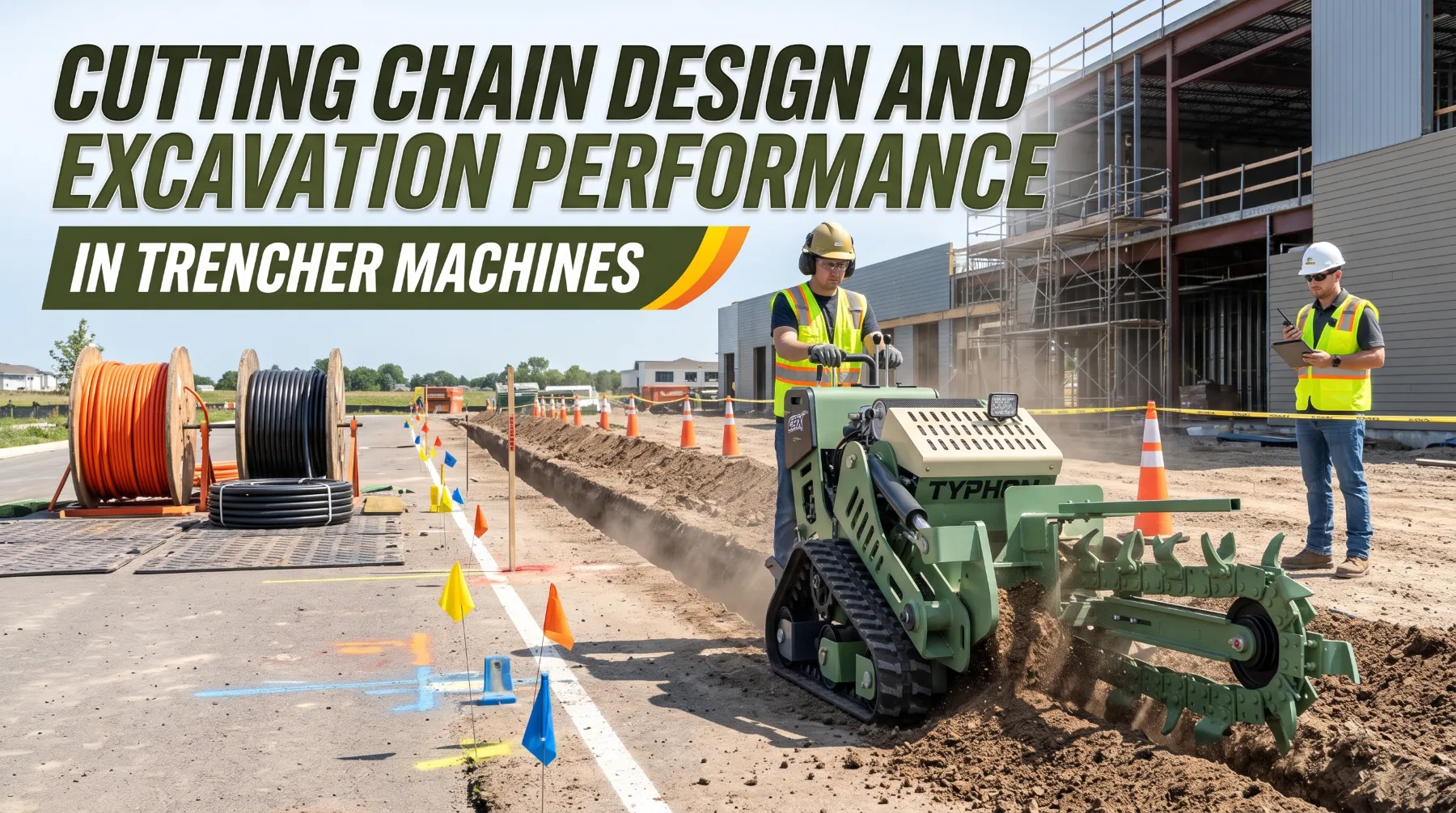
A utility crew sets out to trench 600 feet of conduit across a commercial lot. The first 200 feet run through sandy loam, and the trencher moves steadily, laying a clean spoil pile beside a straight, uniform trench. Then the ground turns to compacted clay mixed with cobbles. Travel slows. The engine bogs. Within an hour, several teeth have worn down, and the chain is throwing more noise than spoil. The machine hasn't changed. The ground has, and the cutting chain set up for soft soil can no longer keep pace.
The cutting chain is the working heart of a chain trencher. It decides how quickly the machine digs, how clean the trench walls and floor are, and how much wear the machine absorbs. Chain design, tooth arrangement, trench dimensions, soil conditions, and the balance between chain speed and travel rate all affect excavation performance. Crews that understand these factors dig faster, protect their equipment, and deliver trenches that meet specification the first time.
How a Trencher Cutting Chain Works
A chain trencher digs with a continuous loop of chain fitted with cutting teeth. The chain wraps around a digging boom, driven by a sprocket at the top of the boom and guided around a roller or idler at the tip. On most machines, a hydraulic motor or mechanical drive turns the sprocket. As the chain moves, its teeth travel up the front edge of the boom, cutting into the trench face and carrying loosened soil toward the surface.
This upward cutting motion, often called up-cutting, is the most common arrangement. It lifts spoil out of the trench as the teeth rise. At the surface, a spoil auger beside the boom moves that material to one or both sides of the trench, forming a neat windrow that can later be used for backfill. A crumber, also called a cleanout shoe, follows behind the chain at the bottom of the trench. It scrapes loose material off the trench floor so conduit, pipe, or cable can rest on a clean, even surface.
Trenchers come in several sizes, and the chain system scales with them. Walk-behind trenchers dig narrow, shallow trenches for irrigation lines, landscape lighting, and small utility runs. Ride-on and compact track trenchers handle longer utility installations, drainage lines, and fiber or power conduit. Trencher attachments for compact track loaders and skid steers use the carrier's hydraulic system to drive the chain. Large track trenchers cut wide, deep trenches for pipeline and major utility work. Each uses the same principle: teeth on a moving chain cut and lift soil while the machine advances along the trench line.
Boom angle shapes the cut. The operator lowers the boom into the ground with the chain running, plunging to the required depth before starting travel. As the machine moves forward, the boom stays at a working angle that lets the chain cut steadily into fresh soil. Many machines include a depth indicator, and some offer laser or grade control systems for drainage work where trench floor slope matters.
Key takeaway: A trencher chain carries teeth up the front of the boom, cutting soil and lifting it to the surface, where an auger moves spoil aside and a crumber cleans the trench floor. The same principle applies from walk-behind units to large track trenchers.
Cutting Tooth Arrangement and Design
Cutting teeth do the actual digging, so their shape, material, and arrangement have a direct effect on performance. Manufacturers offer several tooth styles, each suited to particular ground conditions. Choosing the right tooth for the soil is one of the most effective ways to improve digging speed and reduce wear.
Arrangement matters as much as tooth style. Teeth are mounted on the chain in a set sequence, often called a lacing pattern. Each tooth sits at a slightly different position across the chain's width, so the teeth together cut the full trench width as the chain moves. Some teeth cut the center of the trench, while others angle outward to cut the side walls. A correct pattern produces a clean, square trench with consistent width. Missing, damaged, or misplaced teeth leave ridges of uncut soil, which increase resistance and force the remaining teeth to work harder.
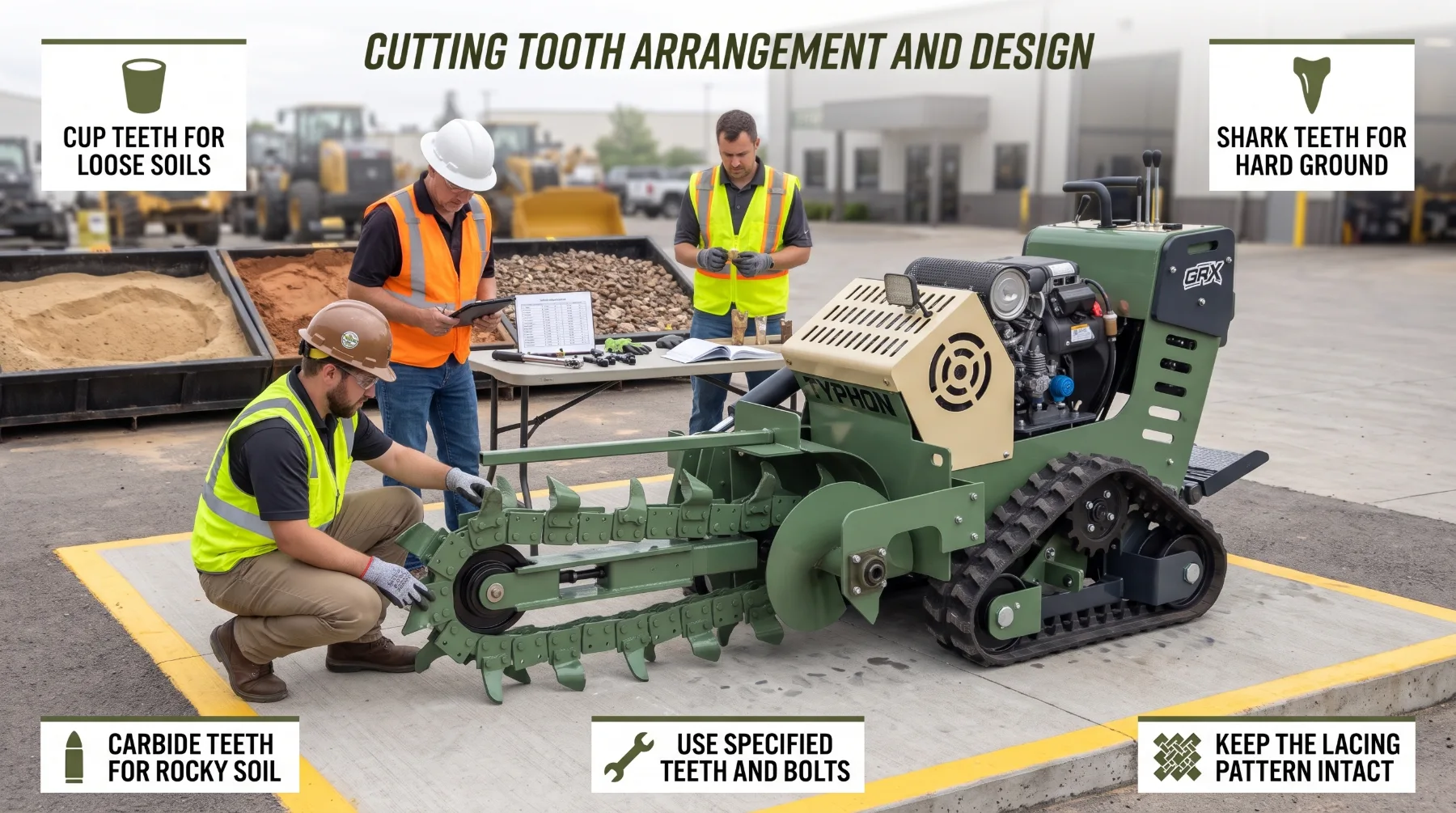
Tooth spacing also influences performance. Closely spaced teeth take smaller bites and work well in hard ground, where large bites would overload the chain. Wider spacing allows each tooth to take a larger bite and carry more spoil in loose soil. Some chains allow teeth to be added or removed to adjust spacing for different conditions.
Follow the manufacturer's recommendations when selecting, replacing, or rearranging teeth. Use the specified tooth type, bolts, and torque values, and keep the lacing pattern intact. Replacing a single damaged tooth with the wrong style or installing it in the wrong position can disrupt the cut and accelerate wear across the chain.
Key takeaway: Cup teeth suit loose soils, shark teeth suit compacted and frozen ground, and carbide rock teeth suit dense, abrasive material. Keep the lacing pattern intact, match tooth spacing to the ground, and use only the manufacturer's specified teeth and hardware.
Soil Type and Cutting Performance
Soil conditions have more influence on trenching speed than almost any other factor. The same machine, chain, and operator can move quickly through sandy loam and crawl through compacted clay with cobbles. Understanding how each soil type behaves helps crews choose the right teeth, set realistic production goals, and avoid damaging the equipment.
Loose soils such as sand, loam, and topsoil cut easily. Cup teeth move a high volume of spoil, and the machine can usually travel at a steady pace. The main challenge in sandy soil is wall stability, since loose sand can slough into the trench behind the boom. The crumber and correct travel speed help keep the trench floor clean.
Clay presents a different problem. Dry, hard clay resists penetration and calls for shark or carbide teeth. Wet, sticky clay cuts more easily but tends to pack between the teeth and around the chain, sprocket, and auger. Buildup increases resistance, reduces spoil removal, and adds strain on the drive system. Crews working in sticky clay often slow travel slightly, use teeth designed to shed material, and stop periodically to clean buildup with the machine shut down and locked out.
Gravel, cobbles, and rocky soils are the hardest on chains. Abrasive material wears teeth quickly, and larger stones can jam between teeth, strike the chain sharply, or deflect the boom. Carbide teeth and rock chains handle these conditions far better than cup teeth. Frozen ground behaves much like soft rock and typically calls for carbide teeth and slower travel. Solid rock may exceed a trencher's capability altogether and require rock wheels, breakers, or other methods.
Moisture changes every soil. A clay that cuts cleanly in the morning may turn sticky after rain, and a loam that holds its walls when damp may crumble when dry. Walk the trench route before starting, dig test sections where conditions are uncertain, and watch how the chain responds as conditions change. Signs that the chain is working too hard include engine bogging, chain speed dropping, excessive vibration, and the boom climbing out of the cut. When those signs appear, slow travel, check the teeth, and consider whether a different chain or tooth style is needed. Never force the machine beyond its intended application.
Key takeaway: Loose soils cut quickly with cup teeth, hard clay and frozen ground need shark or carbide teeth, and rocky ground wears chains fastest. Watch for bogging, vibration, and boom climb, and adjust travel or tooling as conditions change.
Chain Speed and Machine Travel Rate
Trenching performance depends on the balance between how fast the chain moves and how fast the machine travels. Chain speed determines how often teeth strike the trench face. Travel rate determines how much new soil the chain must remove each minute. When the two are matched to the ground, the machine digs steadily without overloading. When they're mismatched, productivity and trench quality suffer.
Traveling too fast overloads the cutting system. The teeth take bites larger than they can clear, spoil builds up in the trench, and the engine bogs or stalls. The boom may climb out of the cut, leaving a trench that's shallower than required, or the trench walls may become rough and uneven. Excessive load also accelerates wear on teeth, chain, sprockets, and drive components. Traveling too slowly wastes time and fuel without improving the trench. In some soils, it can also cause the chain to grind the same material repeatedly, adding wear without adding production.
Most ride-on and track trenchers use a hydrostatic ground drive with a creep speed range for trenching. The operator sets engine speed, typically at or near full throttle for digging, then adjusts travel to keep the engine and chain working within their efficient range. Many modern machines include a load control or anti-stall system that automatically slows ground travel when the engine or chain begins to bog. That system helps maintain steady production, but it doesn't replace operator judgment.
Use the manufacturer's recommended operating procedure for chain speed, engine speed, and travel range. Start each trench slowly after plunging the boom to depth, then increase travel gradually while watching engine speed, chain speed, and spoil flow. Back off at the first sign of overload. Steady, controlled travel almost always produces more trench per hour than aggressive bursts followed by stalls.
Key takeaway: Travel rate sets how much soil the chain must remove each minute, and chain speed sets how often teeth strike the face. Match travel to the ground, start slowly after plunging, use load control where fitted, and back off at the first sign of overload.
Chain Inspection and Wear Maintenance
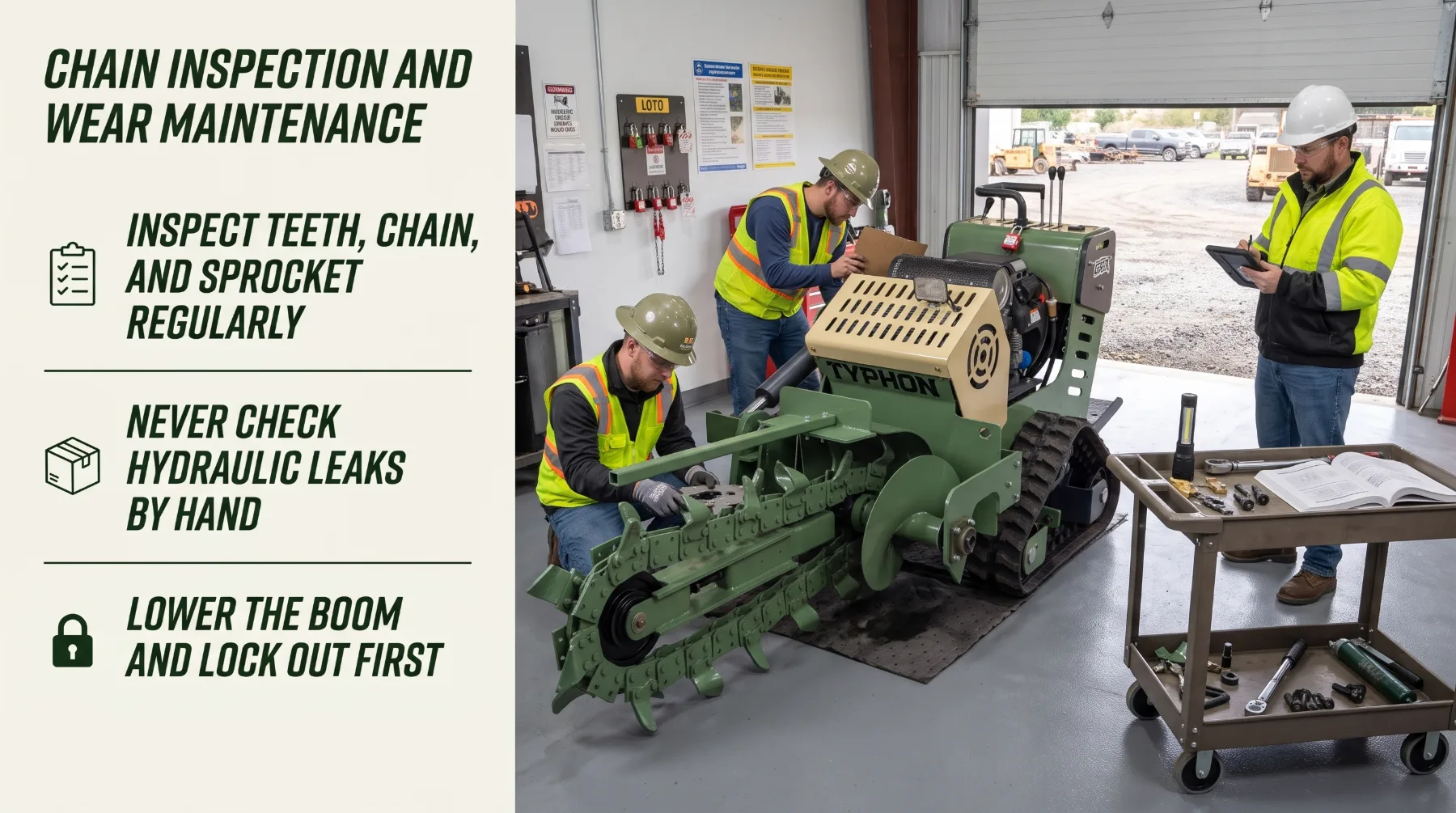
A well-maintained chain cuts faster, produces cleaner trenches, and protects the drive system from unnecessary strain. Chain components wear constantly because they work in abrasive soil under heavy load. Regular inspection catches that wear before it reduces performance or causes a breakdown.
Inspect the teeth first. Look for teeth that are worn, chipped, bent, cracked, or missing, and check that carbide tips are intact. Cup teeth wear at their cutting edges and corners, gradually becoming rounded and less effective. Carbide teeth wear until the tip is gone and the softer steel body begins to wear quickly. Rotating bullet teeth should still turn freely in their holders. Check that tooth bolts are present and tight, and replace any damaged hardware with the specified parts torqued to the manufacturer's values. Worn teeth reduce cutting speed and force the remaining teeth to work harder, so replacing them promptly pays off in production and component life.
Chain tension must stay within the manufacturer's specification. Most trenchers use a tensioning system at the boom, often a threaded adjuster or grease-filled cylinder, to set chain sag. A chain that's too loose can jump off the sprocket, slap against the boom, or derail during digging. A chain that's too tight increases wear on pins, sprockets, rollers, and bearings, and adds load to the drive system. Check tension at the interval the manual specifies and after installing a new or repaired chain, since new chains often stretch slightly during the first hours of use.
Keep the boom, chain, auger, and crumber clean. Packed clay and debris add weight and resistance and hide damage. Inspect the auger flighting and crumber for wear and bending. Grease all fittings on the schedule in the operator's manual, wiping each fitting clean first. Record every inspection, tooth replacement, chain change, and tension adjustment in the maintenance log so wear trends are easy to track.
Key takeaway: Inspect teeth, bolts, links, pins, sprockets, and the boom roller regularly, replace worn parts with approved components, and keep chain tension within specification. Clean packed material, grease on schedule, and record all maintenance.
Safe Operation, Leak Checks, and Lockout
Trenching combines a moving digging chain, buried utilities, and open excavations, so safe habits must be part of every job. The digging chain is the most serious hazard on the machine. Contact with a moving chain can cause severe injury or death in an instant, and loose clothing, gloves, or rope can be drawn in without warning.
Before digging, have all utilities located and marked. In the United States, call 811 several working days before excavating, as required by state law, and wait for all utility owners to respond. Respect the tolerance zone around each marked line, and expose utilities by hand digging or vacuum excavation before trenching nearby. Never trench across a marked utility without exposing it first.
During operation, keep everyone well clear of the boom, chain, and auger. Engage the chain only when the operator is in the correct position and the area is clear, and never step over or reach across the boom or a moving chain. Before leaving the operator's position, disengage the chain, lower the boom to the ground, set the parking brake, and shut down the engine. On ride-on machines, wear the seat belt whenever the machine moves. Never bypass operator presence controls or chain guards.
Inspect hydraulic hoses that feed the chain drive motor and boom cylinders. Never use your hand to search for a hydraulic leak. Fluid escaping through a pinhole under pressure can penetrate skin and cause an injection injury. The wound may look minor at first, but it's a medical emergency that requires immediate surgical treatment. Use a piece of cardboard or wood, wear gloves and eye protection, and keep your face out of line with the suspected leak. If anyone is struck by escaping hydraulic fluid, get emergency medical care at once and tell medical staff it's a hydraulic injection injury.
Wear cut-resistant gloves when handling teeth, since cutting edges and carbide tips are sharp. Remember that a tensioned chain stores energy, so release tension following the manufacturer's procedure before removing or repairing a chain.
Key takeaway: Locate and expose utilities before trenching, keep everyone clear of the moving chain, check leaks with cardboard rather than your hands, and lower the boom and lock out before any chain work.
Conclusion
Trencher cutting chain design shapes every part of excavation performance. The chain carries teeth up the boom to cut and lift soil, while the auger and crumber move spoil aside and clean the trench floor. Tooth style and lacing pattern decide how well the chain penetrates and clears material. Chain width and boom length set trench dimensions. Soil type determines which tooling works best and how quickly the machine can advance. The balance between chain speed and travel rate keeps the cutting system productive without overloading it, and regular inspection keeps teeth, chain, and sprockets working at their best.
Frequently Asked Questions
What does a trencher cutting chain do?
The cutting chain carries teeth around the digging boom, cutting into the trench face and lifting loosened soil to the surface as the machine advances. A spoil auger then moves the material beside the trench, and a crumber cleans the trench floor. The chain's design, tooth arrangement, and condition determine how quickly and cleanly the trencher digs.
Do all trencher teeth work in every soil type?
No. Cup teeth work best in sand, loam, and softer clays, where they move a high volume of spoil. Shark teeth suit compacted soil, hard clay, and frozen ground. Carbide rock teeth handle soft rock, caliche, and heavily mixed ground. Combination chains help in changing conditions. Follow the trencher manufacturer's recommendations when selecting teeth for your ground.
Does maximum digging depth represent normal working depth?
Not always. Maximum digging depth reflects the boom's full reach under suitable conditions. Hard soil, rock, high water tables, and long trench runs can make full depth slow or impractical. Plan installations around a working depth the machine can reach comfortably in your expected ground, and remember that trenches 5 feet deep or more generally require a protective system before anyone enters.
What are signs of a worn trencher chain?
Common signs include worn, chipped, or missing teeth, missing carbide tips, excessive chain stretch, stiff or cracked links, frequent loss of tension, and a chain that jumps the sprocket. Performance changes also signal wear, such as slower digging, increased vibration, unusual noise, uneven trench walls, and frequent engine bogging. Inspect the sprocket as well, since a worn sprocket quickly damages a new chain.