Choosing Between Open Cab and Enclosed Cab Wheel Loaders for Outdoor Work
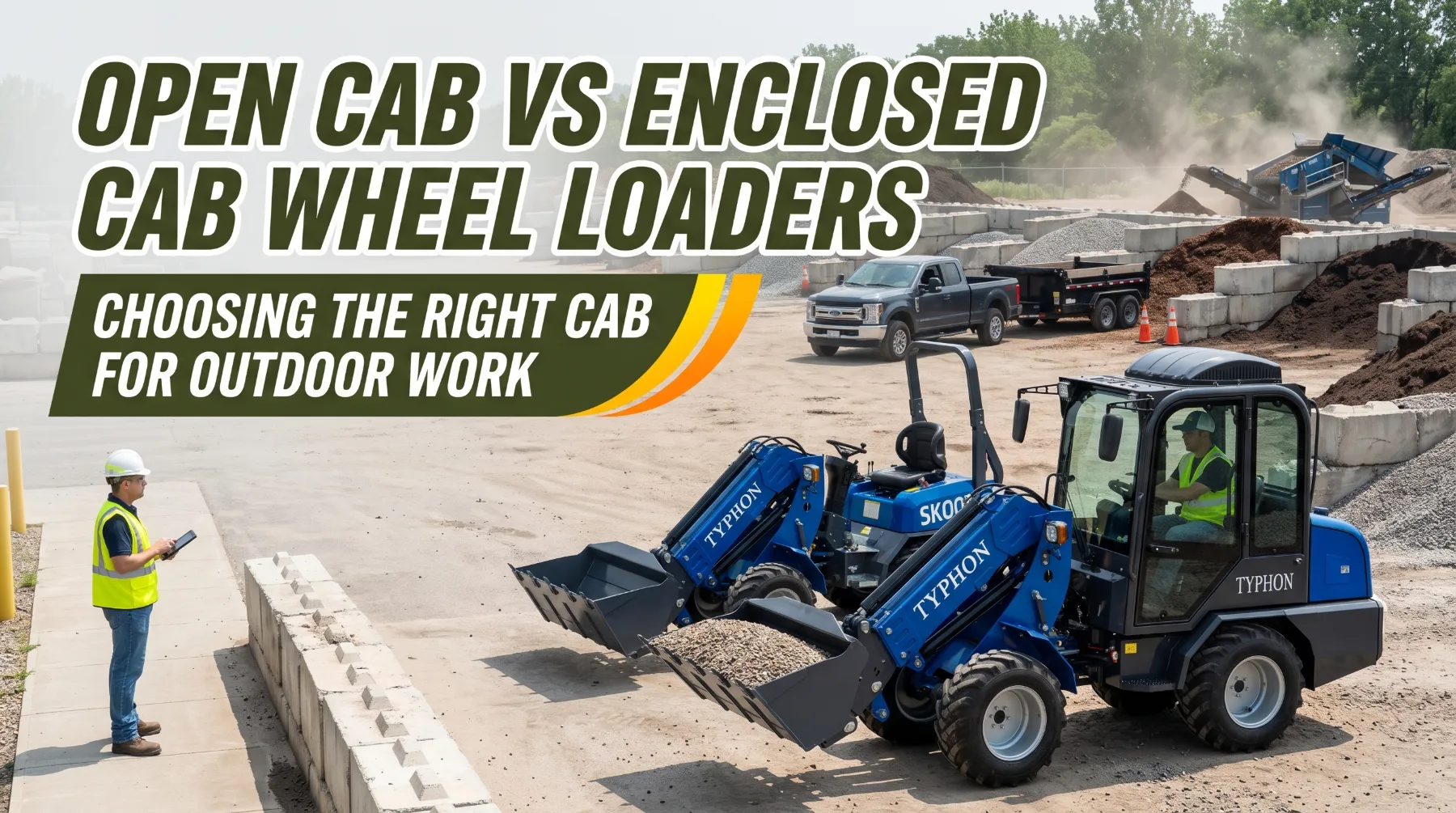
A landscape supply yard owner adds a compact wheel loader to load customer trucks with mulch, topsoil, gravel, and decorative stone. He chooses an open-canopy model. It costs less, his operators can hop on and off quickly to talk with customers, and the spring weather is mild. For the first two months, the decision looks smart.
Then summer arrives. The yard starts running a screener to process topsoil, and fine dust drifts across the loading area most afternoons. By July, the heat index regularly passes 100°F, and the operator rotates breaks every hour and wears a dust mask through the busiest part of the day. In November, the yard picked up a snow removal contract for a nearby retail center. The work starts at 4 a.m. in sleet, and the operator sits in the open for six hours with wind blowing straight through the canopy. By January, two operators have asked to be moved to other jobs, and the owner is pricing an enclosed-cab replacement.
The loader itself performed well the entire time. It simply had the wrong cab for the conditions it faced through a full year of outdoor work.
Wheel loaders work in construction sites, quarries, farms, nurseries, material yards, recycling facilities, and municipal operations. Those environments can change from calm and dry to dusty, wet, hot, or freezing within a single day. The operator station is where the operator spends every hour of that work, so the cab design affects comfort, focus, health, productivity, and retention.
Open-cab and enclosed-cab loaders each have real strengths. Open designs offer simplicity, easy access, and direct awareness of the surroundings. Enclosed cabs offer protection from weather, dust, and noise, along with climate control for long shifts. The right choice depends on where and how your machine works, not on a general rule. This guide explains how to compare both designs so you can choose the cab that supports your operators and your operation.
Understand Open-Cab Design
An open cab, often called a canopy or ROPS canopy, provides an operator station without a fully enclosed cabin. The operator sits beneath a protective roof supported by posts, with the sides, front, and rear open to the outside. The structure is designed to protect the operator in the event of a rollover. Many models also offer protection from falling objects, depending on how the canopy is certified.
Open designs are most common on compact and smaller wheel loaders. Larger production loaders used in quarries, aggregate plants, and heavy construction almost always come with enclosed cabs, and some models don't offer an open option at all. On compact machines, though, manufacturers often offer both configurations, which is where the decision usually comes up for contractors, farms, nurseries, and supply yards.
Those advantages come with real exposure. The operator faces sun, rain, wind, snow, cold, heat, and airborne material directly. Dust, chaff, sawdust, and fine particles from screening or handling dry material reach the operator's breathing zone without any barrier. Noise from the engine, hydraulics, and nearby equipment reaches the operator at full volume. Engine horsepower and hydraulic performance also affect operating conditions, as demanding workloads can increase engine noise, heat, and hydraulic system activity. Rain and snow can soak the seat, controls, and instrument panel. In hot weather, the operator has only shade from the roof, and in cold weather, there's no barrier against wind chill.
Some manufacturers offer accessories that soften these limitations, such as weather curtains, side screens, or heaters designed for canopy machines. These can help in mild conditions, but they don't provide the sealing, filtration, or climate control of a true enclosed cab. When conditions regularly turn harsh, accessories rarely close the gap.
Key takeaway: Open cabs offer quick access, direct awareness of the surroundings, and mechanical simplicity, but they expose the operator to weather, dust, and noise. Confirm ROPS and FOPS certification, and choose an open design only where exposure stays manageable.
Evaluate Enclosed-Cab Protection
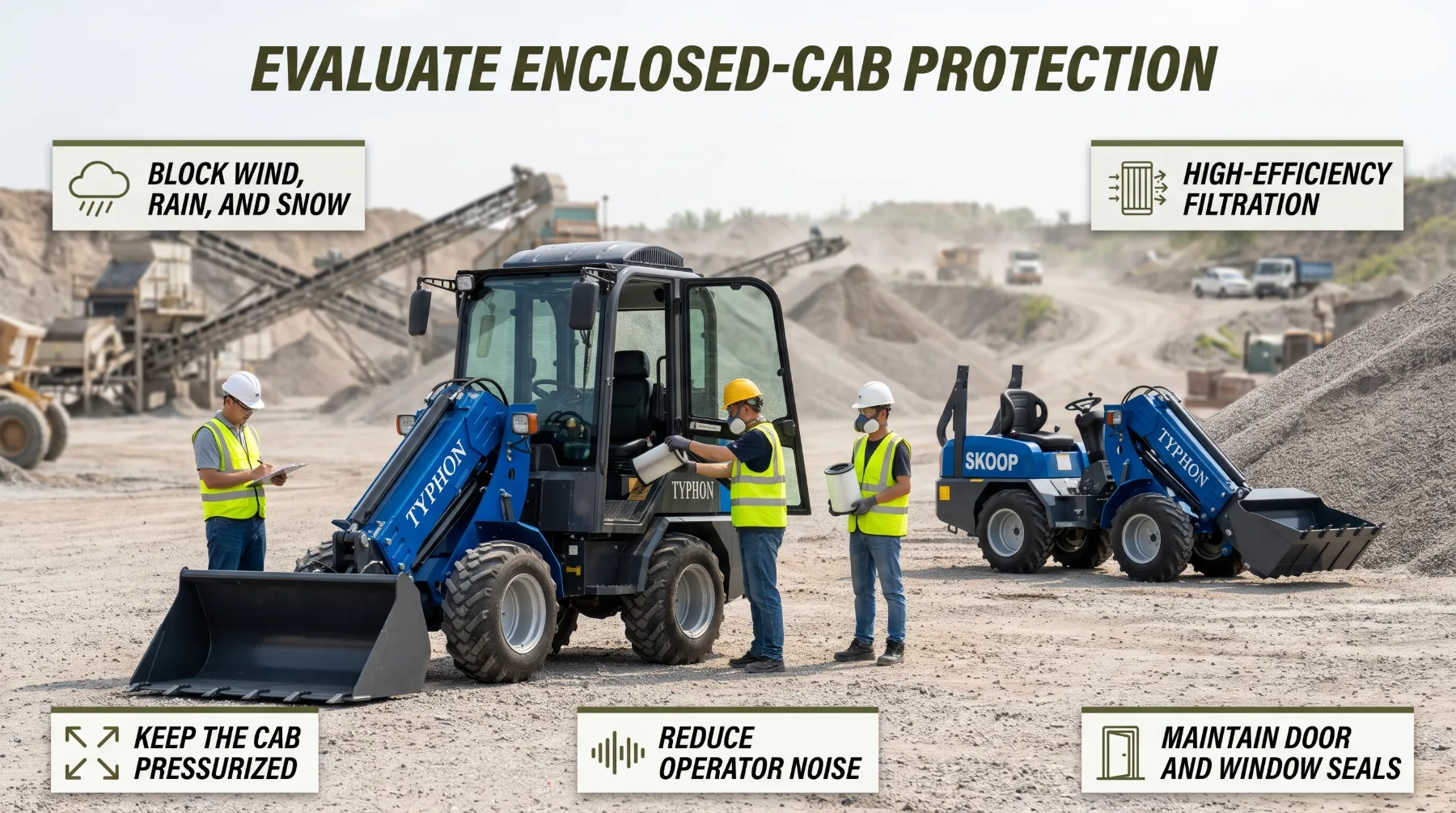
An enclosed cab surrounds the operator with a sealed structure of glass, panels, and doors built around the protective frame. It provides a barrier against wind, rain, snow, dust, cold, and much of the noise around the machine. For operators who spend full shifts outdoors in changing conditions, that barrier can make the difference between a draining day and a productive one.
Weather protection is the most visible benefit. A well-sealed cab keeps rain and snow off the operator, the seat, and the controls. It blocks wind, which matters greatly in cold weather, since wind chill can make moderate temperatures feel far colder. On early-morning snow removal, winter feeding on farms, and wet-season quarry work, the operator stays dry and focused rather than fighting the elements.
Effectiveness depends on maintenance and habits. A cab with torn door seals, a cracked window, a clogged filter, or a door propped open offers far less protection than its design allows. Settled dust on the floor and seat gets stirred up every time the operator moves. Keep doors and windows closed during dusty work, clean the cab interior regularly with a vacuum or damp cloth rather than compressed air, and replace filters and seals at the intervals the manufacturer specifies.
Key takeaway: Enclosed cabs protect against weather, dust, and noise, but only when seals, pressurization, and filtration work properly. Confirm filter efficiency and pressurization, keep doors closed in dusty work, and maintain seals and filters on schedule.
Compare Visibility
Visibility is essential in both cab designs. Wheel loader operators constantly watch the bucket, the loading area, the travel path, nearby workers, and other machines. Every blind spot increases the risk of striking a person, a vehicle, a structure, or a stockpile edge. Neither design guarantees better visibility. Each has strengths, and each depends on how the machine is built and maintained.
Open cabs often feel more open because there's no glass between the operator and the work. The operator can lean slightly to look around a post, hear what's happening nearby, and see without reflections or glare from glass. That direct awareness helps in tight yards with frequent foot traffic. Canopy posts, the roof, the engine hood, and the loader arms still create blind areas, though. Rain, glare, and dust also affect visibility directly, since the operator has no wipers or tinted glass to help.
Enclosed cabs rely on window design. Large, curved, or full-height glass panels, slim pillars, and floor-to-roof windshields can provide excellent sightlines to the bucket edge and the ground near the front tires. Wipers on the front and rear glass keep the view clear in rain and snow. Defrosters and heated mirrors help in cold, wet weather. Tinted glass reduces glare on bright days. Poorly designed cabs, however, may have thick pillars, small rear windows, or frames that block the view of the bucket corners. Dirty, scratched, fogged, or frosted glass can reduce visibility sharply.
Evaluate the full visibility package on every machine you consider. Sit in the operator's seat with the seat adjusted to your typical operator's position. Check your view of the bucket cutting edge at ground level, the bucket corners, the area around the front tires, and the loader arms at full height. Look at the rear view over the engine hood, since wheel loaders spend much of their time reversing. ISO 5006 addresses operator field of view on earth-moving machinery, and many manufacturers design their cabs and mirrors to meet it. Ask which standard each model was evaluated against.
Visibility aids can cover what direct sightlines miss. Mirrors, rearview cameras, multi-camera systems, and object detection or radar systems can help operators see behind and beside the machine. Work lights matter for early mornings, late evenings, and winter shifts, especially on farms and in yards that run before sunrise. LED lighting packages on the cab roof, front, and rear can illuminate the bucket, the travel path, and the loading area. Check that lighting doesn't create glare on cab glass or in the operator's eyes.
Key takeaway: Both designs need clear sightlines to the bucket, loading area, and travel path. Evaluate pillars, windows, mirrors, cameras, and lighting from the operator's seat, and keep glass, mirrors, and cameras clean every shift.
Consider Climate-Control Features
Climate control is one of the clearest differences between the two designs. Depending on the configuration, an enclosed cab may include heating, air conditioning, defrosting, and ventilation. These features help operators manage hot and cold conditions, which supports alertness, comfort, and safe operation over long outdoor shifts.
Heat is a serious concern for outdoor operators. Summer work in yards, quarries, and fields can push temperatures well beyond comfortable levels, and the sun beating on the machine adds to the load. Heat stress can cause fatigue, slower reactions, poor judgment, and heat-related illness. Open-cab operators have only the shade of the canopy and whatever breeze passes through. Enclosed cabs without air conditioning can become hotter than the outside air, since glass traps solar heat. An enclosed cab with effective air conditioning keeps the operator cool, focused, and hydrated more easily.
Cold brings its own risks. Early-morning snow removal, winter feeding on farms, and cold-season quarry work expose operators to low temperatures and wind for hours. Cold hands lose dexterity on the controls, and cold operators lose concentration. A heated enclosed cab keeps the operator warm and the controls responsive. Defrosters keep the windshield clear, which is a safety feature as much as a comfort one.
Climate control works closely with filtration and pressurization. The same HVAC system that heats and cools the cab often supplies the filtered fresh air that keeps it pressurized. That's why OSHA's silica standard includes heating and cooling among its conditions for enclosed cabs used as a dust control. Without climate control, operators open doors and windows to stay comfortable, which defeats the cab's dust protection. Many cabs also use a recirculation setting that reuses cab air through a recirculation filter. Recirculation helps the system heat or cool faster, but cabs still need fresh air to maintain pressure and keep carbon dioxide from building up. Follow the manufacturer's guidance on fresh-air and recirculation settings.
Check ventilation and filter maintenance requirements before purchasing. Ask how many filters the cab uses, including fresh-air and recirculation filters, where they're located, and how often they need replacement. Dusty applications can clog filters far faster than the standard interval, so ask about severe-duty intervals and whether pre-cleaners or upgraded filters are available. Check how easily filters can be reached from the ground, since filters that are hard to reach tend to be changed less often. Ask about AC condenser and cab air intake locations as well, since these can pack with dust and chaff on farms and in yards. Confirm that the machine's cooling package can handle the added load of air conditioning in hot conditions.
Seat comfort and cab ergonomics round out the picture. Suspension seats, adjustable armrests, and well-placed controls reduce fatigue in both designs, but enclosed cabs often offer more options, such as heated or air-suspension seats. Over a long shift, these features add up. A comfortable, alert operator works more smoothly, makes fewer mistakes, and is more likely to stay with your company.
Key takeaway: Heating, air conditioning, and defrosting help operators stay alert and safe in hot and cold conditions, and they support the cab's dust protection by keeping doors closed. Review filter types, service intervals, and access before you buy.
Review Entry and Maintenance Access
Operators climb on and off a wheel loader many times a day. In some applications, such as supply yards, farms, and nurseries, they may enter and exit dozens of times per shift. The cab design affects how easily and safely they do it, and it affects how easily technicians can reach service points.
Open-cab machines usually offer simpler access to the operator station. With no doors to open and close, operators can step on and off quickly through the side of the canopy. That suits jobs with frequent stops, such as checking loads, opening gates, talking with customers, coupling attachments, or moving between tasks on foot. The trade-off is that steps, handholds, and the floor are exposed to mud, ice, snow, and rain, which can make surfaces slippery.
Enclosed designs require suitable door clearance and step placement. The door must open wide enough for safe entry and exit, and the operator needs room to swing the door fully without striking nearby walls, stockpiles, or vehicles. Many cabs offer doors on both sides or a secondary exit. That improves access and provides an emergency exit if one side is blocked. Check that doors latch securely in both open and closed positions, since a door that swings freely in wind can strike the operator or a bystander. Door seals and latches add maintenance items, but they also keep mud and weather out of the operator's space.
Look at service access as well. Check how easily technicians and operators can reach daily inspection points, such as engine oil, coolant, hydraulic fluid, air filters, and grease points. On enclosed machines, check whether the cab tilts or lifts for access to hydraulic and drivetrain components, and how easily HVAC filters, condensers, and blower components can be reached. Ask whether cab components such as wiper motors, door seals, glass, and HVAC parts are readily available from your dealer. Glass replacement in particular can take time if parts must be ordered, so ask about lead times.
Key takeaway: Open cabs offer quick, simple access for frequent stops, while enclosed cabs need proper door clearance and step placement. Inspect steps, handholds, doors, and service access, and train operators to use three points of contact every time.
Match the Cab to Working Conditions
The right cab is the one that fits the work your loader does across the full year, not just on the day you buy it. Open-cab configurations may suit operations where weather exposure is manageable and frequent entry matters. Enclosed cabs are generally better suited to dusty, rainy, cold, or hot environments and to long shifts. Considering operator preference, site conditions, and machine availability together leads to a confident decision.
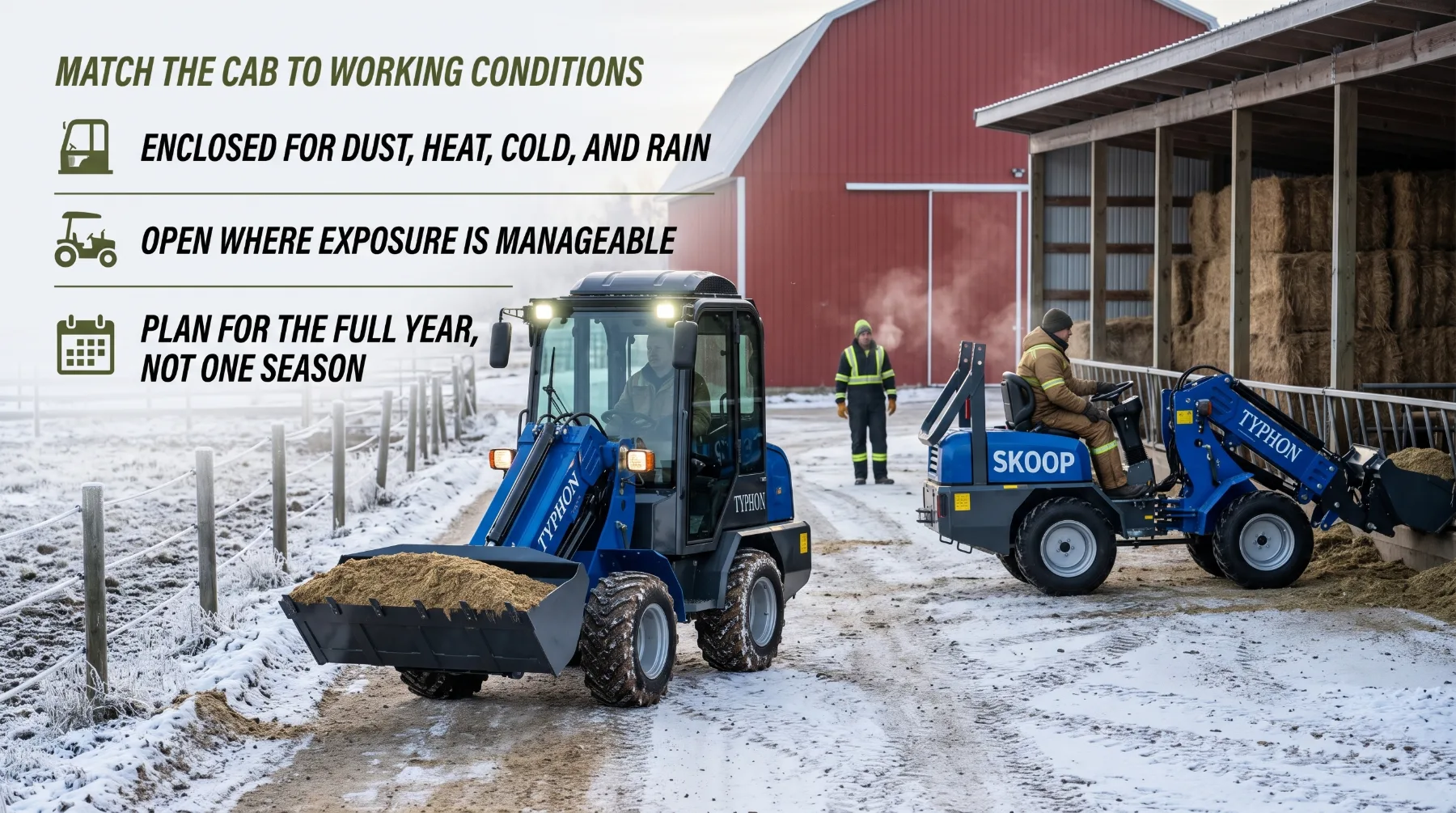
Start by listing the conditions your loader will face month by month. Note average and extreme temperatures, rainfall and snowfall, and how often the machine works in dust. Then note shift length, how often operators get on and off, and whether the machine works near other dust or noise sources, such as crushers, screeners, grinders, or feed mixers. That list often makes the choice clear.
Construction sites, recycling facilities, and municipal operations each bring their own mix. Demolition and concrete recycling generate silica dust and noise, which strongly favors enclosed cabs. Municipal loaders often handle snow removal, salt loading, and early-morning shifts, where heat, defrosting, and lighting become essential. Short-term construction tasks in moderate weather may suit an open machine, but long shifts in heat, cold, or dust usually justify an enclosed cab.
Consider operator preference and retention as well. Ask your operators what they value, whether that's easy access, climate control, quieter working conditions, or direct awareness of the surroundings. Operators who spend full shifts in harsh conditions often strongly prefer enclosed cabs. Offering a comfortable, protected workspace can help attract and keep experienced operators, which is a real advantage when skilled operators are hard to find.
Key takeaway: List the conditions your loader faces across the full year. Choose enclosed cabs for dusty, hot, cold, wet, or long-shift work such as quarries and year-round farm duty. Consider open cabs only where exposure is manageable and frequent entry matters most.
Conclusion
Wheel loader cab design affects operator comfort, visibility, safety, and daily productivity. Open and enclosed cabs offer different levels of access and protection, so the right choice depends on the working environment and job requirements. Cab design, mirrors, cameras, and lighting influence visibility, while entry points and service access affect everyday use and maintenance. Protective structures, ventilation, filtration, and climate control also contribute to a suitable operating environment. When evaluating a wheel loader, consider typical weather, dust exposure, noise levels, shift duration, and operator access needs. Review the available safety certifications, cab protection features, visibility, and comfort specifications for each configuration. A practical demonstration allows operators to assess the controls, visibility, and overall working environment. Selecting a suitable cab helps maintain operator comfort, support safe operation, and improve productivity across different jobsite conditions.
Frequently Asked Questions
What is the main advantage of an enclosed wheel loader cab?
It provides a barrier against wind, rain, snow, dust, and noise, and it can include heating and air conditioning that improve comfort and alertness during extended shifts. When the cab is properly sealed, pressurized, and filtered, it can also reduce the operator's exposure to airborne dust, including respirable crystalline silica.
Is an open cab suitable for outdoor work?
It can be suitable when weather conditions, dust levels, and site requirements allow for operator exposure. Open cabs often work well for short tasks in mild climates and for jobs where operators climb on and off frequently. In dusty, hot, cold, or wet conditions, or on long shifts, an enclosed cab is usually the better choice.
Does an enclosed cab keep all dust out?
No. Protection depends on door and window seals, cab pressurization, filter efficiency, and regular maintenance. Torn seals, clogged filters, settled dust inside the cab, or doors left open can greatly reduce protection. Keep doors closed during dusty work and replace filters and seals on schedule.