Forklift Lifting Height: Choosing the Right Height for Your Application
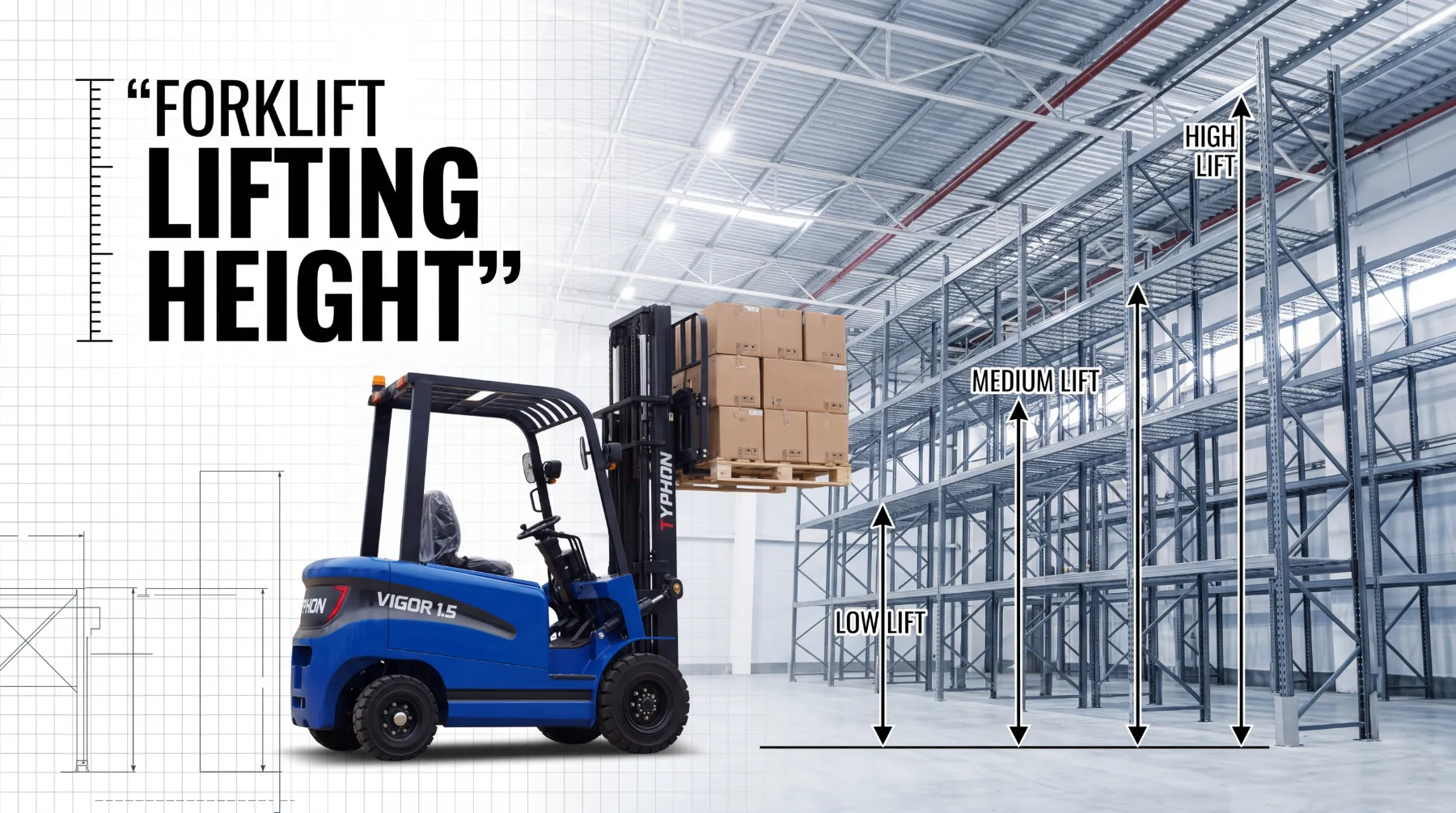
Lifting height is one of the most important decisions you will make when selecting a forklift, yet it is easy to reduce it to a single number on a spec sheet. The reality is more layered. The right lifting height depends on your storage layout, your ceiling, the loads you handle, and the mast that carries them. Choose well, and the forklift makes full use of your vertical space while working safely and efficiently. Choose poorly, and you end up with a machine that cannot reach the top rack, or one that risks striking the ceiling. This guide walks through the five factors that define the right lifting height, so you can match the forklift to your application with confidence.
How Forklift Lifting Height Determines Storage Options
Lifting height sets the ceiling on what your storage system can achieve, quite literally. It determines the height of the racks, shelves, and stacking areas a forklift can safely reach, which means it shapes how much of your building's vertical space you can actually use. A facility that stacks material high needs a machine capable of reaching the top level dependably, while one with lower storage may not require the same reach. Matching the mast to your storage layout is how you turn available vertical space into usable capacity. The connection between lift height and storage strategy is direct. Warehouses often invest in tall racking to store more in the same floor area, but that racking only pays off if a forklift can place and retrieve loads at every level. If the machine falls short of the top beam, that space sits empty and the investment goes to waste. Getting the lifting height right lets you fill the racks from floor to top, making the most of the building you already have. Consider how lift height shapes storage decisions:
- Rack height must fall within the forklift's safe reach so every level stays accessible.
- Stacking density depends on how high the machine can place loads without strain.
- Floor space efficiency improves when vertical storage replaces spread-out ground storage.
Planning storage and lift height together produces the best outcome. Rather than buying racking first and hoping a forklift can reach it, consider both as one system. When the lifting height matches the storage layout, you use your vertical space fully, keep every rack level within reach, and build a material handling operation that makes efficient, dependable use of the room you have.
Why Maximum Lift Height Is Not the Same as Working Height
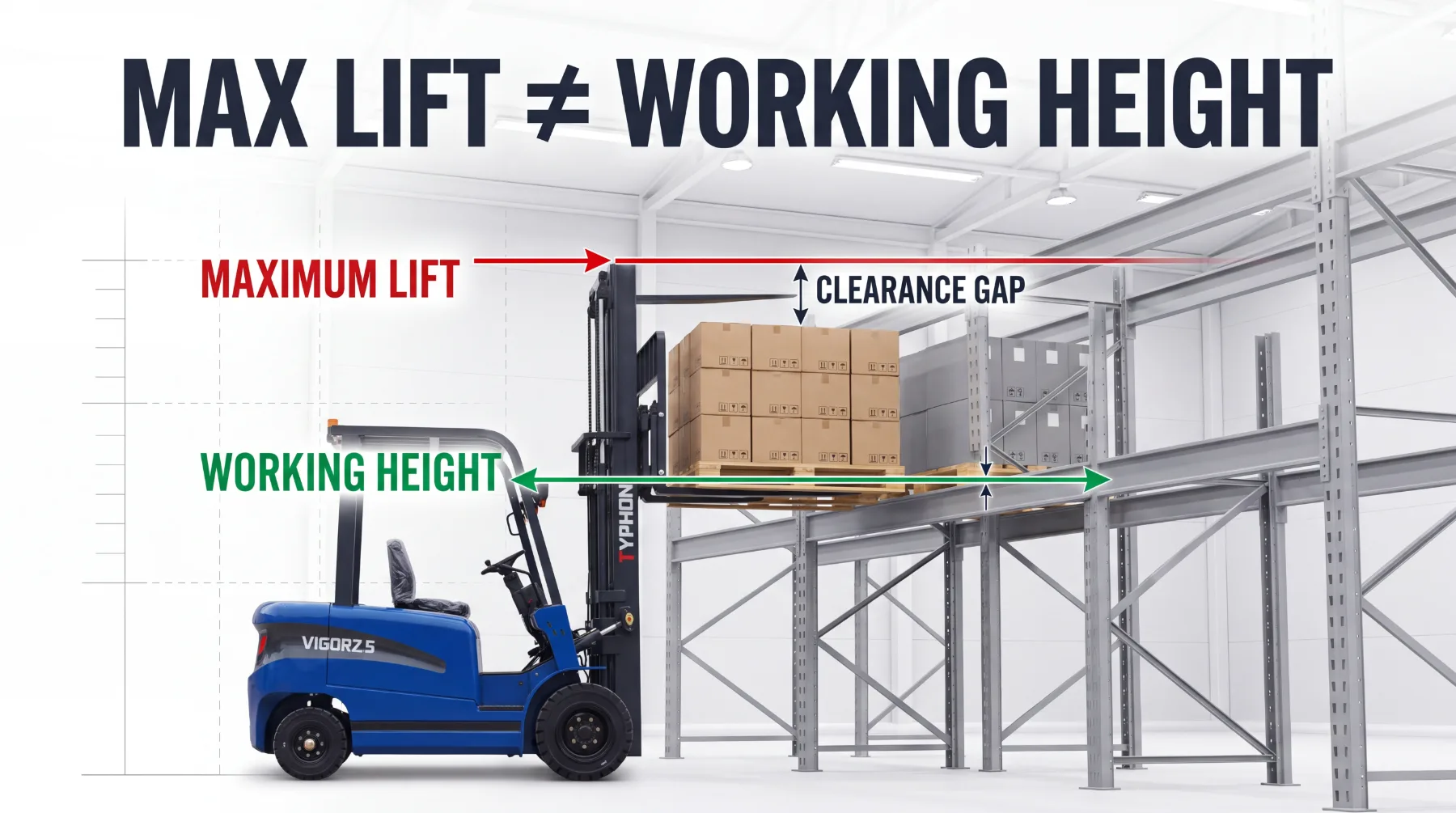
A forklift's maximum lift height tells you how high the forks can rise, but it does not tell you the whole story of what the machine can practically achieve. The working height, meaning the height at which you can actually place and retrieve loads safely, depends on more than that single figure. Mast design, load size, and required clearance all factor in, and overlooking the difference can lead to selecting a forklift that looks capable on paper yet cannot reach the intended storage position in practice. The gap between maximum lift and working height comes from real operating conditions. A load sitting on the forks has its own height, so the top of that load reaches higher than the forks themselves. You also need clearance to lift the load above a rack beam, slide it into position, and lower it onto the shelf. When you account for the load's dimensions and the space needed to maneuver it, the practical working height sits below the machine's stated maximum lift. Several factors separate the two figures:
- Load height raises the effective top of the lift above the fork position.
- Placement clearance is the extra height needed to lift a load over a beam and set it down.
- Mast configuration affects how the height is reached and how much usable reach remains.
For anyone choosing a forklift, this distinction matters a great deal. Selecting a machine based only on its maximum lift figure risks discovering, after purchase, that it cannot comfortably place loads at the top rack level. The dependable approach is to work backward from the actual storage position you need to reach, add the load height and the clearance required to place it, and choose a forklift whose working height meets that real requirement rather than just its headline number.
How Ceiling Clearance Affects Forklift Lift Height
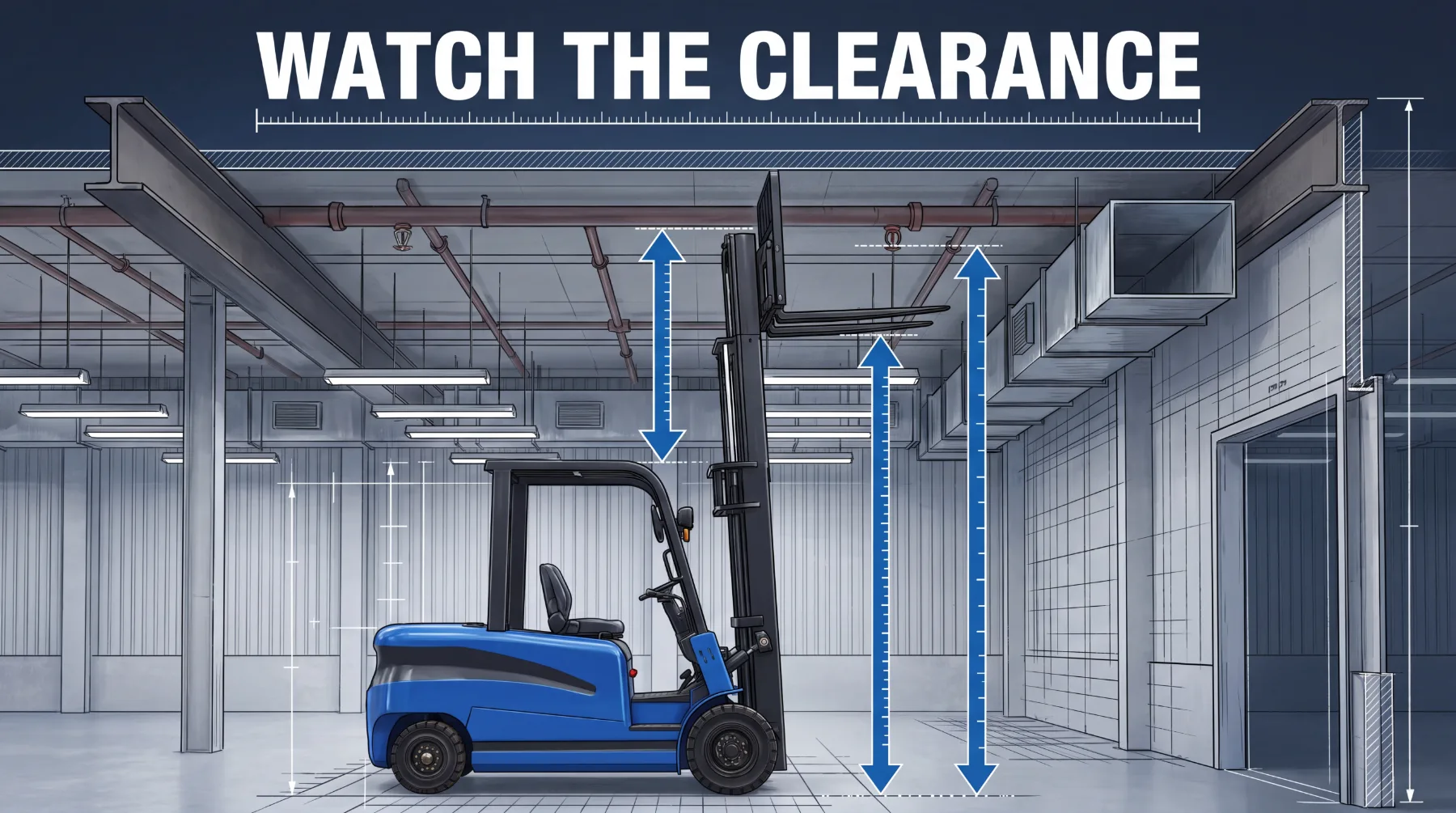
Lifting height is not only about reaching up. It is also about fitting within the space overhead, which makes ceiling clearance a critical part of the decision. The required lifting height must account for overhead doors, beams, lighting, sprinklers, ductwork, and any other obstruction that sits above the work area. A forklift that reaches the required rack level but cannot operate safely beneath these obstacles is not suited to the application, no matter how impressive its reach. The challenge is that the highest point of the machine and its load must clear everything overhead throughout operation. When the mast is raised, or in some designs even when it is lowered for travel, the top of the mast can approach the ceiling. If that point strikes a beam, a sprinkler head, or a light fixture, the result is damage, disruption, and a serious safety concern. This is why lift height and overhead clearance have to be considered together rather than in isolation. Several overhead features deserve careful measurement:
- Beams and structural members that set the true usable ceiling height.
- Sprinkler heads that must never be struck, both for safety and code compliance.
- Lighting, ductwork, and overhead doors that can limit clearance in specific areas.
Doorways add another layer to consider, since a forklift must pass through them with its mast lowered. A mast that collapses to a low enough height for travel through doors and under low sections is often as important as the height it can reach. When you evaluate lifting height, measure your lowest overhead obstructions as carefully as your highest storage level. A forklift that reaches the top rack and still operates and travels safely beneath every obstacle is the one that truly fits your facility.
How Load Weight Changes Lifting Height Requirements
Lifting height and load weight are closely linked, because a forklift's capacity is not constant across its full range of lift. A machine may handle its rated load comfortably at low height, yet its safe capacity often decreases as the load rises and as the load center moves farther from the mast. This means the height you need to reach must be considered alongside the weight and dimensions of the loads you handle, not treated as a separate specification. The reason capacity changes with height comes down to stability. Raising a heavy load lifts the machine's center of gravity, which reduces the margin against tipping. A load center positioned farther out on the forks has a similar effect, increasing the leverage that works against stability. Manufacturers publish capacity ratings that reflect these conditions, often showing how much a machine can safely lift at a given height and load center. Ignoring these figures risks choosing a forklift that handles the weight low down but cannot safely raise it to the required level. This is why a load capacity chart deserves close attention when matching a forklift to your work. It shows the safe relationship between height, load center, and weight for the specific machine, and it prevents the mistake of assuming rated capacity applies at every height. A forklift that lifts a heavy pallet to the top rack safely must be chosen with both the weight and the height in mind together. When you plan lifting height, bring your heaviest loads and their dimensions into the decision. Matching the machine to the real combination of weight, load center, and height you handle ensures the forklift performs safely and dependably at every level it needs to reach.
How Mast Type Influences Forklift Lifting Height
The mast is the component that actually delivers lifting height, and different mast configurations offer different lifting ranges and clearance characteristics. Comparing mast types is essential, because two forklifts can reach similar heights while behaving very differently when it comes to how much they collapse for travel and how their lift progresses. Choosing the right mast helps you reach the height you need while still fitting the working space and doorways your facility presents. Mast designs generally fall into a few common types, each suited to particular needs:
- Single-stage masts offer limited lift height and suit applications with modest reach requirements and open overhead space.
- Two-stage masts provide greater lift and often include a free-lift feature, useful where loads must rise before the mast extends, such as inside trailers or under low ceilings.
- Three-stage masts deliver high lift heights while collapsing to a relatively low height for travel, making them a strong choice for tall racking combined with restricted door or ceiling clearance.
The concept of free lift is worth understanding here. Free lift is the height the forks can rise before the mast begins to extend upward, which is valuable when working in areas with limited overhead room. A mast with generous free lift lets you raise a load in a confined space without the mast growing taller, while a mast with little free lift begins extending almost immediately. Selecting the right mast means balancing several needs at once: the maximum height you must reach, the collapsed height that must clear doors and low sections, and the free lift required for your specific work. A three-stage mast might reach a tall top rack while still passing through a standard doorway, whereas a taller single-stage mast could reach the same height but never fit beneath a low beam. By comparing mast types against your real height, clearance, and load requirements, you choose a forklift that reaches where you need it and works comfortably within the space you have.
Conclusion
Choosing the right forklift lifting height is about far more than picking the tallest reach available. It starts with your storage layout, which defines how high you need to go, and it is shaped by the difference between maximum lift and practical working height. Ceiling clearance sets the limit overhead, load weight changes what the machine can safely raise at height, and the mast type determines how that lift is delivered within your available space. All of these factors work together, and the best choice comes from weighing them as a whole rather than fixing on a single number. When you match lifting height to your real storage, space, and load requirements, you gain a forklift that uses your vertical space fully, operates safely, and performs dependably on every lift.
Frequently Asked Questions
1. How do I determine the lifting height I need for my facility? Start with your storage layout, specifically the height of the top rack or stacking level you need to reach. Then account for the practical details that affect real reach: the height of the loads you handle and the clearance needed to lift a load over a beam and set it down. Add these to the top storage position to find your true working height requirement, rather than relying on a machine's maximum lift figure alone. You should also measure your overhead clearance and doorway heights, since the forklift must fit within them. Working backward from the actual position you need to reach gives you a dependable target. 2. What is the difference between maximum lift height and working height? Maximum lift height is how high the forks can be raised, which is the headline number on a spec sheet. Working height is how high you can practically place and retrieve loads safely, and it is usually lower. The difference comes from real operating conditions. A load has its own height, so the top of the load sits higher than the forks. You also need clearance to lift the load over a rack beam and maneuver it into position. When you account for load dimensions and placement clearance, the practical working height falls below the stated maximum. Choosing by working height, not maximum lift, prevents selecting a machine that cannot reach the top level. 3. Why does ceiling clearance matter when choosing lift height? Ceiling clearance matters because the forklift and its load must fit safely beneath everything overhead throughout operation. Overhead doors, beams, lighting, sprinklers, and ductwork all limit the usable height, and striking any of them causes damage, disruption, and serious safety risks. A machine that reaches the required rack level but cannot operate safely under the ceiling is not suitable for the application. Doorways matter too, since the forklift must travel through them with the mast lowered. This makes the mast's collapsed height as important as its reach. Measuring your lowest overhead obstructions carefully, alongside your highest storage level, ensures the forklift both reaches and clears everything in your facility. 4. Does load weight affect how high a forklift can lift? Yes. A forklift's safe lifting capacity is not constant across its full range of lift. A machine may handle its rated load comfortably at low height, but its safe capacity often decreases as the load rises and as the load center moves farther from the mast. This happens because raising a heavy load lifts the center of gravity and reduces the margin against tipping. Manufacturers publish load capacity charts showing how much a machine can safely lift at a given height and load center. Always check these figures, and bring your heaviest loads and their dimensions into the decision, so you choose a forklift that lifts safely at the height you actually need. 5. Which mast type is best for my application? The best mast depends on the height you must reach, the clearance you have overhead and at doorways, and the free lift your work requires. Single-stage masts suit modest reach with open overhead space. Two-stage masts offer greater lift and often a free-lift feature, useful where loads must rise before the mast extends, such as in trailers or under low ceilings. Three-stage masts deliver high lift while collapsing to a low travel height, making them ideal for tall racking combined with restricted door or ceiling clearance. Compare the maximum height, the collapsed height, and the free lift of each option against your real requirements to find the mast that fits your space and reaches where you need.